Updating your news feed...
NEWS EXPRESS is Nigeria’s leading online newspaper. Published by Africa’s international award-winning journalist, Mr. Isaac Umunna, NEWS EXPRESS is Nigeria’s first truly professional online daily newspaper. It is published from Lagos, Nigeria’s economic and media hub, and has a provision for occasional special print editions. Thanks to our vast network of sources and dedicated team of professional journalists and contributors spread across Nigeria and overseas, NEWS EXPRESS has become synonymous with newsbreaks and exclusive stories from around the world.







.webp)
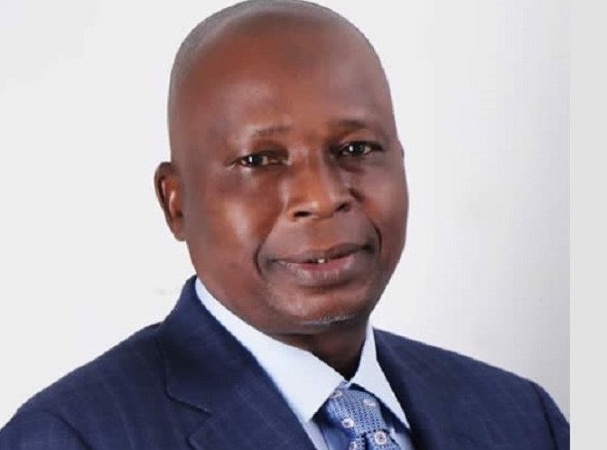
A former Assistant Director-General of the Department of State Services, Mohammed Ngoshe, has explained why the intelligence-driven operation that secured the rescue of abducted pupils and teachers in Oriire Local Government Area of Oyo State cannot be replicated in every kidnapping case.
Explaining why similar outcomes had not been achieved in some northern states despite the capabilities of security agencies, the retired DSS chief said each operation is shaped by different circumstances.
Ngoshe stated this while speaking on Channels Television’s The Morning Brief on Wednesday.
He spoke against the backdrop of questions on why the coordinated operation that led to the rescue of the Oyo victims after 56 days in captivity had not been replicated in states such as Borno, Plateau and Benue, where mass abductions and attacks have also occurred.
“You are right. There are mass abductions. But first of all, I want to address the issue of trust deficit. Nigerians, please, you should learn to trust your servicemen. These people are working hard and they are achieving successes in their own way.
“For every successful operation that you see against Nigeria, more than five to ten such operations must have been foiled. These are no easy successes to achieve. So the issue of trust deficit should please be closed,” he said.
Ngoshe argued that the circumstances surrounding the Oriire abduction differed from those in other parts of the country.
“Every case, every security operation, has its own dynamics. What happened in Oriire might not be the same as what is happening in Borno.
“The political aspect and other considerations that weighed on the minds of the terrorists to go into Oriire are not the same considerations given to the issue in Gwoza.
“I am from Gwoza, and Gwoza was attacked. A lot of our people are still in captivity. Our circumstances are completely different from what happened in Oriire,” he said.
He also attributed the recurring violence in Plateau State largely to retaliatory attacks between communities.
“The problem in Plateau, if you look at it critically, has a lot to do with retaliatory attacks. When you attack a Berom man and kill him, as a Fulani man, you should know, without anybody giving you intelligence, that you are going to be attacked by Berom people.
“And if a Berom man should attack a Fulani community, raze it to the ground, kill their people and rustle their cows, nobody needs to tell you that they are going to come after you,” he said.
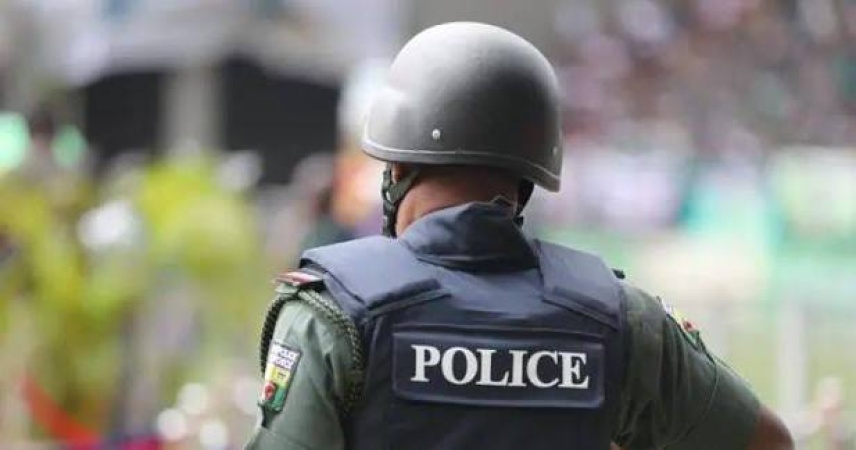
Defending the handling of the Oriire rescue operation, Ngoshe dismissed criticism over the limited public disclosure by security agencies, insisting that security operations could not be conducted in the open.
“It is not an operation that is supposed to be carried out on the pages of newspapers or on the radio or television stations,” he said.
According to him, the abductors initially targeted the school to pressure the Federal Government into releasing detained Ansaru leaders but later came under sustained pressure from security agencies.
“The service went into other activities, especially the arrest of their own leaders, their own assets, like their parents, their wives and their children. All of them are collaborators.
“Upon this happening, the terrorists now opened communication with the service and asked what needed to be done, and they gave those conditions. Those conditions were denied flatly.
“The terrorists were then put under pressure. The pressure was transferred from government to them,” he said.
Ngoshe claimed the security agencies isolated the kidnappers, cutting off access to food, weapons and informants before surrounding their location.
“They were denied access to food. They were denied access to weapons. Their informants were taken out and used as assets.
“They saw that they had no option other than to surrender,” he said.
He added that after the victims were released, security forces engaged the kidnappers.
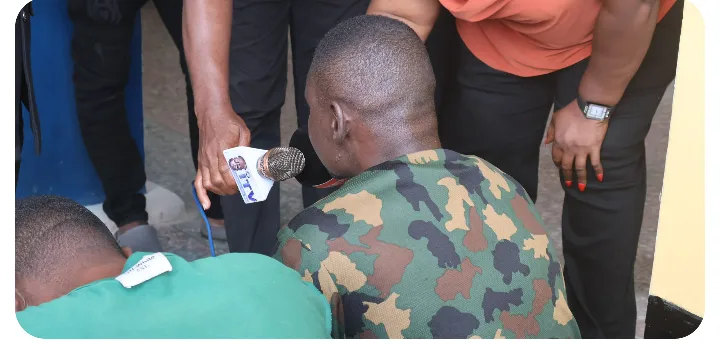
“Some of them were eliminated, and about four of them were critically wounded and picked. The four that were critically injured died in hospital, while the others are being processed for prosecution,” he said.
On concerns about political interference in security operations, the retired DSS officer stressed that effective leadership was key to ensuring professionalism.
“The whole thing boils down to leadership of these services.
“I am a DSS retiree. I can speak for the DSS. I knew the Director-General from when we started as young officers. He has been an operations man through and through.
“He knows the implication of allowing political considerations to outweigh security considerations. His interest is security. His calling is security. His expertise is security,” he said.
Ngoshe urged Nigerians to support security agencies with patience and cooperation.
“This practice of, once anything happens, and everybody goes to the high heavens to call for immediate action, ‘release this, do this, do that,’ on security is not helping matters.
“It is not done like that. If it were that easy, no Nigerian would be in captivity for any reason. But believe you me, a lot of effort needs to be put into it. A lot of understanding on the part of Nigerians needs to be given,” he added.
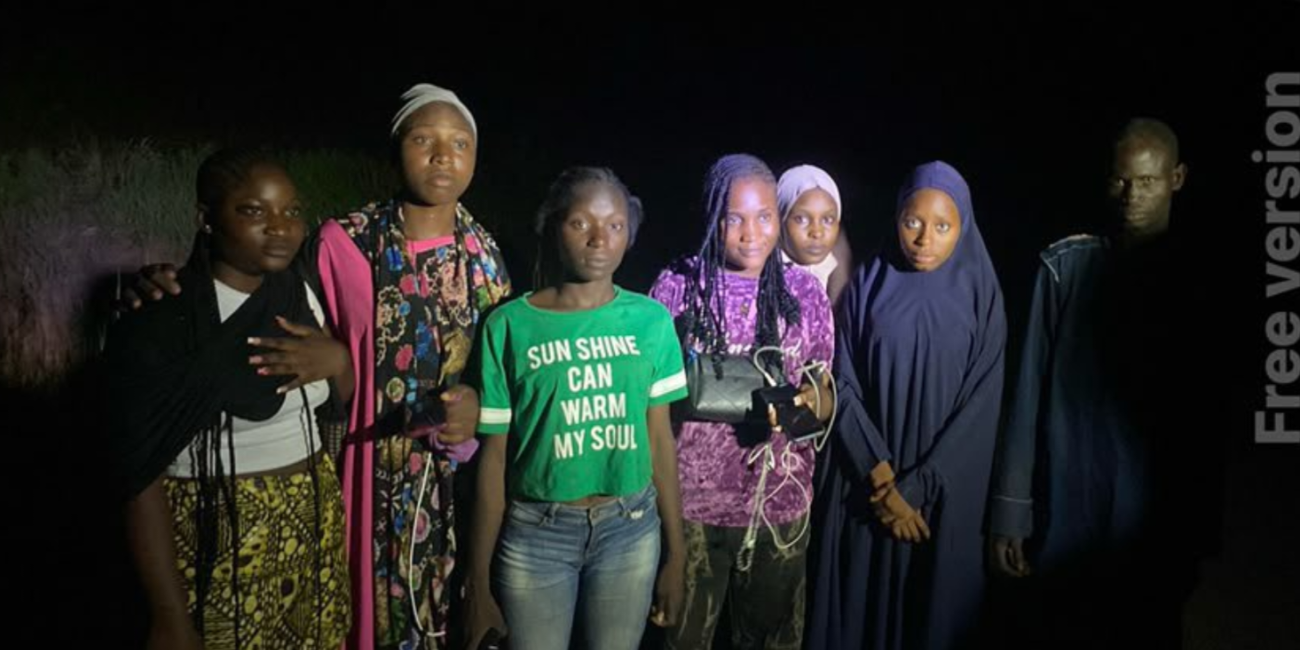
The comments come days after the Federal Government announced the rescue of all pupils and teachers abducted from Community High School, Oriire, Oyo State, following a 56-day intelligence-led operation.
The victims were reunited with their families on Tuesday after receiving medical treatment and psychosocial support. (PUNCH)