ADAD
ADAD
Updating your news feed...
NEWS EXPRESS is Nigeria’s leading online newspaper. Published by Africa’s international award-winning journalist, Mr. Isaac Umunna, NEWS EXPRESS is Nigeria’s first truly professional online daily newspaper. It is published from Lagos, Nigeria’s economic and media hub, and has a provision for occasional special print editions. Thanks to our vast network of sources and dedicated team of professional journalists and contributors spread across Nigeria and overseas, NEWS EXPRESS has become synonymous with newsbreaks and exclusive stories from around the world.








Loading banners
Loading banners...

.webp)
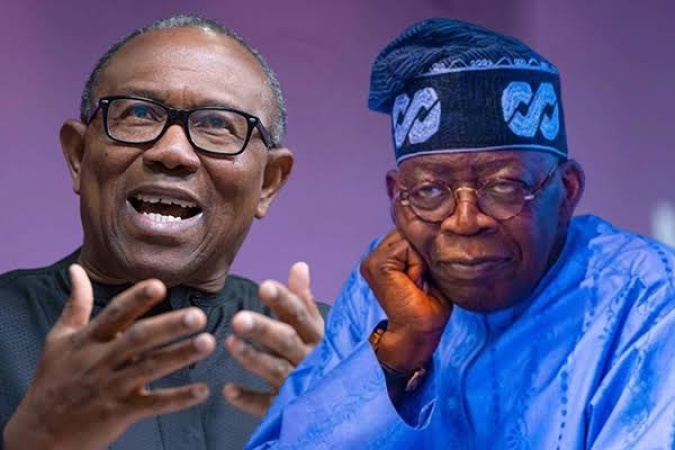
The presidential candidate of the Nigeria Democratic Congress (NDC), Peter Obi, has said Nigerians who had thriving businesses before President Bola Ahmed Tinubu took office in 2023 have now been pushed into hardship, with some reduced to selling kuli-kuli to survive.
Obi made the remark during an interview with Chude Jideonwo published on Wednesday, while reacting to claims that the movement behind his 2023 presidential bid had lost momentum.
He said support for his political movement had instead grown, arguing that more Nigerians had become disillusioned after seeing the outcome of Tinubu’s administration. According to him, many of those who backed the president based on what they believed was his experience and past record had now changed their views.
“Those who jumped into, in quotes, some experiential thing, ‘Oh, this man did this, this man did this’, I was going to create the future. I’ve seen that the whole thing was a mess,” Obi said.
The former Anambra State governor said the hardship across the country had made it impossible for anyone to credibly claim that things were improving.
“Nobody, nobody can tell you things are moving well. What are they going to do now?” he asked.
Obi said businesses that were functioning before Tinubu assumed office had collapsed, leaving many owners struggling to survive.
“Those who had business when he came into power have collapsed. They are now the people who are selling kuli-kuli?” Obi said.
He added that the economic situation had also shaken those who once defended the current administration, saying many Nigerians were now judging the government by the realities they were facing.
Obi maintained that the enthusiasm behind his 2023 presidential campaign had not faded, insisting that his support base had expanded as more citizens reflected on the choices made during the election.
“My fellowship has increased because those who jumped into, in quotes, some experiential thing… I was going to create the future,” he said.
The former presidential candidate also took aim at the Federal Government’s “Renewed Hope” agenda, saying the country had gone backwards since Tinubu came to power.
“You’re talking of the Renewed Hope. It had become hopelessness when President Tinubu came into power,” Obi said.
He said poverty, hunger and insecurity had deepened under the current administration and blamed the situation on poor leadership.
“Eighty-seven million Nigerians were living in poverty. Today, it’s one-fourth,” he said.
Obi further claimed that Nigeria’s position on the global hunger index had worsened under Tinubu’s government.
“We were number five below where we are today in hunger list. We’ve increased,” he said.
He said the country’s challenges were no longer distant concerns but visible realities confronting Nigerians daily.
“Everything has gotten worse. Like I said before, we’re no longer talking of ghosts walking around. You can see where we’ve gotten,” he said.
Obi listed insecurity and worsening economic conditions among the major problems facing the country, saying the government had failed to bring the relief it promised.
“Which hope are they going to renew again? You can’t renew failure, and that’s it,” Obi said.
Speaking further in the interview, Obi defended his relationship with former Kano State Governor Rabiu Kwankwaso after being asked about his alliance with him despite criticism of Kwankwaso’s political structure.
Responding to a question on whether Kwankwaso’s structure was a “structure of criminality”, Obi said the former governor was one of the politicians he knew who genuinely cared about the poor.
“Kwankwaso is one politician that I can say it anywhere who cares for the interest of the poor.
“He believes in pulling people out of poverty. He believes in training a child of nobody to become something, and that for me aligns with my position,” Obi said.
Obi said education and human capital development remained central to any serious plan for national growth, stressing that countries that made economic progress did so by investing in people rather than focusing only on physical projects.
“Truly, the biggest driver of development is education, human capital. It is not physical infrastructure, it’s human infrastructure,” he said.
He pointed to countries such as China and Malaysia as examples of nations that developed by prioritising education and human capital.
“That’s what the Asian Tigers did. That’s what the Chinese did. That’s what Malaysia, that’s what everybody did,” he said. (TRIBUNE)