ADAD
ADADUpdating your news feed...

NEWS EXPRESS is Nigeria’s leading online newspaper. Published by Africa’s international award-winning journalist, Mr. Isaac Umunna, NEWS EXPRESS is Nigeria’s first truly professional online daily newspaper. It is published from Lagos, Nigeria’s economic and media hub, and has a provision for occasional special print editions. Thanks to our vast network of sources and dedicated team of professional journalists and contributors spread across Nigeria and overseas, NEWS EXPRESS has become synonymous with newsbreaks and exclusive stories from around the world.






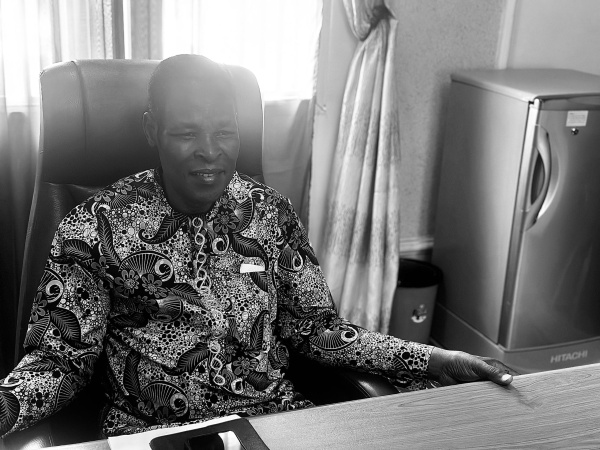


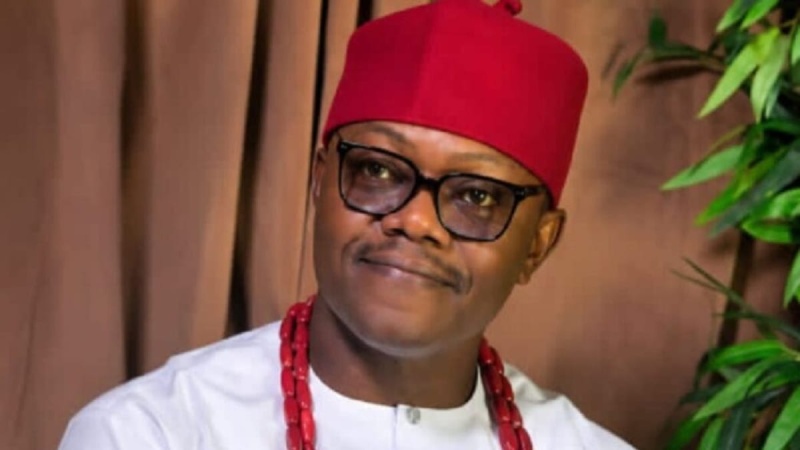
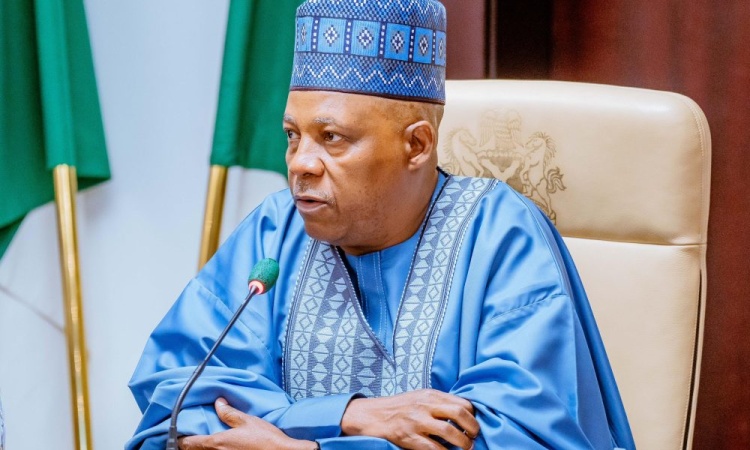
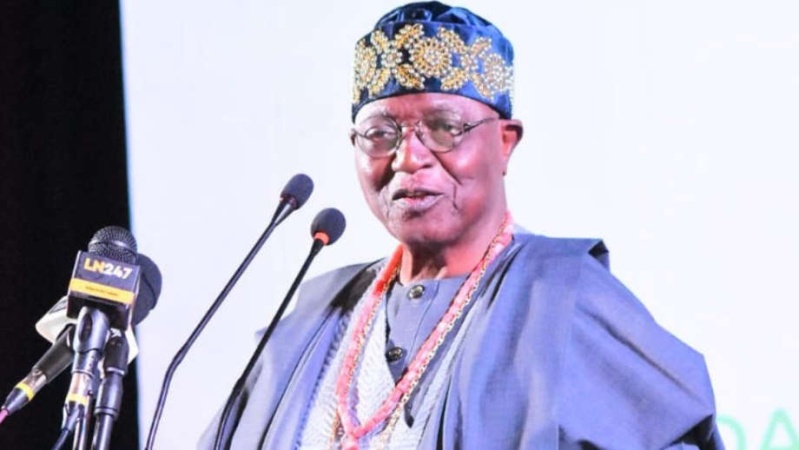


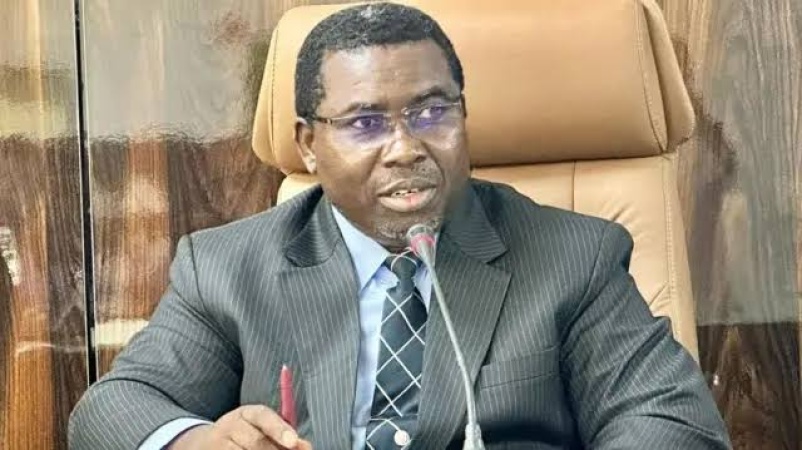
INEC Chairman, Prof Amupitan
Chairman of the Independent National Electoral Commission (INEC), Prof Joash Amupitan said on Wednesday that the much talked about percentage of low voter participation may not be correct as the current register which the commission has continued to build on still contained the names of people that have died.
Amupitan said the current register of voters has existed since 2011 without the necessary clean up to remove the names of such Nigerians, adding that Nigerians have often refused to come forward for claims and objections each time the commission calls for it
He said, “You can just flash your mind back. Even family members that you know that have died, whose names were on the register. And who has been counted in terms of percentage of voters’ turnouts.
He said “before 2011, when technology was beginning to play a major role, what used to happen when there was no digital capturing of voters was that somebody can write 50 names and just give you those names to register. Such names may not be existing persons. Those names are still on the register.
“What we can do is claims and objection. But people don’t come out in their various polling units to show that, oh, this person has died. This one is not in our community. This is the type of engagement that we need to push hard”.
He disclosed that the commission was battling what he called a silent, dangerous enemy in the electoral ecosystem, including voter apathy and deep-seated cynicism, saying “we see it in the off-cycle polls where turnout does not match the energy of our national conversations. We also see a sophisticated, orchestrated wave of fake news and disinformation designed to make the ordinary Nigerian believe their vote will not count”.
The INEC boss said further that the commission cannot build a robust democracy in isolation, saying “when we look at the landscape of our nation today as we prepare for the 2027 General Election, it becomes immediately clear that INEC cannot build a robust democracy in isolation. We can purchase the finest Bimodal Voter Accreditation System (BVAS) machines, we can optimise the INEC Result Viewing Portal (IReV) to international standards, and we can map out the most logistical routes for material deployment.
“But all of these technological and administrative triumphs mean nothing if the citizens remain detached, uniform, cynical, or completely uneducated about the power of their votes.
“This is where the National Orientation Agency comes in. The NOA is, without a doubt, Nigeria’s premier organization for civic orientation. While INEC is the umpire that sets up the field and manages the game, the NOA is the custodian of the values that make the players and the spectators respect the rules. You speak the languages of our people, you understand their local fears, and you know how to navigate the cultural nuances that shape public opinion.
“This is consistent with your duties and powers under section 3 of the National Orientation Agency Act of 1993. Therefore, our partnership with you on voter education is not a secondary option; it is an absolute necessity.
“We also see a sophisticated, orchestrated wave of fake news and disinformation designed to make the ordinary Nigerian believe their vote will not count. Together, INEC and the NOA must rewrite this narrative. We need to co-create a decentralized, grassroots voter education campaign that goes beyond simply telling people when to vote. We need to teach them why their vote matters and how our new legal and technological safeguards protect their choices.
“We must look the rural farmer, the marketplace woman, and the disillusioned urban youth in the eye and explain to them, in the language they understand, that because of the current technological infrastructure, the era of snatching ballot boxes or rewriting results manually is gone.
“We do not have to look far to see the practical validation of these upgrades. The recent February 21 Federal Capital Territory (FCT) Area Council elections and the June 20 off-cycle Governorship election in Ekiti State served as critical, real-world stress tests for our machinery.
“In both outings, our operational achievements were undeniable: we recorded over 90 percent early opening of polling units, impressive biometric authentication via the BVAS, and exceptionally swift, transparent result uploads to the IReV portal. Administratively and technologically, the template is working.
“Yet, these very same elections brought a sobering discovery to the fore—one that underscores why your visit today is so timely. Despite our operational precision, both the FCT and Ekiti polls revealed a persistent, deeply concerning undercurrent of voter apathy, alongside widespread confusion among urban newcomers regarding local polling unit splits and registration transfers.
“This is a clear indicator that while our technology is moving forward, civic familiarity with the evolving system is lagging. It is a loud diagnostic signal that far more needs to be done in the area of intensive, deep-rooted voter education, and it proves that we cannot afford to wait until the eve of the 2027 polls to start talking to our people.
“As we look toward the 2027 timelines —with our Presidential election firmly set for January 16 and Governorship polls for February 6— we must begin the heavy lifting right now. This is the moment to institutionalize our collaboration. I want to see a strong working relationship between INEC’s Voter Education department and the NOA’s communication teams.
“Let us build joint campaigns against the toxic menace of vote-buying and misinformation, which threaten to contaminate our democracy. Let us work together with your field officers with the accurate technical knowledge of INEC’s operations so they can act as trusted ambassadors of truth in their respective communities”.
Amupitan stressed that the National Orientation Agency was created as the custodian of the values that makes players, saying “you speak the language of our people, you understand their local affairs. And you know how to navigate the cultural analysis that shape public opinion.
“Over the years, even before I became INEC chair, I discovered that even among the so-called hierarchies of class of democracy that we have identified, INEC is at the top. Political parties have their own role to play In societies, media, and so on and so forth.
“But even in the political realm, among the political parties, what has played out is that there seems to be no democratic culture that is supposed to be built over the years. Culture in the sense that there are certain things that politicians and actors should know that I cannot and I must not do this.
“Even among the politicians themselves. The election should not be a war. It should not be a battlefield where people go, and then you begin to kill yourself over nothing. So, that is very important.
“In fact, you’re talking about trust. The trust deficit is zero. Very poor as it is now. And we can continue to do much. You came in and you acknowledged that we have changed a lot of things relating to elections in this country”.
The INEC Chairman said the even though the 2026 Electoral Act has made provisions for downloadable PVC, obtaining it is not automatic, adding that it is not every PVC that can be downloadbale.
He explained that only those whose PVC were missing or defaced can be downloaded, adding that before such, the owners of such PVC must apply to the Commission three months before the election.
He said “as we look at the 2027 timelines, the presidential election, National Assembly election on January 16th, and the governorships and houses of assembly elections on February 6th, we must begin the heavy lifting right now. This is the moment to institutionalise our collaboration.
“Let us build strength functions to process the analysis of both violence and misinformation. One of the major problems we have to deal with is that some of the observers are like bloodhounds. Some are watchdogs”.
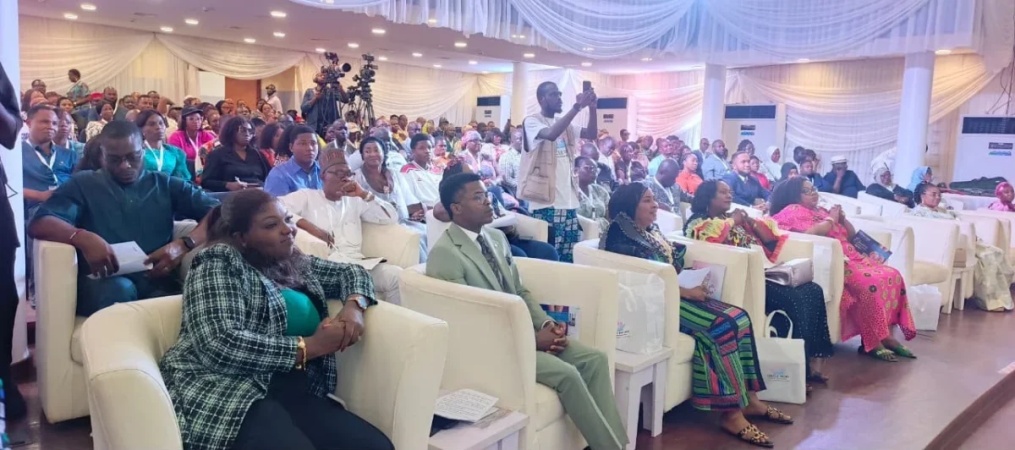
The Director General of the National Orientation Agency, Mallan Lanre Isa Oniru said there has been drastic reduction in genuine complaints from the last three elections, stressing the need for enhanced civic engagement to deepen the electoral cycle.
Oniru describe democracy as the bedrock upon which the country either survives or fails, saying “if there’s anything that we cannot play with, it is the issue of civic rights regarding deciding who will be our leaders and who should not be our leaders. It is just the right of the citizens and we all have a responsibility to protect and ensure we also promote it.
He said the participation of young Nigerians in the 2023 general elections came with its own drawback, with a lot of time dedicated to issues that should never be discussed. Because there was so much knowledge which is very dangerous for the country. (The Nation)