ADAD
ADAD
Updating your news feed...
NEWS EXPRESS is Nigeria’s leading online newspaper. Published by Africa’s international award-winning journalist, Mr. Isaac Umunna, NEWS EXPRESS is Nigeria’s first truly professional online daily newspaper. It is published from Lagos, Nigeria’s economic and media hub, and has a provision for occasional special print editions. Thanks to our vast network of sources and dedicated team of professional journalists and contributors spread across Nigeria and overseas, NEWS EXPRESS has become synonymous with newsbreaks and exclusive stories from around the world.






Loading banners
Loading banners...

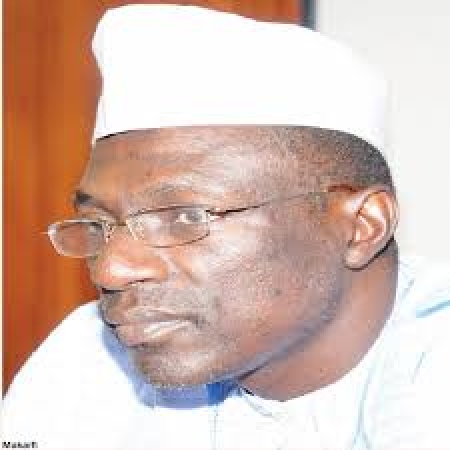
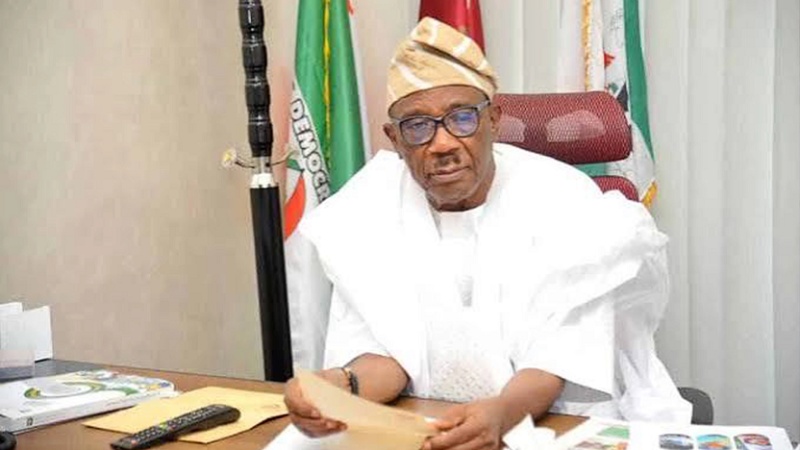
Ex-Gov Makarfi
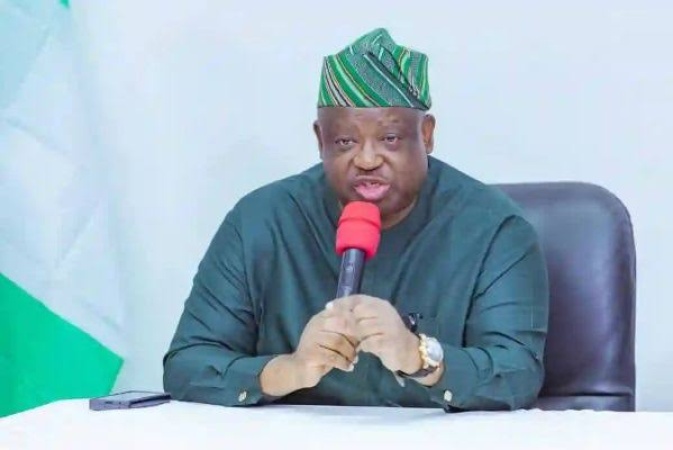
Former Kaduna State governor and former Chairman, Peoples Democratic Party (PDP) National Caretaker Committee, Senator Ahmed Mohammed Makarfi, speaks with journalists on the state of the nation, security, the PDP crisis, deregistration of political parties, 2027 elections, among others. Our Northern Bureau Chief, MUHAMMAD SABIU, was there and brings excerpts.
How do you assess the state of democracy and governance in Nigeria today?
Well, this is the longest period of uninterrupted democratic rule we have had in the country. In itself, that is an achievement. However, what democracy has delivered to the people is also a matter of concern, and people have different opinions on that. If we take 1999 as a starting point, we should be seeing continuous improvement. Unfortunately, political parties have become something else, governance has also become something else, and security has not improved, especially since security challenges became more pronounced. That is not to say that democratic governance from 1999 to date has achieved nothing. It certainly has recorded some successes. However, the conduct of politicians and the behaviour of some people in government are issues that raise serious concern. Our inability to either stop or drastically reduce security challenges remains a major problem.
People talk about economic issues and other concerns, but in my view, once substantial progress is made in restoring security, economic activities will blossom and economic hardship will lessen. If I were to set priorities, security would come first because it has positive multiplier effects on virtually every other sector. The key question is: What should we do about these issues? What should those in government do? What should politicians, traditional rulers, religious leaders, and sociocultural leaders do? My personal view is that there are certain issues that should never be politicised, whether by government or by those outside government. Once such issues are politicised, valuable time is lost in addressing them effectively. Security, in particular, should not be politicised. If people outside government raise concerns or offer suggestions on security matters, government should not dismiss them as mere politics. Likewise, those in opposition should not be happy about insecurity simply because they believe it could improve their electoral prospects. That would be selfish. Security is a matter that affects everyone. It should unite us while we maintain our different political beliefs and aspirations. In my opinion, Nigeria has reached a point where we need to collectively define our national priorities and address them together, while still maintaining our separate political identities and democratic competition. It is a very broad question, but for now, that is my assessment.
Nigerians have been critical of President Bola Tinubu’s handling of security and political issues, particularly as the country moves towards the 2027 elections. How would you rate the President’s handling of these challenges? Secondly, what is your view on the emerging political realignments and activities of political parties ahead of 2027?
The Issue of security should be viewed as a national challenge rather than a partisan matter. Every government should be assessed based on its efforts and results in addressing insecurity, but criticism should be constructive and aimed at helping the country make progress. As I have consistently maintained, security remains the foundation upon which economic growth, social stability, and national development depend. Therefore, government must continue to prioritise it and be open to useful suggestions from all stakeholders. Regarding the politics of 2027, it is natural in a democracy for political parties and political actors to begin consultations, alliances, and realignments as elections approach. However, political activities should not distract government from its primary responsibility of governance. The focus of all political parties should be on presenting credible alternatives, articulating clear policies, and addressing the concerns of Nigerians rather than merely engaging in political manoeuvring. Ultimately, Nigerians will judge political parties and leaders based on their performance, credibility and commitment to addressing the country’s challenges.
How do you view the issue of deregistration of political parties and the manner in which the government is handling security issues?
Well, first of all, on the handling of the security issue: As someone who was a governor and handled security matters on a smaller scale, I know not everything comes into the public domain. So, without fully knowing those things that are not in the public domain, it is difficult to properly assess any leader. Because there could be things that are being done but cannot be made public now. But let’s assume they are there and give the benefit of the doubt. The reality is that, on the ground, the security challenges are becoming more widespread. So, for me, rather than criticise, it is better to advise on the way forward because criticism itself doesn’t solve a problem. For me, the President, working in conjunction with state governments, should declare a national emergency on security. Governance should change so that the number one, two, and three priorities are security, in all facets. You can’t be talking about rural electrification now, or so many other things, when we have these security challenges. For me, the government should commit the next year or two to dealing with security challenges and devoting resources to effectively address them. That is not to say that some other responsibilities of government will stop, such as salaries, pensions, and some investments in education and health. But beyond those major issues, I think government resources should be purely targeted. Because if you don’t have the resources, you can’t deal with security. You can’t deal with the security issue without massive manpower enhancement in numbers, training of security forces, equipping them, and all other logistics. This, in my opinion, should be worked on by the President together with the governors because the government should be working together with the governors. The states get as many, if not more, resources at the local government level than the federal government. So if you just shift it to the central government alone, that will not work. It has to be a combined effort. And the strategy for dealing with the security challenges, I think, is very important. It should be reviewed. We shouldn’t be reading, “We have a repeat attack, we have a repeat attack.” The report should be, “They are running away, we have cornered them, we have arrested them.” But you can’t achieve all of this if we don’t have everything that we need, reasonably, in terms of manpower, training, and equipment. And you cannot achieve this if you are trying to run a normal government as if you don’t have this challenge, doing almost everything at the same time. It’s not possible. It’s almost a state of war, if not one. So let’s consider it as such and deal with it as such. That is what I can say on that. Rather than blame here, blame there. Blame will not help us. We should think of how all of us can come together. And there should be no politics in this.
Secondly, on the issue of INEC, I have not read or heard where INEC is saying it is deregistering political parties. Yes, the High Court made a judgment, and immediately, the Court of Appeal made a pronouncement. Be that as it may, I don’t support the deregistration of these political parties. Even if there is any legal reason, it has come too late, and people will be right to read political meaning into it. It will add to our interest in making INEC better. My personal view is that no political party should be deregistered. All those who have complied with the INEC-published guidelines in their activities should be allowed to participate in the 2027 general election. That is not to say that some political parties or political actors have not been reckless. Reckless in the sense that, from what we hear and read, we know the law and the regulations of INEC, we know the Electoral Act: there must be primaries to nominate. Even if it’s one person, you do primaries to affirm. When there are two or more, you do primaries to elect. But from what we have read, some political parties thought they could just do what they liked and not follow the rules. In my opinion, this also should not be tolerated. So this is the two-way approach I take, but I don’t support deregistration.
Recently, some lawmakers from the opposition at the House of Representatives called on the President to suspend all political activities until he tackles the issue of insecurity in the country. And they also asked him that, in case he fails to fix the issue, he should step aside?
Well, they too should suspend political activities. What is political activity? It is governance we are talking about. And that’s why I addressed the matter that in governance, there should be priorities. And the priority should be security. We should declare a national emergency on security and devote all that is required to effectively deal with the matter. I do not want this thing politicised. If we politicise it, we will not achieve results. That is just the truth of the matter. But we have a big problem and we have to do something about it. And for us to do something about it, we must act differently from the way we have been acting. That’s why I said we cannot run government as if everything is normal. Things are not normal. So, a national emergency declaration on security, and then provide all required resources, necessary training, manpower, equipment, and all that it takes to deal with it.
And do you think the current administration has enough time to address this issue before the 2027 general election?
It’s not about this administration. You cannot tie this to a term of administration. Because that could be part of the problem when a government comes and thinks that what the previous government was doing should be set aside. No. Governance is a continuous process. So wherever this current government takes it, if it is the one that returns, it will continue. If it is not the one that returns, the one that takes over will continue. And that is the wisdom of a national emergency on this matter, so that all political actors, in government or out of government, are part of it. So we’ve taken politics out of it.
As a stakeholder in the PDP, what is the situation in the party now because we have the Turaki and Wike camps?
Right from the beginning, right from before the national convention, along with some other people, I had the belief in promoting a give-and-take situation to avoid crisis. In certain situations, you cannot have it exactly the way you want it. But life is give and take. So I am surely not a factional person; I am a PDP person. What I work for is PDP. But I am also a lawful person. This matter is not about Wike or the new forum. It is about what, at any point in time, the law says. And it is not also your personal interpretation. It is about the interpretation of the regulator. And if you are not happy with the interpretation of the regulator, you go to court. And if that interpretation is changed, you abide by it. But if a regulator says this is the position, and you disagree with it, and you go and act on your own, you cannot set your own law and regulation. You’re dealing with elections. All political parties, including PDP, must comply with the law and regulations. You cannot take yourself out and say you will do as you choose. And that is, unfortunately, the mistake some of us have made, we who have experience in this. I do not have a problem with people making leadership challenges. They have the right to do so until whatever it is finally settled. I am not against that. So leadership challenges should not make party followers suffer. There was a leadership challenge when I was chairman of the National Caretaker Committee, and we operated with a sense of responsibility, a great sense of responsibility. At the time, INEC recognised my leadership. Every chapter of the party, for matters of election, whether they were with Makarfi or they were with Modu Sheriff, they were dealing with us because it was a matter of election and it had to comply with what INEC recognised. At the time INEC recognised Modu Sheriff, every matter of election was referred to Modu Sheriff. Even if people came to us and said, “No, no,” we would say, “We’re not going to waste your time; better go and deal with them.” We had the leadership issue and the operational issue that had to do with the law and regulation. And that is why nobody suffered in relation to elections during that time. And that’s how it was easy to reconcile after the final judgment. We did not separate, we did not create, we did not divide structures, we did not make people go and vote. We did not go against any subsisting position of INEC. No. If we all love the party and our party people, we say, look, everybody should go and comply with INEC’s directive. But we are continuing with our legal issues on leadership. And if we succeed, fine and good. If we do not succeed, we do not make people suffer.
But what is happening now is that if our directive is tied to such a leadership, and another group also makes some people go through a process that we will not accept, at the end of the day, you have made people suffer. You have made party members suffer, which is avoidable. Now, the way we are going is either that it leads to a situation where PDP doesn’t have valid candidates at all, or that one set of so-called candidates lose their money or waste their time. If we love the party, why should we take that path? We shouldn’t take that path. Go on with the legal challenges on leadership—that’s not a problem. If at the end of the day there is a legal pronouncement, everybody will accept it. But in between, we should not place party men and women in a position where they will be injured. And the way it is now, definitely some party men and women will be injured. And it is because of the actions of some of us. At the end of the day, reconciliation is the way out. Right from day one, before the convention in Ibadan, everybody who knows me knows that some of us were for reconciliation, give-and-take. My position has not changed. A lot of water has passed under the bridge. It would have been better then than now. But let’s do it for the future of the PDP. There are things we cannot undo, but there are things we can equally do.
Does the PDP have a future?
Absolutely. Among all the political parties, I think the PDP, because it is deep-rooted and not built around any individual, has a brighter future. At the presidential election in 2027, we really don’t have to go far as a party to understand the reality. PDP members may vote differently among the other presidential candidates. That’s the truth of the matter. So we can’t pretend about that. But this is a developing situation, and there cannot be one uniform position. It’s not possible. Even in one particular state, there can’t be one uniform position. I’m talking of the presidential candidates. It depends on the engagement of all the other presidential candidates with all the players. So it’s not possible the way things are on the ground. That is the truth of the matter. But time will tell how this will develop. So it is going to be the same in other states. But when you come to state and other elections, in many places the PDP will perform well. People will largely vote for individuals. Of course, people will have different reasons for voting. It’s not one single reason. Some people will vote because of party affiliation. Some people will vote based on religion or ethnicity. Some will vote simply because they don’t like somebody. So voters have different reasons for voting for Mr. A or for Mr. B, as the case may be. It’s not something that you can sit down and define. So those in the race have a lot of work to do. Anybody who thinks he will sit back with victory already in the bag is underrating Nigerians. I’ve talked as much as I can on the issue of the presidential election. But as I said, when you come to governorship, Senate, and House of Representatives elections, we have a lot of chances in many places. We are also following events and assessing things. As time goes on, our chances will be improving by the day.
There are those who think the next election may be rigged.
Well, only a lazy mind, right from the beginning, may say the election will be rigged. Why should you just walk away from the election? Work to win, work to prevent rigging, but why should you just go on to say “things may not be equal”? No, things are equal, except if we allow them to be unequal.
Sir, when Vice-President Kashim Shettima came to Kaduna the other day and told you that you are wasting your time in the PDP, indirectly inviting you to the ruling APC, how did you feel about that comment?
A friendly jab. That Is all I have to say.
The present Minister of the Federal Capital Territory is a member of the PDP, and today he’s working for President Tinubu. Apart from that, we have heard that you and Sule Lamido are working for Wike. We want you to clarify this issue.
I have clarified it. We are not with any individual. We are with the law. We cannot go against the law and what INEC recognises or we are wasting our time. We are talking about elections. You must follow the law and what INEC is ready to accept. You cannot make your own law and your own regulations. Then you are not in Nigeria. If you don’t like the law, challenge it. When you have a positive judgment, fine. So, you see, the issue is that you are saying we are doing this because of somebody. No. It is because that Is what the law currently recognises. Except if you want to leave the party, we are just not going to participate. As long as you want to participate, okay, we hear and read that there are two sets of candidates. INEC is working within the ruling of the court. It is those elected at the Abuja convention who can present candidates to INEC. People in Kaduna have still been patient with our leadership. Do you think I will lead them in a direction where they cannot participate in the election just because somebody will say I am with somebody? Then I would have been irresponsible. If I fail to make our people validly participate in elections, then I would have failed. Whether they win or do not win is a different issue. And the whole essence of politics is participating in an election and winning. Why should I, because of being alleged to be with this person or that person, lead my people in a manner that they cannot participate? So it has nothing to do with anybody. It has to do with respect for the law and regulations existing at any particular point in time. Tomorrow it may change. I will follow what it says. Nothing personal about it. But until it changes, I cannot be disobedient to the law and regulations.
Your Excellency, if that is the case, do you not think it will give room for the votes of Nigerians to be divided and work to the advantage of the incumbent?
Look, they will be divided among the candidates. How many people are contesting? The leading candidates, no matter what—forget their number. Why didn’t the opposition come together? I’ve read that in other countries, opposition parties come together. So why did the opposition not come together so that the votes are not divided? We in the opposition have our own faults sometimes. It becomes, “It must be me.” When it comes to “It must be me,” then you are part of the problem. The opposition should have put personal ambition aside, come together, find a suitable figure—whoever that person may be, from the North or the South—and support that person. Then you consolidate forces. When you create a situation where the votes will be divided, then the votes will indeed be divided.
What is the position of PDP in Kaduna now?
You see, for me, it’s an open race. It depends on how people work for it. Since I want my party to do well and to have a good chance, it is not something I am going to start telling you. This is not a game where you just go and talk. I prefer to be underrated in anything I do. But I can tell you this: voters, not just in Kaduna but in some parts of the country, largely vote for individuals. So it’s up to the individuals to work hard. Those who work hard will get support in any way that we can. It’s an open race—that’s all I can say.
Isa Ashiru, described as your political godson, defected to ADC. What is your reaction to that?
No, I don’t have a reaction. That is a personal decision. I’m in the PDP, and it is the PDP that I know and will work for.
Your Excellency, if you were to meet the President, what would be your advice to him in terms of the current state of the economy in the country?
Can you tell me where I can meet him so that I can go to him? (Laughs) Well, you see, all the leading presidential candidates, when you look into their political policies, are virtually the same. Some may even be more extreme. The problem is implementation. When implementing major reforms, the weaker segments of society must be protected. So my advice is that people’s cries and complaints should be listened to. It is not politics. Anything that can be done to support the weaker segments of society should be done. That is the work of technocrats. If you are a professional or a technocrat and you cannot develop a workable policy and implement it in a way that supports the weaker segments of society, then you are not fit for that office. Political office holders occupying key positions in this area should be judged on performance. It is not even a year; it’s a matter of months. How are you doing? If you are achieving something, you stay. If you are not, bring in a better person. Government should begin to function this way. If you want to do favours for individuals, you can do so in different ways. But there are certain areas where there should be no favours.
In the future, do you hope to vie for any elective office?
God willing, in August I will be 70. I do not belong to the class of people who believe that it must always be them, that they must always be there, that they must push themselves forward. I do not belong to that class of people. I will be satisfied contributing in any way that I can and letting more vibrant, younger people be given the chance to lead us. That is my personal position. (Sunday Tribune)