
Updating your news feed...
NEWS EXPRESS is Nigeria’s leading online newspaper. Published by Africa’s international award-winning journalist, Mr. Isaac Umunna, NEWS EXPRESS is Nigeria’s first truly professional online daily newspaper. It is published from Lagos, Nigeria’s economic and media hub, and has a provision for occasional special print editions. Thanks to our vast network of sources and dedicated team of professional journalists and contributors spread across Nigeria and overseas, NEWS EXPRESS has become synonymous with newsbreaks and exclusive stories from around the world.
























Despite the lofty goals of the Federal Government’s Safe School Initiative, the incidences of abduction in schools and other educational institutions in Nigeria have increased tremendously, threatening the country’s national development. Reports have it that in the month of May alone, over 100 students were kidnapped and yet to gain their freedom. Sadly, while other children were celebrating the Children’s Day on May 27 in their homes, amusement parks and recreation centres, their abducted colleagues – kids as young as two-years-old are in the cold forest with their captors, uncovered, afraid and scared. In this report, GBENGA AKINFENWA echoes the question of parents, teachers and concern Nigerians on why the Safe School Initiative is failing Nigerian students.
His frenzied tone, followed by the keen sobbing and free flow of tears, few minutes before he was gruesomely slaughtered echoed. His facial expression, coupled with the two lines of tears were enough to force tears down the eyes of hardhearted individuals.
Mr Michael Oyedokun’s only sin to have died in such a traumatic way –being beheaded was the fact that he was a teacher. He is one of the victims of the coordinated attack on the three schools in Oriire Local Council, Oyo State, where many students and teachers were abducted by bandits recently.
The bandits invaded Baptist Nursery and Primary School, Yawota; Community Grammar School, Ahori Esinele; and L.A. Primary School, Esiele, at about 9:30am on Friday, May 15, 2026, leaving in their trails, sorrow, tears, gnashing of teeth and indelible mark of terror.
In recent times, schools and educational institutions have become soft targets of these bandits, terrorising, maiming, abducting and killing students in separate coordinated attacks, while the law enforcement agents are becoming helpless.
Few weeks before the Ogbomoso incident, April 27, to be precise, five students of the Gateway Polytechnic, Saapade, Ogun State, were reportedly abducted by armed criminals around the community.
The students were rescued by the Ogun State Police Command, according to their spokesperson, DSP Oluseyi Babaseyi.
Acting promptly, a patrol team was deployed to the scene where an ash-coloured Toyota vehicle was discovered abandoned.
Babaseyi disclosed that further examination of the scene revealed an identity card belonging to a student of Gateway Polytechnic, Saapade, confirming that the occupants of the vehicle were students.
He said: “Acting on this directive, operatives of Isara Area Command, Ipara Division, SWAT, Anti-Kidnapping Unit, Violent Crime Response Unit (VCRU), Quick Response Squad (QRS), and OP MESA were swiftly mobilised and conducted coordinated bush combing and tracking operations along suspected escape routes.
“The sustained operational pressure led to the successful rescue of the five victims from the custody of the abductors on April 28, 2026. The victims were immediately evacuated, debriefed, and taken for medical attention due to conditions sustained while in captivity.”
Few days ago, local hunters in Odeda council of Ogun State, raised fresh alarm when suspected kidnappers sent threatening letters warning that schoolchildren in several communities in the area could soon be abducted.
The hunters said the threats have created fear among residents, especially parents, as insecurity continues to spread across rural communities in the state.
According to them, the alarming development comes barely two weeks after a petrol station manager was kidnapped in the area and later released after ransom was reportedly paid.
The Chairman of the Hunters’ Association in Odeda, Festus Ogundairo, lamented that the security situation in the council area has become increasingly disturbing.
According to him, information circulating on social media indicates that armed groups have sent letters to some communities threatening to attack schools and abduct pupils. He added that some towns and villages were specifically mentioned in the threats.
Beyond these instances, it is glaring that palpable fear of insecurity is gradually enveloping schools and communities, based on reports and threats circulating on the ‘exploits’ of the dare-devil bandits.
That this development has tainted the Safe School Initiative launched 12 years ago, is to say the least as many schools have been attacked, several students kidnapped, while others were killed, not leaving out the tutors.
The Safe Schools Initiative was launched in 2014 in the wake of the Chibok schoolgirls’ abduction in Borno State.
It was introduced by the United Nations Special Envoy for Global Education, Gordon Brown, in partnership with the Nigerian Global Business Coalition for Education and private sector leaders during the World Economic Forum on Africa.
The Initiative focused on a range of safety measures including school-based interventions, community protection efforts, and targeted support for schools in high-risk areas.
At inception, the Federal Government committed $10m to the Safe Schools Fund, a figure matched by an equal pledge from the private sector.
The initiative sought to improve the protection and safety of students, family members and teachers focusing on rehabilitating the security infrastructure at schools and establishing community-orientated security concepts, transferring students from high-risk areas to safe schools and providing complementary trauma counselling and providing education for internally displaced persons in camps and communities.
The contributions from Federal Government and private sector were to be complemented by the establishment of Nigeria Safe Schools Initiative Multi- Donor Trust Fund (MDTF) for UN support, co-financing and implementation of activities pertaining to the initiative.
It seemed to have kicked-off well with some positive result because by March 2015, a total of 750 pupils were moved to boarding schools in safe parts of the country, where they were able to continue their education.
To further solidify the commitment to secure schools, former President Muhammadu Buhari in December 2019 signed the safe schools declaration ratification document.
Accordingly, the Federal Government had in December 2022 launched a N144. 8b Safe Schools Financing Plan, with a view to protecting schools from terrorist attacks, across the nation.
But as time went on, the impact waned, raising countless questions on how the funds were utilised and the strategy being adopted, especially as the bandits intensified attacks on educational institutions across the geo-political zones.
Last year, there was a report that the Federal Government was planning to review the implementation of the project, with plans to convene a national summit that will bring together representatives from all 36 states of the federation and the Federal Capital Territory.
Last February, the Federal Government took a bold step towards repositioning the initiative with the unveiling of a comprehensive plan to reinforce security across schools nationwide. The major overhaul was announced in partnership with the Nigeria Security and Civil Defence Corps (NSCDC).
The move, according to the Minister of Education, Dr Tunji Alausa, follows alarming revelations that more than 60,000 schools in the country lack adequate security infrastructure.
Alausa, who disclosed this during a visit to the NSCDC Commandant-General, Ahmed Audi, in Abuja, where both officials reviewed the country’s school security framework, said the government would move away from reactive approaches to school attacks and instead adopt a structured and sustained security strategy, particularly in vulnerable communities.
“We will move from knee-jerk responses to a continuous security presence, especially in vulnerable schools. Our children must remain safe in school, and this administration is committed to providing the resources and structure required,” he said.
The minister described attacks and abductions in schools as unacceptable, stressing that the government maintains zero tolerance for assaults on educational institutions.
He added that safeguarding pupils is a collective responsibility involving government authorities, security agencies, and host communities.
As part of the renewed strategy, Alausa announced the creation of a dedicated Safe Schools Department within the Federal Ministry of Education.
He said the unit would coordinate national security efforts, strengthen collaboration with relevant agencies, and ensure consistent implementation of safety measures.
He also revealed plans to integrate technology into the security framework, including the deployment of panic buttons and alert systems directly linked to security command centres to enable rapid emergency response.
Before this period, last December to be precise, at their plenary session, the Upper Legislative Chamber, declared a move to open a full-scale investigation into the initiative, following repeated attacks on schools and the mass abduction of students across the country.
The Chairman of the Ad-hoc Committee, Senator Uzor Kalu, warned that the inquiry would leave no stone unturned. “Since 2014, more than 1,680 children have been kidnapped, and 180 schools attacked,” he said. “It is unacceptable that schools remain soft targets despite years of funding and policy frameworks.”
The committee was mandated to conduct a thorough financial audit and summon ministers, state governors, and civil society actors to explain operational lapses.
“Every naira and every dollar spent on this programme would be accounted for,” Kalu said. “We need answers on why our schools remain vulnerable despite enormous investment and global attention.”
The probe was also expected to review the deployment of security personnel, early warning systems, and school infrastructure upgrades. Kalu stressed that the investigation was aimed at ensuring transparency and accountability, not assigning blame. “Parents deserve assurance that their children’s education is safe. We will not rest until schools are truly secure,” he said.
However, despite all the promises, declarations and projected moves, little or no impact has been made, as the matter could be likened to “motion without movement situation.”
A confirmation to this is the fact that the tragic incidents have continued to escalate, almost on daily basis. Reports have it that aside from the May 15 abduction of 47 students and teachers in Ogbomoso, Oyo State, a similar mass abduction of roughly 50 students in Borno State around the same period, and separate school attacks in Katsina and Zamfara states that resulted in the capture of numerous students and educators have sent fears down the spine of many concerned Nigerians.
The National President, National Parent-Teacher Association of Nigeria (NAPTAN), Alhaji Haruna Danjuma, who warned that the trend of this heinous act would worsen Nigeria’s existing out-of-school children crisis and deepen learning poverty, questioned the current status of the Safe Schools Initiative programme as a response to the growing number of attacks on students, notably the Chibok schoolgirl kidnappings back then, calling for immediate, practical security upgrades across Nigerian schools.
“We did not envisage a new wave of school attacks, especially in the Southwest. We thought this nightmare was over. We send our children to school to learn, not to become bargaining chips for ransom. This madness will discourage parents from educating their children and terrify students.”
He urged President Bola Tinubu and state governors to live up to their constitutional duty of protecting lives and property.
“Schools must be fenced and guarded by trained, energetic security personnel, not just local gatemen. We need to involve parents and local youths, and train students and teachers on emergency response and security tips.
“Security awareness is critical; citizens must speak up when they notice suspicious movements.”
The Founder/Chief Executive Officer of the Amazing Grace Children Rights Foundation (AGCRF), Mrs Grace Omoye, described the incessant attacks on schools and the kidnapping of students as a dangerous trend mortgaging the country’s future.
Omoye noted with concern that in the month of May alone, over 100 students had been kidnapped, questioning why governments at all levels have yet to secure their release.
She emphasised that the implications of the ugly trend extend far beyond the immediate trauma inflicted on the abducted children, their families, and teachers. She warned that the recurring violence is already instilling deep fear in Nigerian children and educators, stripping them of the peace of mind required to attend school.
Omoye said: “The government should not wait until the children of elites and notable public figures are kidnapped before providing adequate security in all schools and aggressively pursuing the release of those in captivity. As a mother, I am particularly pained to think of what these innocent children are passing through at the hands of these mindless beasts.”
However, the AGCRF boss is calling on the government to decisively address the crisis, secure the immediate release of the captive children, and reassure the nation that it has not been overwhelmed by the insecurity threatening the country’s corporate existence.
Omoye also urged corporate organisations, Parents/Teachers Associations (PTAs), and civil society to join hands in protecting Nigerian schools to safeguard the nation’s future.
An educationist, based in Abeokuta, Ogun State, Mr. Tunde Sanyaolu, said the incessant incidences have become a major threat to national development.
“In recent times, students and teachers have been kidnapped by groups seeking ransom. These incidents have created fear and uncertainty among parents, students, and educators.
This poses serious dangers to the future of the country as it seriously threatens the peace needed for the development of the country.”
He said the Safe School Initiative meant to address menace was launched with good intentions, but sadly, the policy has not achieved its main goal because attacks on schools and kidnapping of students have continued unabated.
“One of the greatest effects of school abductions is decline in education as a result of the disruption of education. Some schools have been forced to shut down after attacks, especially in rural areas. Parents are now afraid of sending their children to school. Workers in educational institutions go to work in fear. More and more students may drop out of school.
“The availability of manpower to run and sustain the country in the future is now endangered. When education is disrupted, and children are denied access to education, the country loses future professionals and skilled workers such as teachers, lawyers, engineers, technicians, and doctors among others. A nation without educated citizens cannot develop economically, politically, or socially.
“Frequent attacks on schools discourage learning and increase illiteracy rates. Some students lose interest in education owing to fear. Children who are denied education are more likely to become unemployable in the future.”
Sanyaolu stated that victims of abduction often suffer emotional trauma, fear, anxiety, and depression. “Some students, including those that are not abducted, may never recover fully from the experience. Such psychological damage affects not only academic performance, but also the medical condition and overall well-being of students, teachers, and parents.
“When schools are repeatedly attacked, citizens will begin to lose trust in government’s ability to confront the menace and provide security. Groups of people or sections in the country will be forced to find ways of providing security for themselves.
“Foreign investors may view the country as unsafe. This will not only damage Nigeria’s international image, it will also have negative impact on the nation’s economy because insecurity will discourage both local and foreign investments.
Sanyaolu hinted that the Safe School Initiative has not lived to expectation because it was “mainly created to respond to threats from Boko Haram, but over time other groups also began targeting schools. The initiative is not made strong or flexible enough to handle the growing threats.
“Another problem is weak implementation. Many schools are supposed to be fenced and given surveillance systems, and trained security personnel, but a large number of schools never got any of these. Some projects were started but were not completed.
“Necessary trainings are not being given to schools and communities on how to respond to security emergencies. The initiative depends heavily on the security system at the national level. Whereas the military and the police are overstretched because they face multiple security crises, therefore, they cannot provide adequate protection for every school in the country,” he said.
Sanyaolu stressed that the failure of the initiative has necessitated the need to intensify efforts on the creation of community policing, and local vigilantes, while traditional leaders are given visible roles with corresponding involvement of state governments.
A security expert based In Anambra State, Mr Anayo Chizoba, said the initiative struggled to achieve its goal because the measures are reactive, not preventive; inconsistent security deployment; under-resourced and overstretched security forces; poor intelligence and community engagement; and focus on politics over implementation, among others.
Said he: “Many state governments respond to attacks by shutting down schools, which is actually a wrong method to adopt. Shutting down schools definitely stops learning, but doesn’t address the root cause. It also signals that the state can’t secure its schools, which emboldens attackers. Security presence in the school are often inadequate, they are either poorly coordinated, or withdrawn after initial response.
“The Police, NSCDC, and vigilantes are stretched across multiple fronts – banditry, insurgency, kidnapping. Schools in rural/northern areas often lack perimeter fencing, guards, or early warning systems. Attacks are often preceded by threats, but intelligence doesn’t get to schools in time. Where community-school-police collaboration is weak, early warnings are missed.
“A good number of people, especially the opposition are of the opinion that government prioritises politics over urgent security fixes. Based on past experiences, policies exist on paper, but implementation, funding, and accountability lag.”
To make the Safe School Initiative effective, Chizoba advised the Federal Government to ensure proper and consistent funding and rollout, not immediately after high-profile attacks have been recorded.
“As part of the strategy of the initiative, government should ensure there are perimeter fencing, controlled entry points, alarm systems, and safe rooms in high-risk areas; focus should shift from reacting to attacks, to preventing them and restoring trust; and the handlers of the initiative”. (Saturday Guardian)
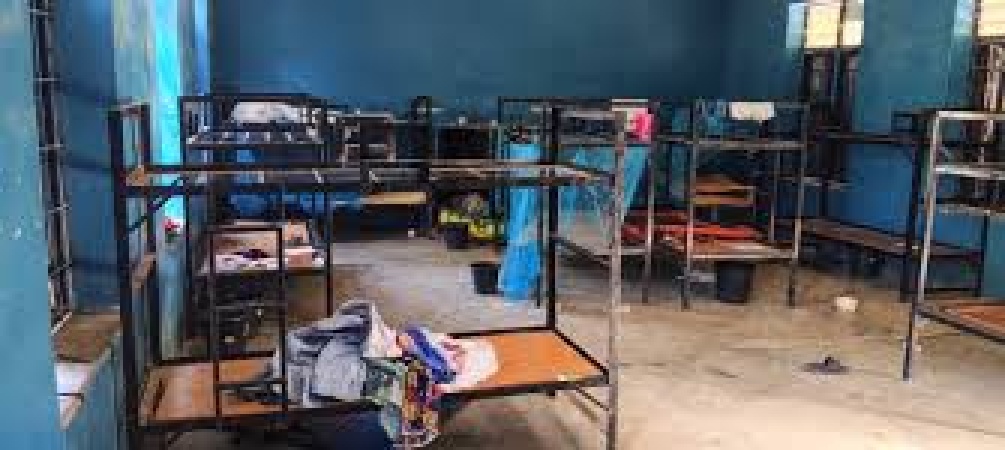
•Dormitory of St. Mary’s Catholic Primary and Secondary School, Niger State, after the students and staff were abducted by gunmen in Papiri community, on Friday, November 21, 2025