
Updating your news feed...
NEWS EXPRESS is Nigeria’s leading online newspaper. Published by Africa’s international award-winning journalist, Mr. Isaac Umunna, NEWS EXPRESS is Nigeria’s first truly professional online daily newspaper. It is published from Lagos, Nigeria’s economic and media hub, and has a provision for occasional special print editions. Thanks to our vast network of sources and dedicated team of professional journalists and contributors spread across Nigeria and overseas, NEWS EXPRESS has become synonymous with newsbreaks and exclusive stories from around the world.



Loading banners
Loading banners...

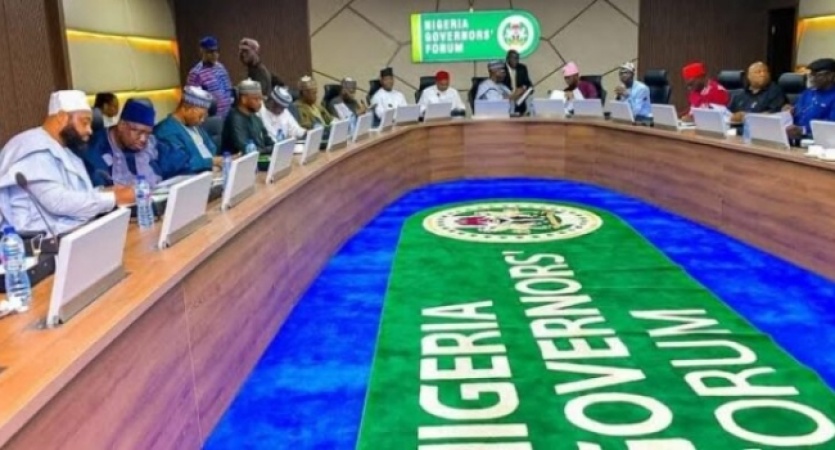
The Nigeria Governors’ Forum has disclosed that state governors are proposing a new national minimum wage of N100,000 as part of ongoing efforts to cushion the effects of economic hardship on Nigerian workers.
Governor of Kwara State, AbdulRahman AbdulRazaq, who is also the Chairman of the Nigeria Governors’ Forum, made this known in a post shared by the state government on Facebook on Saturday, saying the proposal was informed by the rising cost of living, persistent inflation, and the growing financial pressure on workers nationwide.
According to him, state governments acknowledge the urgent need to improve workers’ welfare in line with prevailing economic realities.
He said governors were already engaging with the Federal Government and organised labour to arrive at a wage structure that would benefit workers while remaining sustainable for governments at all levels.
“State governments recognise the urgent need to improve workers’ welfare in response to the current economic realities facing Nigerians,” AbdulRazaq said.
The NGF chairman added that consultations were ongoing to ensure that any new wage regime would not place excessive financial strain on states.
“We are actively engaging with the Federal Government and organised labour to arrive at a wage structure that is fair to workers and sustainable for government finances,” he stated.
AbdulRazaq explained that the discussions were focused on striking a balance between enhancing workers’ purchasing power and preserving the ability of governments to deliver critical public services and infrastructure projects.
“The goal is to improve the living conditions of workers while ensuring that states can continue to meet their obligations and sustain development projects that directly impact citizens,” he said.
He noted that while workers deserved better remuneration, policymakers must also consider the fiscal realities confronting subnational governments.
The proposed ₦100,000 minimum wage is expected to intensify national conversations around salaries, inflation, and broader economic reforms as Nigerians continue to grapple with rising food prices, transportation costs, and other living expenses.
Many workers have repeatedly expressed concerns that their current earnings are no longer sufficient to meet basic household needs amid the country’s challenging economic environment.
Nigeria’s statutory minimum wage currently stands at ₦70,000 per month.
However, a number of states, including Lagos, Rivers and Imo, are reported to be paying above the national benchmark as part of efforts to support workers.
Meanwhile, the Nigeria Labour Congress has continued to push for a comprehensive review of workers’ salaries, insisting that employees deserve a living wage capable of meeting present-day economic demands rather than one that merely guarantees survival.