ADAD
ADADUpdating your news feed...

NEWS EXPRESS is Nigeria’s leading online newspaper. Published by Africa’s international award-winning journalist, Mr. Isaac Umunna, NEWS EXPRESS is Nigeria’s first truly professional online daily newspaper. It is published from Lagos, Nigeria’s economic and media hub, and has a provision for occasional special print editions. Thanks to our vast network of sources and dedicated team of professional journalists and contributors spread across Nigeria and overseas, NEWS EXPRESS has become synonymous with newsbreaks and exclusive stories from around the world.




















Loading banners
Loading banners...

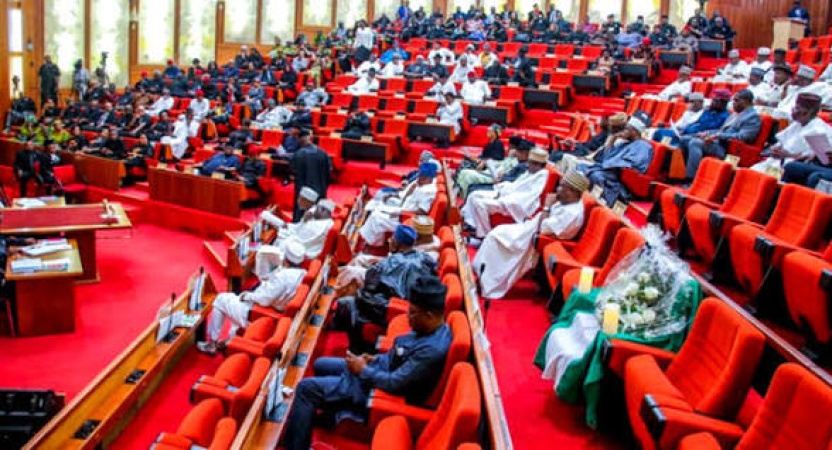
Senators in the Red Chamber during plenary
The carefully cultivated relationship between President Bola Tinubu and the Senate is showing signs of serious strain following the outcome of the All Progressives Congress (APC) senatorial primaries, with multiple party and legislative sources warning that resentment is quietly building among affected lawmakers who feel abandoned by a presidency they loyally defended through some of the most contentious legislative battles of the 10th Assembly.
There are strong indications that a number of senators who lost their return tickets during the primaries are now preparing to publicly distance themselves from the Tinubu administration, having concluded that the loyalty they demonstrated consistently on the floor of the Senate was not reciprocated when governors moved against them during the primary contests.
The sense of betrayal, sources say, is neither superficial nor easily managed. It runs deepest among senators who were among the most vocal and consistent defenders of the administration’s agenda and who had privately expected the presidency to intervene on their behalf when state governors deployed their political structures against sitting federal lawmakers.
“A number of senators believed their loyalty to the administration would count for something when the pressure came from governors,” a lawmaker told Daily Sun in confidence. “But many now feel they were left on their own. That has created bitterness that will not disappear overnight.”
The primaries produced significant upsets across several states, exposing the fault lines between the presidency, state governors and federal legislators that have long existed beneath the surface of the APC’s carefully projected unity.
In Kogi State, ranking Senator Jibrin Isah publicly rejected the primary results, accusing Governor Ahmed Ododo’s political structure of hijacking the electoral materials and intimidating his supporters in a systematic assault on the integrity of the process.
In Ogun State, Deputy Chief Whip, Isiaka Ibrahim, condemned the exercise as shameful and accused Governor Dapo Abiodun of orchestrating what he described as a manipulated affirmation arrangement rather than a genuine primary election.
In Ondo State, violence and gunshots accompanied the Ondo Central primaries, with aggrieved aspirants petitioning the National Chairman and labelling the exercise a kangaroo process engineered by powerful state actors.
Each of these outbursts reflected a common underlying grievance, that governors used their control of grassroots structures to override the preferences of federal lawmakers while the presidency declined to intervene.
That presidential restraint is now being interpreted by affected lawmakers as a strategic calculation rather than an act of neutrality.
“The governors control grassroots structures, so the calculation from the presidency appears to be that governors are more important politically going into 2027,” a senior party source told Daily Sun. “But that decision may come with consequences inside the National Assembly.”
Several outgoing senators are now said to believe that they were effectively sacrificed on the altar of Tinubu’s strategic alliance with governors, whose control of state-level political machinery is considered indispensable to the APC’s electoral prospects in the 2027 presidential contest.
Though political observers argue that the calculation may be logical from the presidency’s standpoint, its consequences for executive-legislative relations, however, could prove costly.
Since the inauguration of the 10th National Assembly in June 2023, the Senate has processed executive requests with a speed and consistency that has drawn both admiration from administration loyalists and sharp criticism from governance analysts and civil society organisations.
Loan requests, ministerial appointments, security expenditure authorisations and major economic policy measures have all passed through the Senate with minimal resistance and, in several cases, with enthusiastic facilitation by lawmakers who are now among the most aggrieved survivors of the primary season.
The loss of that reliable legislative support base, even partially, could complicate the administration’s ability to push through its agenda during the remaining period before the 2027 elections.
To contain the political damage, the APC’s National Working Committee has commenced internal reviews of results from several states, having earlier directed that no primary results should be officially announced without clearance from the national leadership.
The party’s disclaimer, signed by the Chief of Staff to the National Chairman, Albukalreem Bala Kwali, declared all circulating results unauthorised and called on party members and the general public to disregard them pending formal verification and approval by the committee.
Whether those reviews will produce outcomes that restore confidence among affected lawmakers, or merely ratify the results that governors fought to secure on the ground, remains to be seen.
The picture emerging from within the Senate is one of an institution in quiet transition. There are no public declarations of rebellion and no organised opposition bloc formally in formation.
Several lawmakers are said to be quietly withdrawing from active political mobilisation on behalf of the administration. Others are reported to have opened tentative contacts with opposition formations waiting for judicial clarity on INEC’s guidelines following a court judgment that nullified aspects of the commission’s regulatory framework, which could reopen the window for defection.
“There may not be open confrontation,” a party insider acknowledged, before adding with the careful precision of someone who understands exactly what they are saying, “but the relationship has clearly changed.”
For a presidency that has relied on the Senate’s legislative goodwill to advance one of the most ambitious and contested economic reform programmes in Nigeria’s democratic history, that change in relationship, however quietly it manifests, arrives at a moment of considerable political sensitivity. (The Sun)