ADAD
ADAD
Updating your news feed...
NEWS EXPRESS is Nigeria’s leading online newspaper. Published by Africa’s international award-winning journalist, Mr. Isaac Umunna, NEWS EXPRESS is Nigeria’s first truly professional online daily newspaper. It is published from Lagos, Nigeria’s economic and media hub, and has a provision for occasional special print editions. Thanks to our vast network of sources and dedicated team of professional journalists and contributors spread across Nigeria and overseas, NEWS EXPRESS has become synonymous with newsbreaks and exclusive stories from around the world.




.webp)












Loading banners
Loading banners...

•Medium N400,000; big N2.5m
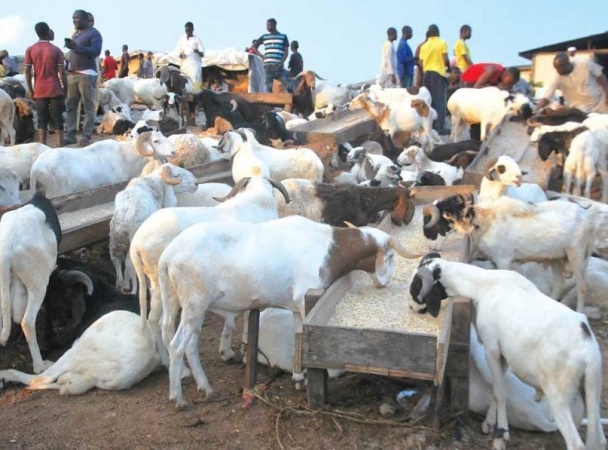
Ahead of the Eid-el-Adha celebration, prices of rams and cows have risen sharply across markets in the country.
Chairman of the Lagos State Butchers’ Association, Alhaji Ismail Babalola Afisuru, said the price of a medium-sized ram now ranges between N400,000 and N800,000, while bigger sizes sell for as much as N2.5 million.
Many Nigerians expressed fears that worsening economic hardship may prevent them from observing the traditional sacrifice of rams and cows during the festive period.
A number of factors have been blamed for the high cost of the sacrificial animal, which is an integral part of the spiritual celebration.
In several states north and south, potential ram buyers are stunned by the huge cost of the animal necessary for the festival that is coming up on Wednesday worldwide.
Our correspondents across the country report their findings from markets in various states of the federation:
Lagos State
According to Alhaji Afisuru, cows currently cost between N2 million and N4.5 million, depending on size.
“As we approach the Ileya festival, the prices of rams and cows are becoming unbearable. Many Muslims can no longer afford them,” he said.
“The minimum price for a small ram is not less than N400,000, while medium and large sizes sell for between N800,000 and N2.5 million. Cows are also sold between N2 million and N4.5 million,” he added.
Afisuru attributed the rising cost of cows to low supply, alleging that livestock dealers from the northern parts of the country are focusing more on supplying rams because of increased demand during the festive period.
“This is a seasonal business. The dealers from the North want to maximise profit by supplying more rams while reducing the supply of cows. This has largely contributed to the high cost of cows,” he said.
He appealed to the government to address insecurity in parts of Northern Nigeria to ease transportation and livestock supply.
“We are appealing to the government to ensure peace in troubled areas in the North so that traders can travel safely and purchase livestock without difficulties,” he added.
Abuja
At the popular Kugbo Ram Market in Abuja visited by Saturday Tribune, the price of big rams ranges between N450,000 to N1.2 million and the smaller ones between N300,000 and N150,000.
Some intending buyers who spoke to Saturday Tribune complained bitterly about the price of the rams which they said is above their reach.
Umar Lukman told our correspondent that he would either settle for a goat or share the price of the ram with another customer who would be willing to.
He said he came to the market with a budget to buy a N200,000 ram.
“The prices of the rams are not affordable for me this year and maybe I’ll have to settle for a goat or if I see anyone that we can pool resources together to get a ram of about N400,000. We understand the situation of things in the country but I never knew I would get a befitting ram at around N200,000 because that is what I brought here. May we celebrate many more of Eid el Kabir and may Almighty Allah spare our lives to celebrate many more,” Lukman said.
A ram seller, Abdullahi Abdurahaman, while giving reasons for the rise in the price of the rams, said they had to take into consideration the money used in transporting the rams to the market and the feeds for the livestock. He stated that the fuel price hike also contributes greatly to the price of the rams compared to last year.
How much did we sell last year if you remember? Then petrol price was around N700 and N750 but today it is sold between N1,350 and N1,400, so what do you expect? We are not happy either, because it has affected our sales. People are complaining and there is little we could do. Remember, we also have to factor the price of the feeds into what we are selling,” he stated.
Kano State
Livestock traders disclosed that the price of a small ram now ranges from ₦250,000 to ₦450,000, while cows are being sold for between ₦850,000 and ₦1.5 million, depending on their size and breed.
Findings from an investigation conducted across Tarauni and parts of Kano metropolis showed a sharp increase in the prices of livestock compared to previous years, placing the animals beyond the reach of many low and middle-income earners.
Residents interviewed blamed the situation on inflation, rising food prices, and the removal of fuel subsidy, which they said has worsened the economic condition of ordinary citizens.
Alhaji Murtala Ahmed, resident of Hotoro, lamented that his family, which usually buys at least one ram every Sallah, may not be able to afford one this year.
“We used to buy at least one ram every year for Sallah, but this time the prices are beyond our reach,” he said.
Another resident, Alhaji Yahya Muhammad, in Kano city, described the development as painful, noting that the rising cost of transportation and basic commodities has affected both buyers and sellers.
Several civil servants also complained that their monthly salaries can no longer meet basic family needs, making it difficult to purchase sacrificial animals for the celebration.
Livestock dealers, however, defended the increase in prices, attributing it to high transportation costs, insecurity along cattle routes, and the increasing cost of animal feed.
Oyo State
Ram sellers at UMC, Oke-Ado in Ibadan, expressed concern over low patronage.
Saturday Tribune observed at the market that buyers were not turning up in expected large numbers despite the availability of rams.
Findings revealed that ram prices currently range between N300,000 and N600,000, depending on the size and breed.
At the Railway Line at Iyaganku, and Liberty Stadium Road, traders complained that interested buyers were left helpless when they find that rams are costlier than their budget.
They cited high cost of transportation occasioned by energy costs.
Sellers explained that transporters charge between N10,000 and N15,000 for each ram brought into Ibadan from northern Nigeria.
Ram traders, Ishola Ganiyu and Olawale Roheem, blamed the poor sales on the general economic hardship in the country.
Sokoto
Both ram sellers and buyers in Sokoto lamented low patronage and the high cost of livestock in the market.
At the popular Kara Market in Sokoto on Friday, Saturday Tribune found that an average ram which sold for less than N150,000 last year now costs about N250,000 in the market.
Alhaji Imran Shehu, a ram seller in the market, described the current prices as unavoidable.
According to him, “The high cost of rams is due to many factors, including insecurity and the high cost of animal feed, among others. Most of the people who sell rams to us have been displaced by insurgency. The few who are still in the business are barely operating because of fear. This is apart from the high cost of feeds.”
Mallam Ismail Haruna, a buyer who also spoke with our correspondent, said the high cost of rams had forced many families to rethink plans to slaughter rams this year.
Kwara
Ram sellers in parts of Kwara State blamed insecurity in the country and the high cost of transportation, occasioned by increased fuel prices, for the exorbitant cost of rams.
Saturday Tribune gathered that the prices of sizeable rams start from between N170,000 and N250,000 in some popular markets such as Mandate, Zango, Fate and Asa Dam areas of Ilorin, while bigger ones sell for between N500,000 and N1 million.
The ram sellers expressed worry over low patronage ahead of the Eid-el-Kabir celebrations, attributing it to the prevailing economic situation in the country.
The Vice Chairman of the Ram Sellers Association, Agric Branch, Ilorin, Ibrahim Wasiu, blamed the low patronage to the low purchasing power of customers, saying the increase in the pump price of petroleum products, insecurity and delays in salary payments had negatively affected sales.
Also speaking, Abdulmalik Olawale said in addition to insecurity, bad roads had prevented livestock farmers from visiting the rural markets.
He appealed to the government to provide security in rural communities to prevent livestock farmers from relocating to other countries.
Ondo State
Checks at ram markets at Ilesha Garage and Agape Junction at Road Block in Akure showed that small-sized goats now sell for between ₦120,000 and ₦250,000, while medium-sized rams cost between ₦300,000 and ₦700,000 depending on breed and size.
Large and well-bred rams, which are usually preferred by wealthy families and groups, were found selling for as high as ₦800,000 to about ₦1 million.
Some of the dealers attributed the increase in prices of the rams to the high cost of transportation, insecurity along major supply routes from the northern part of the country, and the rising cost of animal feed and general inflation affecting the economy.
One of the ram sellers at the Agape junction, identified simply as Ibrahim, said traders were also struggling with low patronage as many families could no longer afford the prices unlike the previous years.
He noted that despite the rising prices, Muslim faithful have continued to troop to markets in search of affordable for rams.
One of the faithful seen at the ram market, Alhaji Adams, expressed optimism that the prices of the rams will still fall some days before Salah.
Plateau State
The high cost of rams has forced many people to abandon the idea of buying rams this year for the celebration.
Saturday Tribune findings in Jos, Plateau State, revealed that a medium-sized ram, which sold for N250,000 last year, now costs about N350,000, while the prices of bigger sizes range between N500,000 and N1 million.
A ram merchant, Abdullahi Sule, revealed that many people are reluctant to buy rams this year due to the high prices and the country’s economic challenges.
According to him, there is a possibility that some rams may be returned to the farms or that prices may drop a few days before the festival.
He said many middle-aged civil servants have abandoned plans to buy rams and are turning to other alternatives for the celebration.
Ebonyi State
Livestock dealers across major cattle markets in Ebonyi State raised concerns over poor patronage and skyrocketing prices of rams, goats and cows, warning that many Muslim faithful may be unable to perform the traditional Sallah sacrifice this year due to economic hardship.
They said the sharp rise in the prices of rams, goats and cows is due to high cost of transportation and the exit of Fulani herders from Nigeria for the situation.
Chairman of the Goat Market in Abakaliki, Mallam Ahmadu Sariki, described this year’s patronage as “very dull,” noting that many Muslim families can no longer afford livestock for the Eid-el-Kabir celebration.
“Before now, patronage used to be encouraging, but this year it is very poor. Last year, patronage was about 80 per cent, but this year it is just 20 per cent,” he stated.
He explained that the prices of rams now range from N350,000 upward, compared to between N290,000 and N350,000 recorded last year.
“The family that used to buy three rams before can hardly afford one now. We are calling on the government to pay salaries promptly and assist Nigerians so they can celebrate Sallah comfortably,” he appealed.
Also speaking, the Chairman of the Cattle Market in Abakaliki, Alhaji Ali Gambo, said the high cost of cows and transportation had significantly affected sales.
“Sallah celebration is incomplete without rams or goats here in Ebonyi State. But because there are not many wealthy Muslims in the state, people now prefer smaller animals.”
He disclosed that a big cow which previously sold for about N900,000 now goes for between N1.5 million and N1.7 million and attributed the increase to the migration of Fulani cattle dealers out of Nigeria to neighbouring countries such as Chad and Cameroon.
“The Fulani herders have left Nigeria and are staying outside the country. This has contributed to the scarcity and increase in prices,” he said. (TRIBUNE)