Updating your news feed...

NEWS EXPRESS is Nigeria’s leading online newspaper. Published by Africa’s international award-winning journalist, Mr. Isaac Umunna, NEWS EXPRESS is Nigeria’s first truly professional online daily newspaper. It is published from Lagos, Nigeria’s economic and media hub, and has a provision for occasional special print editions. Thanks to our vast network of sources and dedicated team of professional journalists and contributors spread across Nigeria and overseas, NEWS EXPRESS has become synonymous with newsbreaks and exclusive stories from around the world.




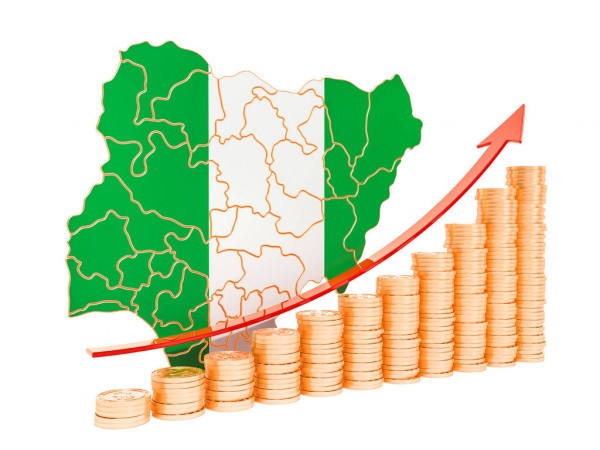
The capital expenditure by 26 state governments plunged by N2.19tn within three months in the first quarter of 2026, raising concerns over slowing infrastructure development and worsening fiscal pressures as politics for next year’s elections intensifies.
An analysis of quarter-on-quarter financial reports published on the official websites of the states showed that total capital expenditure fell by N2.20tn, representing a 58.1 per cent decline, from N3.79tn recorded in the fourth quarter of 2025 to N1.59tn in the first quarter of 2026.
Similarly, a breakdown of state government expenditure between January and June 2025 showed that 31 states collectively spent N2.75tn, averaging N1.38tn on capital projects during the six-month period.
The sharp contraction comes amid growing political activities and early alignments ahead of the 2027 general elections, a period analysts say could increasingly shift government attention from long-term infrastructure investments to political calculations and recurrent spending.
The data were obtained by our correspondent in Abuja on Sunday from quarterly budget implementation and financial performance reports uploaded on the official websites of the states.
The figures gathered and analysed by our correspondent indicate a decline of N2.19tn, representing a 57.9 per cent drop within three months, highlighting a slowdown in infrastructure and development spending across many states.
The findings are against the backdrop of a PUNCH report that the external debt of 32 states and the Federal Capital Territory climbed to nearly $5.7bn in fresh loans in 2025, pushing subnational foreign debt sharply higher year-on-year despite increased inflows from Federation Account Allocation Committee allocations.
The data showed that only one state, Oyo, recorded a significant increase in capital expenditure during the period under review, while most states posted sharp declines in spending.
The PUNCH reports that state government capital expenditure is the money set aside for development projects and public infrastructure that will benefit residents over a long period.
It is meant for building and improving facilities such as roads, schools, hospitals, water projects, housing, electricity infrastructure, public transport systems, and other major projects that support economic growth and public welfare. The aim is to create assets that improve living conditions, attract investment, create jobs, and boost economic activities within the state.
An increase in capital expenditure means more investment in critical infrastructure aimed at improving the welfare of the people, while a reduction indicates slower infrastructure development and fewer completed projects.
Out of the 36 states, only 26 had uploaded their financial data as of the time of filing this report, while 10 states had yet to publish their first-quarter financial performance reports.
The states that published their financial data are Adamawa, Akwa Ibom, Bauchi, Bayelsa, Benue, Borno, Cross River, Ebonyi, Ekiti, Enugu, Gombe, Jigawa, Kaduna, Kano, Katsina, Kebbi, Kogi, Kwara, Lagos, Niger, Ondo, Oyo, Sokoto, Taraba, Yobe, and Zamfara.
The states whose data were unavailable are Abia, Anambra, Delta, Edo, Imo, Nasarawa, Ogun, Osun, Plateau, and Rivers.
Breakdown of figures
A breakdown of the figures showed that Lagos retained its position as the highest spending state on capital projects despite recording a decline. Lagos spent N340.76bn on capital projects in the first quarter of 2026, down from N535.46bn in the fourth quarter of 2025. This represents a decline of N194.70bn or 36.4 per cent.
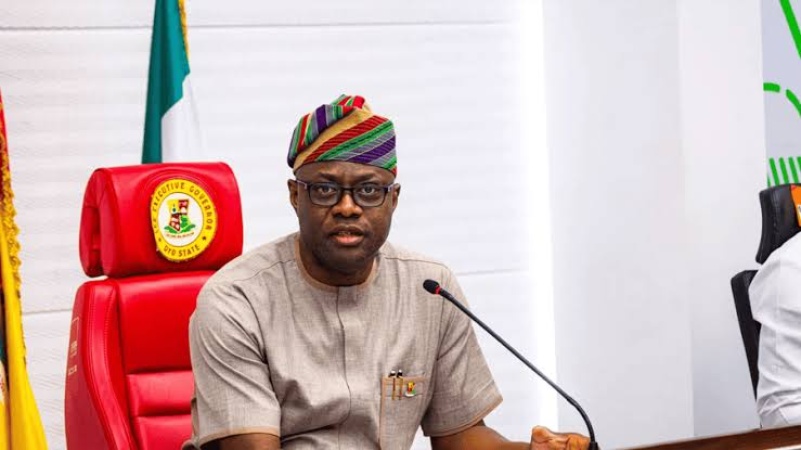
However, Oyo emerged as the only major exception to the nationwide slowdown. The state increased its capital expenditure from N105.35bn in the fourth quarter of 2025 to N231.27bn in the first quarter of 2026. The increase of N125.93bn represents a 119.5 per cent rise, making Oyo the state with the highest growth rate during the period.
The sharp increase in Oyo’s spending coincided with the state’s borrowing profile, as the state also recorded the highest loan figure among the reporting states. Oyo borrowed N164.88bn in the first quarter of 2026.
Akwa Ibom recorded one of the biggest spending cuts among the states reviewed. The oil-rich state reduced its capital expenditure from N428.64bn in the fourth quarter of 2025 to N137.39bn in the first quarter of 2026. The drop of N291.26bn represents a 67.9 per cent decline.
Bayelsa also posted a steep decline. Its capital expenditure fell from N384.81bn in the fourth quarter of 2025 to N77.51bn in the first quarter of 2026. This translates to a decrease of N307.30bn or 79.9 per cent.
Enugu recorded one of the sharpest contractions in percentage terms. The state’s capital spending plunged from N365.69bn to N31.37bn. The decline of N334.33bn represents a massive 91.4 per cent reduction.
Kano also witnessed a decline in spending, though less severe compared to several other states. The state’s capital expenditure dropped from N141.29bn in the fourth quarter of 2025 to N121.96bn in the first quarter of 2026. The decline of N19.33bn represents a 13.7 per cent decrease.
Niger State reduced its capital expenditure from N116.05bn to N79.28bn. The drop of N36.77bn represents a decline of 31.7 per cent. The state, however, recorded borrowings of N39.28bn during the period.
Bauchi spent N85.39bn in the first quarter of 2026 compared to N94.45bn in the previous quarter. This represents a decline of N9.06bn or 9.6 per cent. The state also recorded borrowings of N56.57bn.
Jigawa’s capital expenditure dropped from N193.88bn to N60.62bn. The decline of N133.26bn represents a 68.7 per cent reduction.
Kaduna reduced its capital spending from N106.92bn to N39.51bn. The state recorded a decline of N67.41bn or 63.1 per cent.
Katsina’s capital expenditure fell from N227.80bn to N55.08bn. The drop of N172.73bn represents a 75.8 per cent decline.
Benue recorded capital expenditure of N25.42bn in the first quarter of 2026, down from N114.59bn in the fourth quarter of 2025. This represents a decline of N89.17bn or 77.8 per cent.
Cross River’s capital expenditure dropped from N114.32bn to N19.48bn. The reduction of N94.84bn represents an 83 per cent decline.
Ebonyi reduced its spending from N118.10bn to N31.77bn. The decline of N86.34bn represents a 73.1 per cent decrease.
Ekiti’s capital expenditure fell from N50.05bn to N16.92bn. This represents a drop of N33.12bn or 66.2 per cent.
Gombe spent N36.19bn in the first quarter of 2026 against N68.06bn in the previous quarter. The state recorded a decline of N31.87bn or 46.8 per cent.
Kebbi reduced its capital spending from N55.87bn to N17.43bn. This represents a decline of N38.44bn or 68.8 per cent.
Kogi’s expenditure dropped from N48.40bn to N21.52bn. The decline of N26.88bn represents a 55.5 per cent reduction.
Kwara recorded capital expenditure of N13.68bn in the first quarter of 2026 compared to N61.65bn in the fourth quarter of 2025. The drop of N47.97bn represents a 77.8 per cent decline.
Ondo reduced capital spending from N52.49bn to N13.56bn. This represents a decline of N38.94bn or 74.2 per cent.
Sokoto’s capital expenditure fell from N59.31bn to N16.82bn. The decline of N42.49bn represents a 71.6 per cent reduction.
Taraba spent N16.91bn in the first quarter of 2026, compared to N26.77bn in the previous quarter. The state recorded a decline of N9.85bn or 36.8 per cent.
Yobe’s capital expenditure dropped from N76.74bn to N31.79bn. The decline of N44.95bn represents a 58.6 per cent decrease.
Zamfara reduced spending from N104.04bn to N28.99bn. The state recorded a decline of N75.05bn or 72.1 per cent.
Adamawa also posted a steep decline. The state’s capital expenditure dropped from N90.77bn in the fourth quarter of 2025 to N22.93bn in the first quarter of 2026. This represents a decline of N67.84bn or 74.7 per cent.
Borno’s spending declined from N46.89bn to N19.91bn. The drop of N26.98bn represents a 57.5 per cent reduction.
An analysis of the first quarter 2026 financial reports of 26 states showed that subnational governments borrowed a combined N361.98bn within three months despite a widespread decline in capital expenditure across the country.
Oyo recorded the highest borrowing figure at N164.88bn, accounting for nearly half of the total loans obtained by the reporting states during the period. Bauchi followed with N56.57bn, while Niger borrowed N39.28bn. Taraba secured fresh loans worth N23.4bn, while Ebonyi and Yobe borrowed N20bn each.
Katsina obtained N8.55bn in loans, Kaduna recorded borrowings of N8.06bn, while Gombe borrowed N7.61bn. Jigawa secured N6.27bn, Ekiti borrowed N3.01bn, while Borno obtained N2.85bn.
Kwara recorded loans worth N438.88m, Ondo borrowed N300m, while Kogi posted the lowest borrowing figure at N5.32m.
The figures showed that 13 of the 26 states that published their financial reports recorded fresh borrowings in the first quarter of 2026, highlighting the growing reliance on debt financing amid rising fiscal pressures and slowing capital spending.
Analysts speak
Analysts said the sharp drop in capital expenditure may reflect the typical slowdown that follows aggressive end-of-year spending by governments trying to implement annual budgets before year-end deadlines.
Economic experts also noted that the decline could be linked to rising debt obligations, revenue pressures, and adjustments following the implementation of fiscal reforms.
A Professor of Economics at Babcock University, Segun Ajibola, stated that the enduring problem of high governance expenses had persisted at the state level, with inadequate oversight and accountability resulting in minimal economic benefits for grassroots citizens.
The Director and Chief Economist at Proshare Nigeria LLC, Teslim Shitta-Bey, warned that the rising debt burden on Nigeria’s subnational governments could challenge their fiscal stability in the coming years. He stressed that most state governments, along with the Federal Government, had failed to effectively manage their balance sheets.
Speaking recently to The PUNCH, Shitta-Bey said, “The challenge here is that most of the governments, including the Federal Government, are unable to manage their balance sheets properly. While borrowing might seem like an easy way to run operations, it is not necessarily the right approach.”
According to Shitta-Bey, borrowing should not be the default solution for governments. “Governments could consider longer-term debt structures that resemble equity, which might actually be more beneficial in the long run,” he explained.
A macroeconomic analyst, Dayo Adenubi, also emphasised the need for states to take more targeted steps toward boosting internally generated revenue as they grapple with rising debt obligations and constrained federal transfers.
However, the Chief Executive Officer of the Centre for the Promotion of Private Enterprise, Muda Yusuf, posited that capital expenditure usually records slower spending in the early part of the year because of lengthy procurement and contracting procedures.
According to him, unlike recurrent expenditure, which covers regular expenses such as salaries, travels, and other day-to-day government operations, capital projects require more bureaucratic processes before funds can be disbursed.
Muda, speaking during a telephone interview on Sunday, said, “On capital expenditure, the process is usually longer. The contracting processes, procurement, and tendering take more time. It is not like recurrent expenditure, where spending happens every day through salaries, travels, and the like.
“For capital expenditure, there are usually more disbursements around the second and third quarter because by then they would have concluded most of the procurement processes, which are often very bureaucratic. It also involves huge sums of money, and payments are not made at once. So, for capital expenditure to gather momentum, it usually gets to the second or third quarter before you begin to see significant spending.”
The reduction in capital spending by many states could have implications for economic growth, job creation, and infrastructure development, especially at a time when subnational governments are expected to play a larger role in driving economic activities.
Strong spending
Despite the slowdown, some states maintained relatively strong spending levels. Lagos, Oyo, Akwa Ibom, Kano, and Bauchi emerged as the top five states in terms of capital expenditure in the first quarter of 2026.
The figures also showed that several states relied on borrowings to support spending amid declining revenues and rising fiscal pressures.
Financial analysts have repeatedly warned that increasing debt accumulation without corresponding revenue growth may worsen fiscal sustainability challenges for subnational governments.
However, state governments have argued that borrowings remain necessary to finance critical infrastructure projects and bridge funding gaps. (PUNCH)