Updating your news feed...

NEWS EXPRESS is Nigeria’s leading online newspaper. Published by Africa’s international award-winning journalist, Mr. Isaac Umunna, NEWS EXPRESS is Nigeria’s first truly professional online daily newspaper. It is published from Lagos, Nigeria’s economic and media hub, and has a provision for occasional special print editions. Thanks to our vast network of sources and dedicated team of professional journalists and contributors spread across Nigeria and overseas, NEWS EXPRESS has become synonymous with newsbreaks and exclusive stories from around the world.













.webp)



Loading banners
Loading banners...

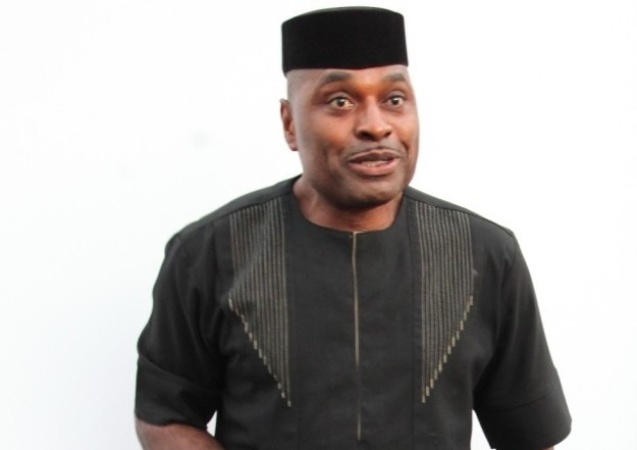
Politician and actor, Kenneth Okonkwo
By VITUS OZOKE, PhD
Kenneth Okonkwo may have acted as Andy Okeke in Living in Bondage, but history has delivered a crueler irony: it increasingly appears that Andy Okeke was not merely a role he played. It was a prophecy he carried.
The tragedy of Kenneth Okonkwo is not that he became controversial in Nigerian politics. Nigerian politics is itself a marketplace of controversy. The tragedy is that the moral architecture of Andy Okeke – ambition without loyalty, advancement without rootedness, success purchased through betrayal – seems to have escaped the screen and followed the actor into public life.
In the film, Andy Okeke begins as an ordinary man frustrated by limitations. Poverty humiliates him. Obscurity suffocates him. He wants more than survival; he wants arrival. He wants recognition. Respect. Power. Visibility. The hunger itself is not evil. What destroys Andy is the method he chooses to satisfy it. That is the deeper genius of the film. Andy is not born wicked. He is seduced. Corrupted gradually. He enters a system that promises elevation but demands sacrifice. And once inside that system, betrayal becomes the currency of belonging. That is where the eerie parallel with Kenneth Okonkwo emerges.
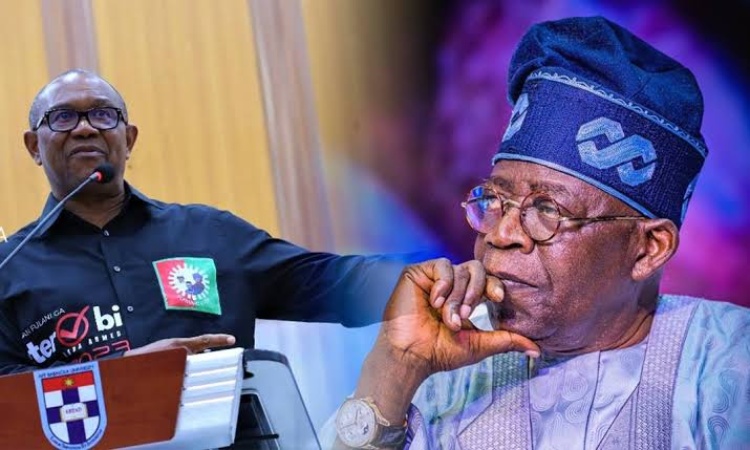
In the film, Andy sacrifices Merit, the person who trusted him most. In contemporary Nigerian politics, critics increasingly see Peter Obi as occupying that symbolic position. Whether one agrees entirely with that interpretation or not, the political perception matters. Kenneth Okonkwo rose to renewed national relevance largely through the Obidient movement surrounding Peter Obi. That movement gave him ideological oxygen, visibility, and a new political identity beyond Nollywood nostalgia. He was embraced not merely as an actor dabbling in politics, but as a public intellectual voice within a movement many young Nigerians invested with moral hope. But politics, like the occult brotherhood in Living in Bondage, has its own rituals of initiation and survival.
Soon came disillusionment, public criticism, strategic distancing, and eventual rupture. What had once appeared as solidarity became antagonism. The language changed. The loyalty evaporated. And to many observers, it looked painfully familiar: another Andy Okeke moment. Another sacrifice at the altar of ambition. Of course, the comparison is metaphorical, not literal. Peter Obi is not Merit. Nigerian political parties are not occult shrines. But metaphors matter because they reveal moral patterns beneath visible events.
In Living in Bondage, occultism was the mechanism of corruption because the film emerged from a Nigeria haunted by fears of ritual wealth and mysterious power. Today, the occult has changed form. The shrine now wears party logos. The incantations are television interviews, coalition meetings, strategic defections, and political calculations. The priests are power brokers. The sacrifices are principles, loyalties, friendships, and ideological consistency. The bondage remains.
Andy Okeke became trapped in an occult covenant that gave him wealth but consumed his soul. Kenneth Okonkwo appears trapped in the modern covenant of political relevance – the endless hunger to remain visible, influential, quoted, positioned, and aligned with power. In both cases, the bondage is not physical. It is moral and spiritual. This is why the comparison feels so unsettlingly powerful. Andy’s tragedy was not merely that he betrayed Merit. It was that after gaining everything he thought he wanted, he lost the ability to live peacefully with himself. Wealth brought torment instead of fulfillment. He became haunted by the ghost of what he sacrificed.
There is something deeply symbolic in watching Kenneth Okonkwo – once the face of Nigeria’s greatest cinematic cautionary tale about ambition and betrayal – navigate political spaces defined by shifting loyalties, ideological instability, and performative outrage. One begins to wonder whether “Living in Bondage” was less fiction than diagnosis.
The frightening thing about bondage is that people inside it rarely know they are bound. Andy believed he was becoming free when he joined the cult. In reality, every step upward tightened the chains around his soul. That is the central metaphor here.
Power can become a form of spiritual captivity. Politics can become an addiction to relevance. Public attention can become a shrine before which conviction is sacrificed daily. One does not need candles, blood rituals, or dark robes to lose one’s moral center. Sometimes all it takes is applause, microphones, television cameras, party meetings, and the intoxicating fear of becoming politically irrelevant. Kenneth Okonkwo’s public journey increasingly resembles that kind of captivity.
This is not an argument that politicians should never disagree or evolve. Political disagreement is legitimate. Real democracy requires ideological debate. The issue is deeper than disagreement. It is the perception of transactional loyalty – the sense that relationships and causes become disposable once they no longer serve ambition. That was Andy Okeke’s greatest sin. He transformed human loyalty into a ladder. And that is why the symbolism remains devastating.
In the end, Living in Bondage was never really about occultism. The occult was only the language through which Nigeria explained corruption, greed, betrayal, and moral collapse. The real subject of the film was what happens when ambition becomes detached from conscience. That question still haunts Nigeria today.
Kenneth Okonkwo may have left the movie set decades ago, but the shadow of Andy Okeke appears to follow him still. The clothes have changed. The stage has changed. The rituals have changed. But the deeper bondage – the captivity of ambition without moral anchoring – remains frighteningly recognizable. And perhaps that is the final irony.
Andy Okeke spent the entire movie searching for freedom through power, only to discover that every immoral shortcut created a new chain. Decades later, Kenneth Okonkwo seems to be acting out the sequel in real life.
•Dr. Vitus Ozoke is a lawyer, human rights activist, and public affairs analyst based in the United States. He writes on politics, governance, and the moral costs of leadership failure in Africa.