ADVERTISEMENT

ADVERTISEMENT

ADVERTISEMENT

ADVERTISEMENT














Loading banners
Loading banners...


NEWS EXPRESS is Nigeria’s leading online newspaper. Published by Africa’s international award-winning journalist, Mr. Isaac Umunna, NEWS EXPRESS is Nigeria’s first truly professional online daily newspaper. It is published from Lagos, Nigeria’s economic and media hub, and has a provision for occasional special print editions. Thanks to our vast network of sources and dedicated team of professional journalists and contributors spread across Nigeria and overseas, NEWS EXPRESS has become synonymous with newsbreaks and exclusive stories from around the world.
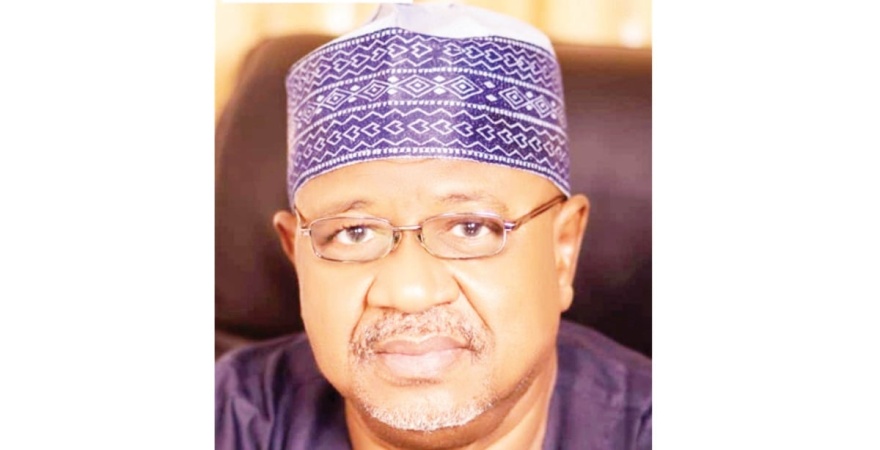
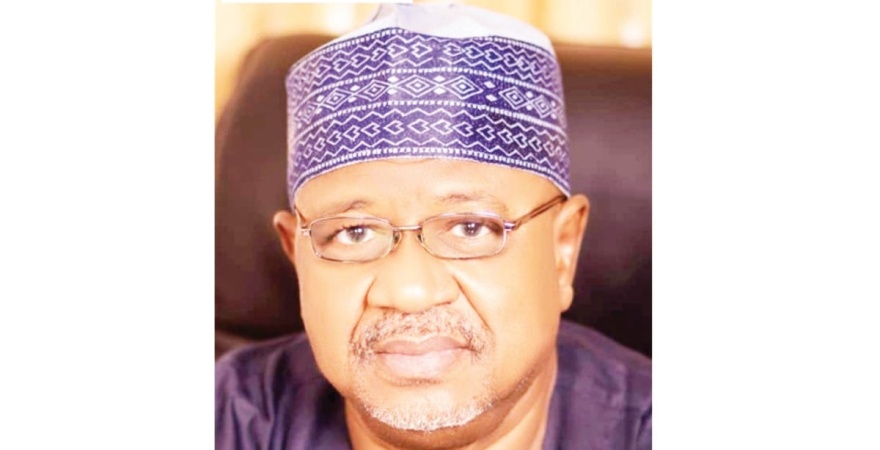
ADA promoter, Dr Umar Ardo
Dr. Umar Ardo is one of the leading promoters of the All Democratic Alliance (ADA), a proposed political party that sought to serve as a platform for the opposition in the country. Ardo speaks with LASISI OLAGUNJU on his planned legal challenge against the Nigerian Democratic Congress (NDC), the role of the Independent National Electoral Commission in the non-registration of the ADA as a political party and other salient national issues.
You have been trending online for saying you will challenge the registration of the Nigerian Democratic Congress (NDC) in court. Some people question your motive. Is this about principle, or personal disagreements with figures like Rabiu Kwankwaso and Peter Obi?
This is entirely about constitutional principle. I have no personal quarrel with Peter Obi or Rabiu Kwankwaso as individuals. In fact, I met Obi only once in my life in the Southern Sun Hotel in Lagos in May 2022 when former President Obasanjo assembled nine of us to discuss the strategy for Obi’s contest in 2023. My concern is metaphysical: the NDC was born illegitimately. It bypassed every constitutional requirement — no formal application, no administrative fee, no shortlisting, no portal engagement, no regulatory compliance whatsoever and no participation in the entire process. It obtained recognition through what I have called “judicial murder” and INEC’s inexplicable capitulation. The question I pose in my essay is whether these politicians possess “the epistemic humility to recognise that the tree they now cultivate is poisoned at the root, and whether they possess the moral courage to refuse its fruit.” If the registration process is subverted for one party today, it will be subverted for all parties tomorrow. My challenge is to defend the architecture of democratic legitimacy itself, not to settle personal scores.
Former President Goodluck Jonathan said on Thursday that he would consult widely to decide on whether or not he would join the 2027 race. If he consults you, what will you tell him?
I will tell him not to because he’s constitutionally ineligible.
What makes him ineligible? Some would say that the law you are hinting at cannot be retroactive?
First is the Supreme Court judgement that determined that no governor and president can remain in office for a cumulative period exceeding eight years. If Jonathan contests and wins, he will be in the office of the president for 10 years, 23 days.
Second, there is a constitutional amendment enacted and signed by former President Muhammadu Buhari specifically addressing the scenario where a vice president (or deputy governor) assumes office due to the death, resignation or removal of a president (or governor) and then seeks to contest that same office, like in the current case of President Jonathan. This particular amendment stipulates that if a Vice President assumes the presidency (say, due to the death, removal, resignation or incapacitation of the President), that individual – having effectively completed the remainder of the predecessor’s term (like former President Jonathan) – is eligible to contest for the presidency only one more time. The same rule applies at the state level: a Deputy Governor who takes over a Governor’s term may only contest the governorship one additional time. The relevant clause reads: [137](3) “A person who WAS [upper case emphasis mine] sworn in as president to complete the term for which another person was elected as president shall not be elected to that office for more than a single term”.
This provision is clear without any equivocation. The obvious implication is that someone (like President Jonathan) who is in such a succession position, having succeeded ‘Yar’Adua and contested once more cannot run for office anymore; meaning effectively that he cannot contest again.
Critics say you are bitter that your own political platform, ADA, was not registered by INEC. How do you respond to that, and how would challenging the NDC help your position as an opposition figure?
The suggestion that I am bitter because ADA was denied recognition despite meeting all requirements is precisely the inverse of my position. If anything, my experience proves the systemic problem where a political association like ADA that complied with every constitutional and regulatory requirement was denied registration, while the NDC which participated in none of the process was recognised. I feel disappointed, yes, but this is not about my personal disappointment; it is about institutional inconsistency that threatens the entire democratic order. Challenging the NDC is not about improving my position as an opposition figure. It is about preventing the normalisation of constitutional circumvention. As I argued, when politicians “treat democratic legitimacy as a convenience rather than a constraint,” they signal to every future political entrepreneur that “constitutional compliance is optional.” I refuse to accept that signal.
Given your claim that the NDC failed to complete mandatory INEC registration, what specific legal or institutional steps do you believe INEC and the courts should now take to address what you describe as a pervasive judgment?
Let me educate ignorant Nigerians who have been castigating me on the NDC matter. No political association can be registered as a political party without filling INEC’s Form EC15A, which is INEC’s party registration form. This form is online and an association pays a mandatory N2 million administrative fee to be issued with INEC’s access code with which the association will open the portal and make its application. In the application it will upload the party name, acronym, logo, constitution, manifesto, names, addresses, ID cards, passport photographs, indigene letters, etc, of its national executive members, address of national office headquarters, INEC’s payment receipt, bank account details, a sworn affidavit of truth, etc.
It is these documents that INEC will examine to see whether they comply with the requirements of the constitution, Electoral Act and its guidelines. And until these documents are uploaded on INEC portal and INEC examines them and finds them to have 100 per cent complied, it cannot register the association as a political party, because that’s the requirement of the law.
But in the case of the NDC, it did not pay the N2 million mandatory administrative fee, it did not collect the access code, therefore it did not fill the Form EC15A and it did not upload anything — anything at all as required by law. So what documents did they put before the Lokoja Federal High Court for court to say they fulfilled all the requirements of the constitution, the law and the guidelines?
I have obtained the Certified True Copy of all documents and processes NDC placed before the court, including the judgment, and they naturally exhibited not one of these fundamental documents — not one! And it couldn’t because it did not fill Form EC15A and upload them into INEC’s registration portal! The court was thoroughly misled to have made pronouncement without any due regard to these documents, making it a highly pervasive judgement.
It’s like someone contesting a presidential or governorship primaries and losing and without filling INEC’s nomination Form EC13A or EC13B respectively and his party submitting to INEC. It means he was not on the ballot. But he goes to the tribunal and files whatever papers he deems fit and prays the tribunal to declare him winner as president-elect or governor-elect and the tribunal gives him a favourable judgement without regard to the facts, ordering INEC to issue him with certificate of return. And INEC said it accepts this court order and will not appeal, and went ahead and issued him the certificate of return. I ask all honest and rational citizens, should Nigerians accept this scenario? Now this is exactly the case of the NDC!
But because Peter Obi and Kwankwaso and others have joined the NDC, we are told that Nigerians must accept NDC! If all Nigerians will accept this pervasion, I will not! Period!!
What is your view on the presidential ambition of northern politicians like Atiku Abubakar, especially when many Nigerians argue that power should remain in the South for now?
My philosophical framework is clear: legitimacy matters more than geography. The critical issue is not whether a candidate is from the North or the South, but whether they emerge through constitutional integrity. A northern politician who respects institutional process is preferable to a southern politician who circumvents it, and vice versa. I am the one that crafted the formation of the APC and Buhari’s fourth contest in 2015. What did the Buhari regime benefit the country or even the North? So what Nigerians should resist is not northern ambition per se, but any ambition that treats constitutional constraint as negotiable. The deeper problem is that our political culture suffers from “a deficit of institutional trust.” Power rotation is a pragmatic arrangement, but it cannot substitute for procedural righteousness. If we sacrifice constitutionalism for zoning, we will have merely rotated mediocrity.
Looking ahead, if you were to vote in the next election, would you support Bola Tinubu or any of the opposition candidates?
I do not engage in transactional endorsements. In my recent essay, I asked a more fundamental question: “What kind of government will they form if elected?” The logic of the tree and the fruit applies to all candidates. I will support whoever demonstrates radical integrity — the refusal to “participate in legitimating illegitimacy.” If a candidate emerges from a process that insults constitutional order, I cannot in good conscience support them, whether they wear the banner of the ruling party or the opposition. As I wrote, “some vehicles are too compromised to carry any passenger with self-respect intact.” The electorate’s task is discernment: “By their fruits thou shall know them.”
You described the NDC as “constitutionally inaccurate.” In simple terms, what exactly does that mean?
In simple terms: the NDC’s existence is a legal fiction. “Constitutionally inaccurate” means it claims a status it did not earn. It obtained registration not through the prescribed constitutional and statutory process — application, fee payment, shortlisting, portal compliance, regulatory review — but through a court judgment built on “unsubstantiated claims.” It is like a birth certificate issued for a child never born. The Constitution, the Electoral Act and INEC guidelines constitute the “lex loci” — the law of the place where political power must be born to claim democratic parentage. The NDC was never born in that place. It is constitutionally inaccurate because it “parades itself as a legitimate vehicle for the democratic will while wearing the stolen garments of constitutional recognition.”
You referenced Hannah Arendt and the idea of “natality.” Why is the proper formation—or “birth”—of a political party so important in a democracy?
Hannah Arendt argued that every genuine political act must be “born into a public space where it can be seen, judged and held accountable.” She called this capacity for new beginnings “natality.” A political party’s registration is precisely such a birth – a rite of civic legitimation where private association is “transubstantiated into public instrumentality.” The NDC, however, was stillborn. It has “no public natality.” It entered the world not through the “arduous labour of constitutional compliance” but through “the shortcut of judicial manipulation.” It exists as a “phantom political entity with the form of democracy but the substance of usurpation.” Without proper natality, a party cannot be held accountable because it was never truly born into the democratic public space. It is a ghost wearing democratic clothing.
You also used the phrase “moral money laundering” to describe some politicians’ actions. Can you explain that in plain language?
In plain language: it is when politicians of perceived integrity lend their good names to sanitise something rotten. These politicians have “reputational capital” — public trust built on claims of procedural righteousness, institutional integrity or developmental governance. By joining the NDC, they are depositing that capital into “an account whose assets were obtained through procedural theft.” They become “human shields for institutional illegitimacy,” using their credibility to camouflage an entity that “could not survive naked exposure.” The public sees Peter Obi’s name, Rabiu Kwankwaso’s name and mistakenly believes the party must be legitimate because respectable people joined it. That is the laundering: dirty legitimacy is washed clean by association with seemingly clean politicians. It is not coalition-building; it is “the counterfeiting of reputational capital.”
You have been critical of the Independent National Electoral Commission. Where exactly do you think INEC failed, and what should it do differently?
INEC failed at every level. First, it registered a party that had not complied with any regulatory requirement. Yes, it obeyed a court order which it is bound to. But it had the option of appealing seeing the gross inaccuracy in the judgment. But it refused to appeal a judgment — meaning a surrender of regulatory sovereignty. Then, it published specific national officer names on its website “under the false claim of a court order that the commission cannot itself produce” — what I call “official deception, a lie inscribed on government letterhead.” What should it do differently? It must appeal the judgment, enforce its own guidelines without fear or favour, and cease being “a passive executor of judicial irregularity.” Regulatory gatekeeping is not negotiable.
With opposition parties divided and facing challenges, do you still believe in Nigeria’s democracy? What should ordinary Nigerians do at this point?
I believe in democracy as an ideal, but I am eschatologically anxious — fearful of what is to come if we continue on this path. The deepest wound is “the epistemic damage to democratic hope itself.” When citizens cannot distinguish genuine reformers from performative ones, “democratic citizenship becomes impossible.” What should ordinary Nigerians do? Exercise radical discernment. Jesus said, “By their fruits thou shall know them” — this is an imperative to judge, not merely a description. Nigerians must look at the root, not the branches. They must ask: How was this party born? Did it comply with constitutional process, or did it circumvent it? They must refuse to be “subjects of propaganda rather than citizens of a republic.” And they must demand that politicians of integrity refuse to become “accomplices in their own deception.” There is always time for radical integrity — “until the polls open or the oaths are sworn.” The ax is at the root of the trees. Every tree that does not bear good fruit must be cut down. God help Nigeria. (Saturday Tribune)