ADAD
ADADUpdating your news feed...

NEWS EXPRESS is Nigeria’s leading online newspaper. Published by Africa’s international award-winning journalist, Mr. Isaac Umunna, NEWS EXPRESS is Nigeria’s first truly professional online daily newspaper. It is published from Lagos, Nigeria’s economic and media hub, and has a provision for occasional special print editions. Thanks to our vast network of sources and dedicated team of professional journalists and contributors spread across Nigeria and overseas, NEWS EXPRESS has become synonymous with newsbreaks and exclusive stories from around the world.






Loading banners
Loading banners...

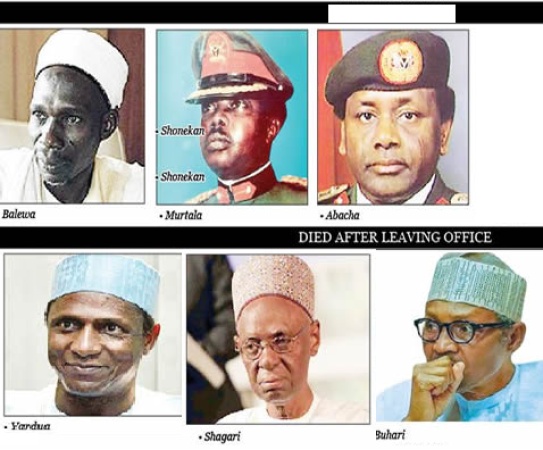
The North-West zone usually has an advantage over the other geopolitical zones when it comes to national politics because of its population and voting strength. In this piece, Northern Bureau Chief, MUHAMMAD SABIU, looks at the strengths and weaknesses of the major contending political actors and parties ahead of the 2027 election in the zone, with additional contributions from KOLA OYELERE, ATTAHIRU AHMED, OLAKUNLE MARUF, ADAMU AHMADU, AYODELE AJOGE, AND MUHAMMAD ABBA.
The North-West zone is a key player in Nigeria’s electoral processes. The reasons are not far-fetched. In terms of its population and strategic role, it is the zone that has produced five presidents and heads of state. They include the late General Murtala Muhammad, Alhaji Shehu Shagari, General Sani Abacha, Alhaji Umaru Yar’Adua, and the late General Muhammadu Buhari in the last four decades. Other zones like the South-West, South-South, and South-East have produced three presidents: Olusegun Obasanjo, Goodluck Jonathan, and Bola Tinubu.
More so, according to an INEC press statement in 2023, the North-West has the largest voter base in Nigeria with 22,255,562 registered voters. This figure, according to Nigerian Tribune findings, is the highest of all six geopolitical zones as it represents 23.8% of Nigeria’s total 93,469,008 registered voters in 2023.
INEC sources further stated that three states have a combined voting strength of over 10 million out of the 22 million in the zone. For instance, Kano has the highest number of registered voters with 5,921,370, followed by Kaduna with 4,335,208 and Katsina with 1.6 million registered voters. Other states like Sokoto, Kebbi, Zamfara, and Jigawa complete the remaining balance. Understandably, this is the strength of the zone. That’s the reason no serious politician worth his salt toys with the zone.
The next highest zone was the South- West with 17,958,966 registered voters. If you do the arithmetic, the North- West led by 4.3 million voters.
Thus, the North-West holds the aces for whoever will emerge as Nigeria’s next president in 2027.
Predominantly an APC zone, all seven states—Zamfara, Sokoto, Kebbi, Kano, Jigawa, Kaduna, and Katsina—are run by APC governors. It is a zone with the highest number of lawmakers. It is also a zone with prominent politicians like former Katsina State Governor Aminu Masari, Senator Abdulaziz Yari, Minister of State for Defence Bello Matawalle, Minister of Defence Gen. Chris Musa (rtd), Senator Aliyu Wamakko, Senator Adamu Aliero, former Defence Minister Abubakar Badaru, former Zamfara State Governor Senator Ahmed Sani, and a host of others who are all card-carrying members of the ruling APC.
Going by the above, some sources may want to conclude that the next election may just be a walk in the park for the ruling APC. But politics does not just follow simple arithmetic procedures. This is because other political parties are not sleeping as well, as they are ensuring their presence in the zone is very well felt. Despite its travails as regards registration, the ADC leadership is not sleeping to ensure it captures politicians in the zone because of the strategic position of the zone in national politics.
Findings revealed that they are closely on the neck of the APC, trying to be a formidable opposition in the zone. From investigation, the ADC has prominent politicians in its fold, and among them are former Governor of Kaduna, Nasir El-Rufai, former Governor of Sokoto, Aminu Waziri Tambuwal, former Minister of Justice Abubakar Malami, former presidential candidate Rabiu Musa Kwankwaso, Senator Kabir Gaya, Senator Kabir Marafa, former Inspector General of Police MD Abubakar, AIG Yusuf Garba (rtd), and former Katsina SSG Alh. Mustapha Inuwa, among others who are calling the shots.
“Except the Supreme Court puts a sledgehammer to it,” a political analyst who gave his name as Mustapha Idris noted, “the party (ADC) is attracting more followership and strategizing ahead of 2027 in the zone.”
He also said the party is ready to field candidates for various elective offices.
Following the ADC is the PDP, which also has a litany of prominent politicians like former Governor of Jigawa, Sule Lamido, former Governor of Kaduna State, Ahmed Makarfi, Mohammed Abacha, etc. Even though the PDP is no longer as strong as it used to be, political pundits however stressed that in politics no party is small or big. Citing an example from the Second Republic, during Shagari’s era, they argued that the PRP won in two states, while the GNPP won Borno. According to them, “People want a platform, and once the PDP comes out of its shell and fields candidates, Nigerians will vote for the party.”
KADUNA STATE
The battle for the control of Kaduna State is expected to be between the incumbent governor, Governor Uba Sani, and the coalition of opposition parties and the ADC, led by former governor of the state, Mallam Nasir El-Rufai. But from recent developments, it is emerging that the 2027 battle, which looks to be a fierce battle and a litmus test between both camps, is gradually turning a simple battle. This is because El-Rufai has been out of circulation, while Governor Uba Sani continues to wax stronger in the states political circles.
As it is today, while the governor is strategically making his re-election bid easier by reaching out to different individuals and organizations and providing dividends of democracy, the opposition is still battling with identity, registration issues. The African Democratic Congress (ADC) is enmeshed in turmoil, same as the Labour Party, whose banner is being carried by Datti Baba-Ahmed as well as the Peoples Redemption Party (PRP). Aside from that, possible contenders like Isa Ashiru, Jaafaru Sani, and Muhammad Sani Bello in the ADC are not sure if the are contesting because of the party’s legal issue currently before the Supreme Court.
Findings revealed that other opposition parties like the SDP, PRP, and Labour might not field candidates, or even if they do, their candidates might not have the political will and funds to contest the governorship. Thus, looking at the present realities, we can say the APC or Governor Uba Sani is coasting to victory. The said easy ride is expected to rub off on President Bola Ahmed Tinubu as well.
KANO STATE
In Kano, political activities are gradually gathering momentum ahead of the 2027 governorship election in the state as attention is increasingly shifting from party platforms to the enduring influence of three former governors whose political networks continue to shape the state’s electoral direction.
Observers widely point to Ibrahim Shekarau, Abdullahi Umar Ganduje, and Rabiu Musa Kwankwaso as the central figures whose alignments and strategies could determine not only the emergence of candidates but also the eventual winner of the next governorship contest.
Kano’s political landscape has long revolved around personalities rather than ideology. The trio of Shekarau, Ganduje, and Kwankwaso—each with a loyal base and established structures—remain influential power brokers. Their endorsements, tacit or explicit, are expected to weigh heavily on party primaries and general election outcomes.
Within the ruling All Progressives Congress (APC), the focus is firmly on incumbent Governor Abba Kabir Yusuf. He is widely regarded as the party’s leading contender heading into 2027.
Beyond performance, political arithmetic also appears to favour the incumbent. Analysts highlight three major factors: his Kano roots and appeal within metropolitan voting blocs; the potential backing of influential political figures, including Shekarau and Ganduje; and the support of key party stakeholders such as Barau Jibrin, along with other prominent figures in the state.
Additionally, the emergence of Murtala Sule Garo as a running mate is seen as a strategic move aimed at consolidating grassroots support. On the other hand, within the African Democratic Congress (ADC), several potential aspirants are being discussed, although none has formally declared an intention to contest.
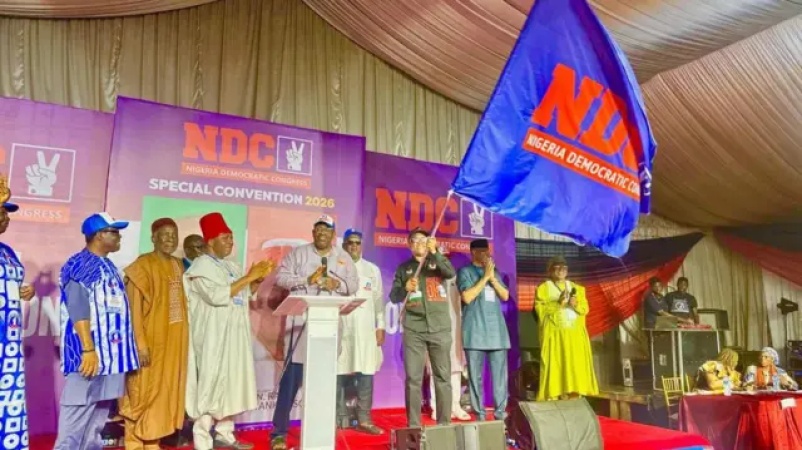
Among those frequently mentioned are Abdulsalam Gwarzo, a former deputy governor; Shaba Sharada, a younger political figure with established networks; Ibrahim “Little” Al-Amin, known for his political connections; and Ibrahim Khalil, a cleric with a reputation for integrity. The defection of Rabiu Kwankwaso to the National Democratic Congress (NDC) is expected to swing something in favour of that party in the state. But that remains to be seen.
ZAMFARA STATE
In Zamfara State, from the prevailing political happenstance, it is safe to presume that 2027 would be pregnant with lots of attention-grabbing scenarios and surprises.
The principal actors that may determine the political processes from the major political parties are already engaged in consultations and contacts from ward to local government level in anticipation of a ferocious 2027 political battle in the state.
The recent reconciliation of APC bigwigs was attributed to the efforts of the national leadership of the APC and elders such as former Governor Ahmed Sani Yarima and former Minister Ambassador Bashir Yuguda, who waded into the party’s crisis and reconciled the warring factions.
The defection of Governor Dauda Lawal from the PDP to the APC also enveloped all three senators—Senator Ikira Aliyu Bilbis, Senator Sahabi Yau, and Senator Abdulaziz Yari Abubakar—along with six members of the House of Representatives who are now all in the APC.
The governor’s defection to the APC, however, opened a new course for the party in the state. All the political actors, including four former governors—Ahmed Sani Yarima Bakura, Mamuda Aliyu Shinkafi, Senator Abdulaziz Yari Abubakar, and Bello Matawalle Maradun—have anointed the incumbent Governor Dauda Lawal to run for a second term in the state.
The political alignment of Governor Dauda Lawal with former Governor Abdulaziz Yari, Ahmed Sani, and Matawalle has caused serious ripples among the majority of their supporters, as some oppose the idea of Governor Lawal’s defection and may likely work against the incumbency during the election. Though there were some misgivings among the camps of the governor and Matawalle a former governor, Sani Yerima, was, however said to have doused the tension when he convened a meeting with all the APC political actors and it yielded fruits. While the ADC is expected to spring surprises in the state, the uncertainty over the fate of the party appears to be slowing the party down.
SOKOTO STATE
In Sokoto, as political realignments gather momentum ahead of the 2027 general elections, Sokoto State is fast emerging as one of Nigeria’s most closely watched battlegrounds.
At the center of the unfolding contest are two formidable political heavyweights—Aliyu Wamakko and Aminu Waziri Tambuwal—whose rivalry is expected to shape not only the state’s political direction but also influence power dynamics across the North-West.
For over a decade, both men have dominated Sokoto’s political landscape, building extensive grassroots networks and commanding loyalty across party lines.
Their influence transcends electoral cycles, rooted in deep patronage systems, strategic alliances, and longstanding relationships with traditional and political institutions.
Wamakko, a former governor and now a leading figure within the All Progressives Congress (APC), remains arguably the most influential political actor in the state.
His membership of the APC and his role in delivering Sokoto during previous elections solidified his position as the party’s undisputed leader in the state. His political machinery, widely regarded as disciplined and well-funded, continues to exert control over key party structures and local government networks.
On the other side stands Tambuwal, the immediate past governor and a seasoned political strategist who recently aligned with the African Democratic Congress (ADC). His defection signals a significant shift in Sokoto’s political equation, introducing a fresh platform through which he hopes to reassert his influence and challenge APC dominance. The battle for dominance in the state will surely continue among these gladiators as the 2027 elections take shape.
JIGAWA STATE
Political activities in Jigawa State are intensifying ahead of the 2027 general elections, with key power brokers across the All Progressives Congress (APC), African Democratic Congress (ADC), and Peoples Democratic Party (PDP) positioning themselves in a high-stakes contest for control of the state.
With over 2.5 million registered voters under the Independent National Electoral Commission (INEC), the three parties are not only testing their structures but also relying heavily on the influence of their leading chieftains to consolidate support and expand political reach.
For the ruling APC, the battle to retain power rests significantly on the strength of its established political figures and the advantage of incumbency. Notable among them are Senator Ahmed Abdulhamid, a ranking federal lawmaker with deep grassroots connections in Jigawa North-East; Babangida Husaini, a seasoned politician with strong mobilisation capacity; and Alhaji Isah Gerawa, whose longstanding political networks continue to shape party dynamics.
These figures, alongside Governor Umar Namadi’s administration, form the backbone of the APC’s strategy to sustain dominance through a mix of governance record, political structure, and resource advantage. The influence of former governor Sule Lamido is expected to play some roles in the determination of the fate of the opposition in the state but it is expected that the APC would retain an upper hand in the calculations.
KEBBI STATE
Kebbi politics has been centred on personality and the ability of political echelons to establish a political base and carry the downtrodden and vulnerable along. This is where Governor Nasiru Idris has displayed his welfarism above any political leaders who have emerged before him.
The governor, having come from the background of labour unionism, knew what poverty is all about. He understood this quickly, and during his campaign did not hesitate to announce to the electorate that this was their time to vote for a Comrade leader who would address their neglect over the years and bring hope and succour to their lives.
The governor has brought to reality across the state. Apart from infrastructure development, the governor has been labelled as a welfarist whose benefits have cut across all and sundry in the state. He has, through this system, won the hearts of the majority of the people in the state, and anybody who thinks he can defeat Kauran Gwandu in the coming election would run a difficult race.
Another powerful power broker in the state is Senator Adamu Aliero, who is considered a political wizard across the state with his structures on ground in every community.
Adamu Aliero, who ventured into politics in 1999, became the governor of the state under the then APP before it later became the ANPP. All this while, Aliero has been moving from one political party to another, finding where his presence and influence would be anchored. He remains a force in the state. Former Justice Minister Abubakar Chika Malami is expected to lead the charge of the opposition in the state with the ADC but his battles in the court might have reduced the challenge for now.
Alhaji Faruku Aliyu Enabo, the current Chairman of the Kebbi State Pilgrims Welfare Board, is another political power broker in the state who commands respect politically. It is expected that he remains loyal to the APC, thus strengthening the hold of the ruling party on the state.
KATSINA STATE
As the 2027 General Elections draw nearer, looking at how each of them is struggling to tie up their knots, the ruling party APC in Katsina State, ADC, and PDP are assessed to be the main contenders in the election.
The All Progressives Congress (APC) has been ruling the state for over 12 years. Although the incumbent Governor, Malam Dikko Radda, has repeatedly boasted that he has no threat in his contest for a second term, he is at the same time trying to win more support and defectors from the opposition parties through his style of citizens’ inclusion for the development of the state.
Through this policy, he has wooed and placed so many grassroots politicians from the opposition PDP in his government.
Radda’s threat is not Senator Yakubu Lado Danmarke of the PDP, who always insists he is the gubernatorial candidate of his party.
As it stands now, the PDP is not a party that will have an impact in the election. The leadership tussle in the party is what derails it. Additionally, Aminu Bello Masari, the governor before handing over to Dikko Radda, diplomatically wooed the who-is-who in the opposition PDP to the APC.
The APC’s main threat in Katsina is the ADC, which is filled with the most feared bigwigs and grassroots politicians such as Dr. Mustafa Inuwa, former Secretary to the State Government, Senator Ahmed Babba Kaita, and with the emergence of the former DSS Director, Lawal Daura.
Although Radda is boasting of achievements in all aspects, the ADC is decampaigning the APC with the problems associated with hardships inflicted on people by what it alleges are the APC’s rotten policies.
In their campaigns, they are winning more supporters who have grudges against the federal and state governments on different issues.
But despite that, Radda came with a vision and mission to defeat the problem of insecurity that is bedevilling the state, transform the education system and social life of the citizens, and because he has been assessed and found to have so far performed well, many people in Katsina are seeing him as a preferable candidate. It looks like the APC is seeking to consolidate its hold by retaining the seats of the three state senators, members of the House of Representatives, State Assembly members, and even all 34 local council chairmen are all members of the APC, a form of confidence building ahead 2027. (Nigerian Tribune)
.Past Nigerian leaders from the North-West: Gen. Murtala Muhammad, Alhaji Shehu Shagari, Gen. Sani Abacha, Alhaji Umaru Yar’Adua, and Gen. Muhammadu Buhari