ADAD
ADAD
Updating your news feed...
NEWS EXPRESS is Nigeria’s leading online newspaper. Published by Africa’s international award-winning journalist, Mr. Isaac Umunna, NEWS EXPRESS is Nigeria’s first truly professional online daily newspaper. It is published from Lagos, Nigeria’s economic and media hub, and has a provision for occasional special print editions. Thanks to our vast network of sources and dedicated team of professional journalists and contributors spread across Nigeria and overseas, NEWS EXPRESS has become synonymous with newsbreaks and exclusive stories from around the world.























Loading banners
Loading banners...

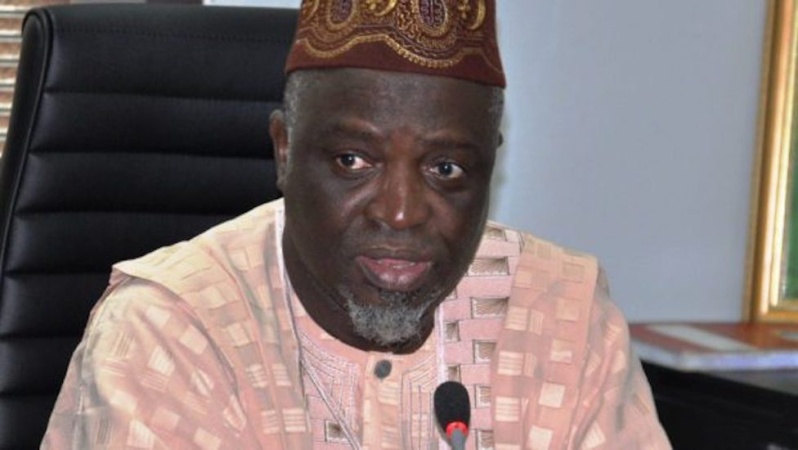
JAMB Registrar, Oloyede
By HENRY OLADELE
The Registrar of the Joint Admissions and Matriculation Board (JAMB), Prof. Ishaq Oloyede, says teacher preparation in Nigeria will be strengthened through simultaneous reform of admission processes and curriculum content.
Oloyede made the assertion at the Third Distinguished Lecture Series of Lagos State University of Education (LASUED) on Monday.
The lecture is entitled: “Strengthening Teacher Preparation in Nigeria: Admission and Contents Consolidation”.
According to him, addressing admission and content consolidation simultaneously is critical to producing competent and effective teachers.
“Teacher preparation in Nigeria cannot be strengthened unless the questions of admission and content are addressed together,” he said.
He stressed that admission policies into teacher education programmes must be profession-sensitive, saying that recent reviews by the Federal Ministry of Education were steps in the right direction.
Oloyede emphasised that subject mastery remained foundational across all disciplines, including languages, sciences, mathematics, arts, social studies, technology and religious education.
“A teacher cannot teach what he or she does not understand. It is not enough to know a subject; teachers must also understand how learners encounter difficulties in that subject,” he said.
The JAMB registrar, however, decried the mismatch between expectations from teachers and the level of support they received.
“You cannot demand first rate formation for a profession that offers second rate reward; neither can you retain top talent in a profession constantly overshadowed by more attractive alternatives,” he said.
He outlined key elements of a comprehensive reform agenda for teacher preparation to include purposeful recruitment, curriculum consolidation, stronger practicum, governance rationalisation and improved reward systems.
He listed the others to include differentiated but coherent training pathways, caution against compressed training formats, institutional prestige-building and resetting incentives within the profession.
Oloyede advocated a shift from what he described as residual placement to deliberate recruitment into teacher education, with tailored entry criteria and aptitude-based selection.
He added that aptitude screening should be conducted at the institutional level rather than by JAMB, stressing the need for diligence and integrity in the process.
On training structure, he said the Nigeria Certificate in Education should remain a respected specialist route, while degree pathways should be strengthened without undermining foundational teacher education.
He also called for seamless progression across levels of teacher education.
“ Admission determines who enters the craft, while content determines the kind of teacher that emerges,” he said.
Earlier, the Vice-Chancellor of LASUED, Prof. Bidemi Lafiaji-Okuneye, described the lecture as timely and strategic, noting that teacher quality was central to national development.
She said that admission into teacher education should not be treated as a routine administrative exercise, but as a foundation for quality assurance.
According to her, content consolidation involves aligning subject knowledge, pedagogy, values, practicum, digital competence and assessment with the realities of 21st Century learning.
Lafiaji-Okuneye added that teacher education must evolve in response to global changes such as digital disruption, artificial intelligence and shifting labour market demands.
“We must prepare teachers who are not only knowledgeable, but reflective; not only certified, but competent; not only employable, but innovative and ethically grounded,” she said.
She urged stakeholders to use the lecture as an opportunity to strengthen standards, improve curriculum coherence and promote fairness and transparency in admissions.
The vice-chancellor reaffirmed the institution’s commitment to advancing teacher education through research, quality assurance and institutional reforms.
The News Agency of Nigeria (NAN) reports that the event was attended by academics, policymakers and other education stakeholders. (NAN)