ADAD
ADAD
Updating your news feed...
NEWS EXPRESS is Nigeria’s leading online newspaper. Published by Africa’s international award-winning journalist, Mr. Isaac Umunna, NEWS EXPRESS is Nigeria’s first truly professional online daily newspaper. It is published from Lagos, Nigeria’s economic and media hub, and has a provision for occasional special print editions. Thanks to our vast network of sources and dedicated team of professional journalists and contributors spread across Nigeria and overseas, NEWS EXPRESS has become synonymous with newsbreaks and exclusive stories from around the world.

















Loading banners
Loading banners...


For the proposed State Police to be effective, there must be a constitutionally guaranteed funding mechanism that ensures mandatory remittances from the Federation Account and from all state governments.
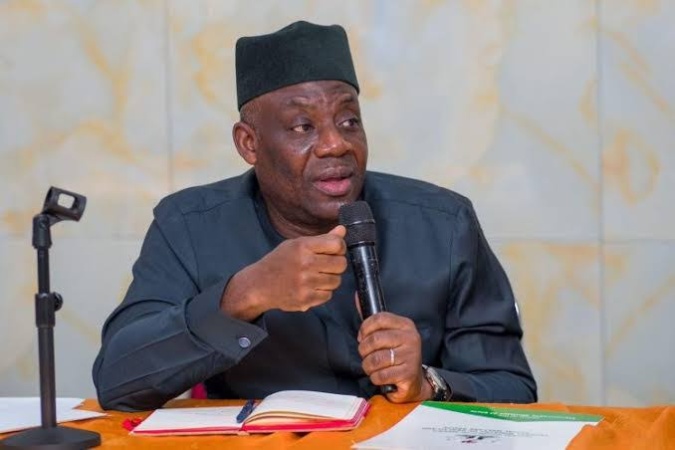
This was part of the recommendations made by the Prof Olu Ogunsakin Steering Committee on State Police inaugurated last month by the Inspector General of Police (IGP) Olatunji Disu.
Information available to The Nation revealed that the committee recommended a three per cent remittance by the Federal Government from the federation account into a proposed State Police Fund, while state governments will contribute 15 per cent of their annual security sector budgets to the fund.
The panel argued that the State Police Fund would ensure stable financing and reduce inequality between richer and poorer states, adding that disbursement by the Fund would be based on population, landmass, security threats, fiscal strength and compliance with national policing standards.
The panel said a transparent funding system would reduce corruption risks and prevent weaker states from becoming “security deserts.”
As part of accountability reforms, the committee recommended mandatory use of body-worn cameras by operational officers, adding that recorded footage should be stored in secure cloud systems and made available to oversight bodies, including ombudsman offices and police service commissions.
It further proposed the creation of public dashboards showing arrest statistics, complaints data, conviction rates and community satisfaction levels to improve trust between citizens and the police.
To manage relations between federal and state police services, the committee recommended the creation of a Federal-State Police Coordination Council chaired by the Inspector-General of Police. The council would include state police heads, lawmakers, civil society representatives, the National Human Rights Commission and the media.
It would oversee joint operations, resource sharing and dispute resolution, and help ensure coordinated national security responses.
On intelligence harmonisation, the panel recommended a National Police Intelligence Portal to support real-time intelligence sharing between federal and state police services. The portal, it said, should be managed by the Federal Police Service Intelligence Bureau under security protocols approved by the Office of the National Security Adviser (ONSA).
According to the recommendations, the portal will improve responses to threats such as kidnapping networks, interstate trafficking and organised crime.
It also proposed the creation of a National Police Standards Board to regulate federal and state police operations, which would conduct annual inspections of state police services, publish compliance ratings and enforce rules on recruitment, training, funding and human rights performance.
States that fail to meet required standards could face improvement directives and funding penalties through a proposed Federal-State Police Coordination Council, the panel proposed.
To prevent political misuse of police structures, the committee recommended criminal sanctions for elected officials who issue unlawful operational orders to police commanders. It also proposed a national register of political interference allegations to be maintained by the coordination council and made accessible to oversight committees of the National Assembly.
Also suggested was the fast-track judicial review procedures for urgent cases involving politically motivated police deployments.
Identifying serious gaps in existing infrastructure, the steering committee proposed minimum standards for future state police headquarters and divisional stations. These include separate custody suites for men, women and juveniles; interview rooms for gender-based violence cases; digital evidence storage systems, command-and-control centres and integrated communications networks.
States are expected to deploy crime databases, geographic information systems for crime mapping and public complaint portals under the proposed policing framework. (The Nation)