Updating your news feed...
NEWS EXPRESS is Nigeria’s leading online newspaper. Published by Africa’s international award-winning journalist, Mr. Isaac Umunna, NEWS EXPRESS is Nigeria’s first truly professional online daily newspaper. It is published from Lagos, Nigeria’s economic and media hub, and has a provision for occasional special print editions. Thanks to our vast network of sources and dedicated team of professional journalists and contributors spread across Nigeria and overseas, NEWS EXPRESS has become synonymous with newsbreaks and exclusive stories from around the world.






















Loading banners
Loading banners...

Marusya
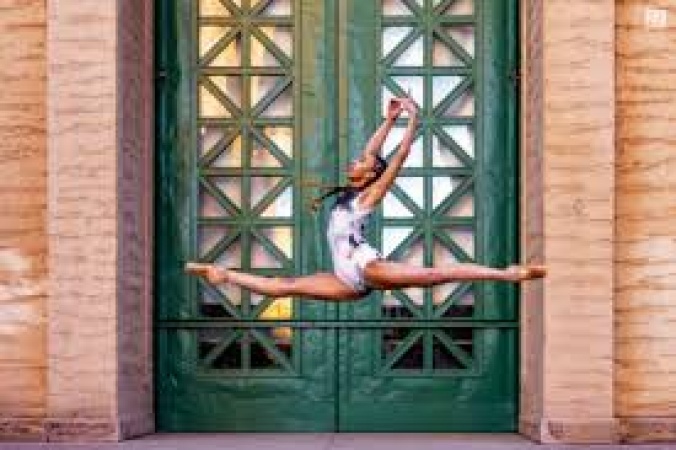
In a world where ballet has long been shaped by tradition and often narrow definitions of identity, a new generation of dancers is quietly but powerfully redrawing the lines. Among them is a remarkable artist, Marusya Ifeoma Madubuko, an American-Nigerian, whose journey into the rarefied world of ballet is as compelling as the performances that have earned her widespread acclaim across the United States and the world.
Straddling two cultures and defying expectations at every turn, this dancer brings more than technical precision to the stage. There is history in every movement, resilience in every leap, and a story that refuses to be boxed in.
In this interview, Marusya speaks on what makes ballet tick. “This is a career of generosity and giving to others through movement, and being able to do that for people, to touch their hearts. It’s part of what makes this job a privilege, it’s a part of what makes it so beautiful,” she says.
Happy reading!
What was your growing up like?
I was born and raised in New York. The earlier part of my childhood was in Queens, NY, until we eventually moved to Manhattan in 2012. I grew up living with my mother and two siblings, with us visiting our father, who also lived in NY, twice a month. I’m very grateful for my mother exposing my siblings and I to all kinds of art, as she was an artist herself. When we could afford it, she would take me to museums, to go see ballets, watch live music performances… That exposure made me appreciate the arts at a very young age.
My mother also put me and my siblings through all kinds of extracurricular activities. I practised everything – from piano, violin, tennis, drawing, gymnastics, and even taekwondo, until I eventually found ballet! I’m grateful for my father and the fact that even though we didn’t live together full-time, he always made sure we felt loved and supported. Despite my parents being separated, I have just as many heart-warming memories with my father as I do with my mother.
Not only that, but I grew up absorbing both the Russian and Nigerian cultures, all while living within the American culture as well! I also had the privilege of having both of my grandmothers around as I was growing up, which absolutely contributed to me connecting to both the Russian and Nigerian side of my heritage.
You have a sister and brother. We understand that you didn’t get along with your sister while growing up. What was responsible for this?
Yes, I grew up with a sister, who is one year and 10 months older, and a brother who is five years younger than me. It’s true, my sister and I didn’t get along at first. We would be able to have fun together, play together, hang out with our mutual friends… but sometimes she would decide she didn’t like me, or found me annoying, as older siblings at times do with younger siblings, or turn our friends against me and bully me. However, we started getting along more consistently during our teenage years, and presently, we are very close and supportive of each other. She is there for me when I need her, and an amazing older sister to me, my brother and younger sisters.
You were a kid model. How did that come about? And why didn’t you become a model as an adult?
I did do some modelling when I was very young. One of my mother’s first friends in New York happened to be a photographer. She not only referred my mum to one of her first jobs in New York, but also did some family shoots with my sister and I. The photographer noticed how photogenic we both were, and recommended my mother contact a kid modelling agency she knew of. I only have a few vague memories of doing photo-shoots as a kid, but I do have a lot of photos from that time. At one point, I even made it to the cover of “Baby Talk” magazine!
Although I stopped modelling after my toddler years, as a professional dancer now, I have photographers reaching out to me and do several photo-shoots a month on the side of my full time job. They are mostly dance photo-shoots, but if I had more time I would definitely look into modelling more, both as a dancer and for fashion. With all of that being said, I am definitely more drawn to dance than modelling and glad I’m in the career I am in.
How did you become a ballet dancer?
I started training in ballet when I was seven years old. I did that until I was 11 years old, then ended up quitting and pursuing visual art instead. There are several reasons as to why I stopped dancing at that age. Part of it was feeling too different— I was taller than everyone in my class, and one of the only darker skinned girls. Because of the commitment ballet takes, I also felt like I was missing out on my social life. Everyday after school, my friends would have time to go to the playground, go hang out at each other’s houses, but I had to rush to ballet class after school everyday. I felt like I was missing out on that, and meanwhile I didn’t even think I was good enough to continue ballet and make the distant dream of becoming a professional dancer a reality.
But I was only 11 years old! And I was so wrong for thinking that I wasn’t good enough, or that I looked too different to pursue it. At 15 years old, I decided to come back to ballet. I missed the challenge of it, and I missed moving my body to express myself. My ballet journey felt unfinished, so I started dancing a few times a week causally, and then eventually got into a pre-professional programme in NY. Because of me not dancing from 11 years old to 14, I was initially very behind and I had to work much, much harder than my peers to catch up to the typical level my age group was.
I’ve always been naturally very disciplined, and that trait helped me stay focused and committed on the ambitious goals I set for myself. Once I came back to ballet at 15 years old, I promised myself I would see it through that time, that I would do everything in my power, spend as much time, put in as much effort as was needed to reach my goal of becoming a professional. The field is very competitive, and extremely challenging. It takes full commitment and focus, sacrifices, and resilience, to make it to the professional level.
I started auditioning for ballet companies in 2018, just three years after returning to ballet. It was only because of all the hard work I put into the craft, all the extra hours I spent practising in my own time, that my coach believed I was ready. Still, with how competitive the field is, it took years to secure a professional contract with a company. Throughout those years, I continued my training.
In 2019, San Francisco Ballet School noticed me during their summer programme and offered me a scholarship to stay for their year-round programme. This school also had a company for professionals, and both were considered very prestigious organisations in the ballet world. I thought that being in their school would give me a better chance of potentially joining their company, and would look good on my resume for other companies. My coach in NY was so excited for me and encouraged me to take the offer.
San Francisco also happened to be the home of my dream company, Alonzo King Lines Ballet; so it made all the more sense to move there. Freshly 19 years old, I packed my bags and moved to San Francisco, CA to continue my training and audition for companies. I stayed in that school until 2021, and that summer I auditioned for and secured a contract with Alonzo King Lines Ballet.
The journey there was extremely challenging, and took a lot of patience and determination, but it was all worth it. Even after five years of working with the company, I still zoom out and realise that I am indeed living my dream. I’m so grateful, so fortunate, to not only be dancing with my dream company, but that it was my first professional contract that kick-started my career.
How do you keep fit and what does it take to be a good ballet dancer?
Being a professional dancer doesn’t mean the work is done! As a student, you train to become a professional, but even within the professions world, you are still learning something new everyday. I believe that if a professional dancer approaches the work with an open mind, with curiosity, like a student would, and puts the ego aside, it fuels the process of growth and consistent self-improvement. Which is exactly what you want as a dancer— we are always striving for perfection, while knowing that there is no such thing, while knowing that absolute perfection is sort of boring, and that as humans we are beautifully flawed, and there will always be something to improve, some higher goal to achieve. Being able to accept that, and enjoy the process of pushing yourself towards your goals without debilitating self-judgement is essential.
As a professional dancer, you’re building your whole life structure around your career because of the commitment and energy it requires. Just like any other pro-athlete, you are responsible for taking good care of your body and mind. Even though we all know that the mind is the control centre of the body and that they are very much linked, many don’t realise that the mental aspect of being a dancer is just as important as the physical. You have to make sure you’re sharp enough to memorize any amount of choreography that you’re assigned; you need to be able to stay calm and ground yourself within a high pressure environment, must make sure you’re able to take criticism without it discouraging you; you’re expected to learn new skills consistently, and must work towards growing your artistry— which comes from introspection, tuning into your creative mind, maturing and being able to take what you’ve learned from life, discoveries you’ve made about yourself, and apply it to the craft.
Another responsibility of a professional dancer is to be mindful of what you put in your body, because that is the fuel that will determine how your “machine” functions. You must be intentional about how much you push yourself, and balance it with self-care and recovery for the muscles and joints.
I strongly believe that as an artist, exposing yourself to other kinds of art and forms of media, perhaps even partaking in it, highly contributes to how a dancer develops. It can be so hard making time for other parts of life as a pro dancer, but I learned how important it really is to keep a balance between enjoying the craft, and enjoying other things life has to offer. Whether it’s other kinds of challenges, or other kinds of fun, it all gives something valuable to one’s growth as a dancer. As a human.
Regarding the physical aspect, my typical work day is from 11am till 6pm. Every morning, we take a ballet class to warm-up, and then rehearse the programmes we are preparing to perform for the rest of the day. Those six to seven hours of dancing do keep us in shape by normal standards, but I believe cross training is essential to stay in great shape, build well-rounded strength, and help prevent injury.
Everyone’s body and routine are different, but I personally show up to work an hour earlier to condition the body with different exercises. I also go to the gym before or after work, and do everything from TRX, to weigh training. I’ve even picked up boxing for fun, but it also ended up giving me a special kind of strength and dynamic that aids in my dancing.
Ballet uses nearly every muscle in the body, but the conditioning outside of work does make a stronger, more versatile, dancer. So to answer your question, being intentional about what I eat, the seven to nine hours of exercise five days a week, and the several hours of exercise and self-care during the weekend, are what keep me fit and healthy.
As a ballet dancer, could you share with us your greatest moments?
There are so many moments I’ve had as a dancer that I remember very fondly, but if I had to share one, I would choose a memory I have from the performance season that took place in San Francisco in 2025. Every year, the director/ choreographer of the company I work for creates a new ballet to premiere in the Spring. That year, the director created a role for me that was by far one of the biggest I’ve ever had. This was coming during a time that I was dealing with both physical and emotional pain. I was going through a big heartbreak that month, and had just founded out that the pain in my foot that I had been dancing with for months was actually a fractured toe.
Some may say that this sounds like it was a dark time for me, but actually it was a very powerful phase of change and development. Yes it was a very challenging time because I was under more pressure at work while dealing with great pain, but I grew immensely as I learned how to navigate all of that. I realised that years earlier I would have gotten overwhelmed with all of that, but that challenging time showed how much I had grown because I “took the bull by the horns” and decided that I will conquer what was laid out in front of me.
That performance season, I actually made a big breakthrough in my artistry and used all the hardship I was going through in my craft in a new way. I felt so free and honest on stage… I felt like I figured out a new way to share a deeper part of myself with the audience. This principal level role was a big responsibility, and the opportunity, the freedom and trust the director gave me to make the role my own, gave me a huge confidence boost. I conquered something big within myself that year. I finished the performance season having received amazing feedback from not only my superiors and peers, but from strangers in the audience.
There is one moment after one of the shows that holds a special place in my heart. The performance had ended, and I went back to my dressing room to rest and change. I took what must’ve been at least 30 minutes, and when I came out into the hallway backstage, there were the usual amount of people there— a combination of production staff, company members, and their loved ones. Then I noticed a woman I hadn’t seen before, and she noticed me too. It seemed like she was waiting for me this whole time because she lit up as soon as she saw me and she came directly over to me, with bright yet teary eyes. She held both of my hands right away, looked at me and said, “I’m sorry, I know you don’t know me, but I just watched tonight’s performance and … I’m sorry I’m at a loss for words….”
Her voice started wavering and she started crying as she said, “you can see I’m an old woman, but I’m telling you that tonight, you made me feel something I didn’t think I could ever feel again. Thank you, thank you so much, thank you so much….” Her emotion rubbed off on me and I started crying with her. Not out of sadness, partially out of empathy, mostly from how deeply her words touched my heart.
One of the goals of a dancer is to be able to move an audience. Make them think, make them feel, make them forget about the outside world, at least for a bit. Sharing that moment with one of the audience members was very touching to me and left me feeling more confident about not just my dancing, but how what I’m trying to express through my movement is received. It’s those moments that remind you that the pain and sacrifices you make each day and beyond is worth it. This is a career of generosity and giving to others through movement, and being able to do that for people, to touch their hearts. It’s part of what makes this job a privilege, it’s a part of what makes it so beautiful.
Tell us about your worst or most embarrassing moment as a ballet dancer…
I don’t make a habit of ruminating on past “mistakes” or so called “embarrassing” moments. If we live life holding on to regrets… well that would get to be quite a heavy weight to carry day to day. So many things in this life will not go according to our plan, and I’ve found radically that accepting those unprecedented challenges as part of life makes navigating problems much easier. I’ve also found that limiting myself to naming experiences as simply “good” or “bad”, black and white, can cause the mind to get carried away thinking about the “bad.” It’s science even— the human brain tends to focus on the negative, looking for something to fix.
Anyway, those two labels don’t do the whole of experiences justice. With a mistake, known with a negative connotation of course, there’s still a lesson to learn. And with learning lessons, there is growth. So how could a so-called “mistake” be labelled as something only wrong or bad, when so much good can come out of it? Embarrassment is a feeling, not an objective stance, and so shifting the perspective to find the good in an experience is not only completely possible, but I would argue an essential skill as professional dancer. Otherwise you won’t last.
In the world of dance, no matter how much you train, you have to accept that you will never be perfect. There will always be a step that you didn’t do the way you wanted to, or even an unexpected fall on stage. But embarrassment is linked to shame, and I have nothing to be shameful about in my experiences as a dancer— I am human and therefore I am flawed. I am allowed to be imperfect. I am allowed to learn from “mistakes.” (The Sun)