ADAD
ADAD
Updating your news feed...
NEWS EXPRESS is Nigeria’s leading online newspaper. Published by Africa’s international award-winning journalist, Mr. Isaac Umunna, NEWS EXPRESS is Nigeria’s first truly professional online daily newspaper. It is published from Lagos, Nigeria’s economic and media hub, and has a provision for occasional special print editions. Thanks to our vast network of sources and dedicated team of professional journalists and contributors spread across Nigeria and overseas, NEWS EXPRESS has become synonymous with newsbreaks and exclusive stories from around the world.
















Loading banners
Loading banners...

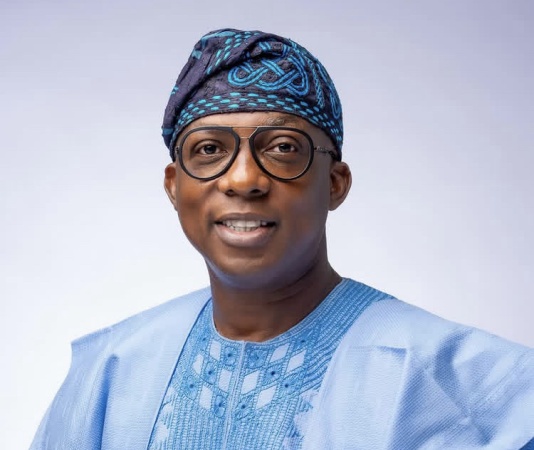
Lagos Commissioner for Environment and Water Resources, Tokunbo Wahab
The Lagos State Commissioner for Environment and Water Resources, Tokunbo Wahab, has responded to criticism of the state’s planned monthly environmental sanitation exercise, insisting that the initiative is a necessary civic responsibility and not a “shutdown” of the city.
Wahab was reacting to remarks by former former Lagos Labour Party governorship candidate and now an African Democratic Congress chieftain, Gbadebo Rhodes-Vivour on Friday, who had described the exercise as “parochial” and lacking imagination, arguing that it does not address the deeper issues of waste management in the state.
Defending the policy in a detailed response shared on X, Wahab rejected the claim that the exercise disrupts economic activity in a major way.
“Shutting down a city of over 20 million people is not what we are doing. We are asking residents to dedicate one-hundred-and-twenty minutes, once every thirty days, to clean their immediate surroundings. That is not a shutdown. That is called taking responsibility,” he wrote.
He explained that the sanitation exercise is designed to reinforce environmental discipline and citizen responsibility.
“Monthly sanitation matters because it reinforces five important principles,” he said, listing civic awareness, drainage maintenance, enforcement windows, community ownership, and improved waste disposal practices.
Wahab also stressed that the initiative is not a replacement for structural reforms, but part of a broader waste management strategy.
“I agree completely that waste management logistics, from collection to disposal to recycling, are critical,” he said, adding that the state had been working on systemic improvements over the past year.
According to him, Lagos has already introduced several environmental interventions, including restrictions on single-use plastics, waste-to-energy projects, biogas initiatives, and partnerships aimed at converting waste into usable resources.
“These are not cosmetic actions. They are structural changes to how Lagos manages waste,” he stated.
However, he maintained that infrastructure alone is insufficient without public cooperation.
“But here is what I also know. No system of waste management, no matter how sophisticated, will succeed if citizens refuse to take basic responsibility for their environment,” Wahab said.
He urged residents to adopt better environmental practices, warning against indiscriminate dumping and poor waste habits.
“You cannot complain about flooding while dumping refuse in drains. You cannot demand a cleaner city while sweeping waste into the road,” he added.
Wahab described the monthly exercise as a complement to broader reforms rather than a stand-alone solution, insisting that behavioural change is central to achieving a cleaner Lagos.
“The monthly sanitation exercise is not a substitute for systemic reform. It is a complement to it. It is about rebuilding a culture of environmental stewardship,” he said.
He also faulted critics of the initiative for dismissing it without offering alternative solutions.
“Dismissing a civic exercise as unimaginative, while offering no alternative path to citizen participation, does not move us forward,” he stated.
Wahab concluded that a cleaner Lagos would require a combination of systems, enforcement, infrastructure, and collective responsibility from citizens.
“A cleaner Lagos will not be built by government alone,” he said.
Rhodes-Vivour had criticised the planned reintroduction of the monthly environmental sanitation exercise in the state, describing the approach as “parochial” and lacking innovation.
Rhodes-Vivour, in a post on X on Friday, reacted to an earlier announcement by Wahab, who had urged residents to participate in the exercise.
The commissioner had announced that the sanitation exercise would hold between 6:30am and 8:30am, calling on residents to take responsibility for keeping their environment clean.
But Rhodes-Vivour faulted the model, arguing that shutting down a megacity like Lagos does not address the root of the problem.
“Shutting down a city of 20 million people to clean their immediate environment is parochial and lacks imagination,” he wrote.
He added, “For emphasis: the issue is not so much about cleaning your environment (which is great) but the logistics of waste management – starting from the collection, to disposal and recycling.”
According to him, without a systemic overhaul, the exercise would yield little long-term impact.
“Anything short of rethinking this system is cosmetic and unimaginative,” he stated. (PUNCH)