
ADVERTISEMENT

ADVERTISEMENT

ADVERTISEMENT

ADVERTISEMENT
























Loading banners


NEWS EXPRESS is Nigeria’s leading online newspaper. Published by Africa’s international award-winning journalist, Mr. Isaac Umunna, NEWS EXPRESS is Nigeria’s first truly professional online daily newspaper. It is published from Lagos, Nigeria’s economic and media hub, and has a provision for occasional special print editions. Thanks to our vast network of sources and dedicated team of professional journalists and contributors spread across Nigeria and overseas, NEWS EXPRESS has become synonymous with newsbreaks and exclusive stories from around the world.

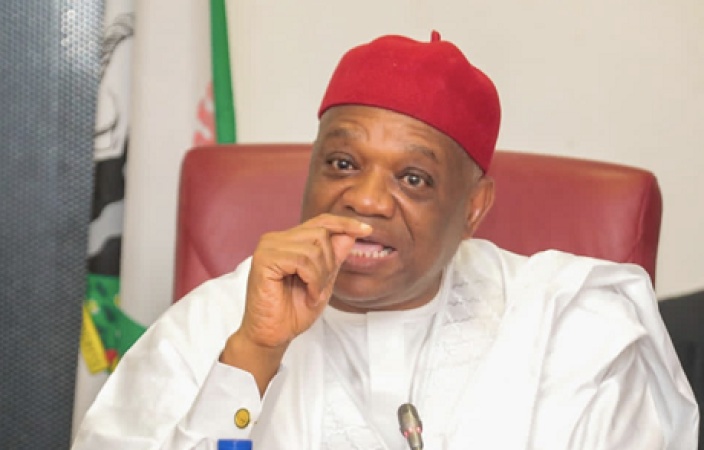
Minister of Power, Adebayo Adelabu
Despite the nationwide shortage in electricity supply, Nigeria’s gas market in the first quarter of 2026 supplied 62 per cent of gas produced to foreign markets.
According to data from factsheets by the Nigerian Midstream and Downstream Petroleum Regulatory Authority (NMDPRA), an average of 4.832 bscf/day was produced during the quarter but allocations increasingly skewed toward exports—leaving power generation, industries, and households under pressure.
The factsheet showed that while production remained relatively stable—January (4.837 bscf/day), February (4.771 bscf/day), and March (4.888 bscf/day)—domestic utilization steadily weakened as export demand intensified.
In contrast, average. Daily gas supplied to the domestic market dropped to 1.906 bscf/day in January, 1.763 bscf/day in February, and 1.855 bscf/day in March, indicating that the local market is increasingly treated as a balancing segment—absorbing cuts whenever export demand rises.
At the center of this shift is NLNG Limited, which saw gas supply to its six operational trains rise consistently from 2.931 bscf/day in January to 3.018 bscf/day in February and 3.033 bscf/day in March.
By March, NLNG alone accounted for about 62% of total gas supply, significantly tightening volumes available for domestic use.
The factsheet showed that sharp decline in gas allocations to thermal power plants nationwide is driven primarily by allocation and offtake decisions rather than any underlying supply shortage.
Gas-to-power supply declined sharply by 25% within one quarter, dropping from 0.648 bscf/day in January to 0.536 bscf/day in February and 0.485 bscf/day in March.
This contraction directly correlates with persistent grid instability and electricity shortfalls nationwide witnessed during the quarter.
Average daily gas supply to industrial users remained largely flat—0.431 bscf/day in January, 0.440 bscf/day in February, and 0.430 bscf/day in March—indicating that constraints on manufacturing and petrochemical output stem less from infrastructure limitations and more from inconsistent allocation of gas.
Meanwhile, Nigeria’s cooking gas market tipped into deficit.
Supply, which stood at 5,110 MT/day in January and 4,703 MT/day in February, failed to keep pace with demand in March, where 4,726 MT/day supply lagged behind 5,122 MT/day consumption, resulting in an approximately 400 MT/day shortfall.
This tightening supply to demand balance has sustained high retail prices—ranging from N950/kg to N1,550/kg during the quarter—forcing many households to revert to alternative fuels such as charcoal and firewood.
Commercial gas supply showed moderate volatility, rising from 0.573 bscf/day in January to 0.628 bscf/day in February, before easing to 0.601 bscf/day in March, showing uncertainty in supply planning for commercial users—particularly in emerging segments such as CNG-based transportation.
In contrast, supply to gas-based industries—including fertilizer, petrochemicals, and manufacturing—remained largely flat at 0.431 bscf/day in January, 0.440 bscf/day in February, and 0.430 bscf/day in March, pointing to stagnation in industrial feedstock availability.
This suggests that constraints are driven less by processing capacity and more by inconsistent and unreliable gas allocation.
Despite the Petroleum Industry Act’s intent to safeguard domestic supply through delivery obligations, findings indicate these commitments are increasingly being sidelined, as export-oriented allocations take precedence.
On the export front, combined flows through NLNG and the West African Gas Pipeline averaged about 0.156 bscf/day in Q1, reinforcing the steady outward push.
The LNG shipments alone grew by 6.4%, rising from 52,857 MT/day in January to 56,241 MT/day in March, outpacing every domestic segment.
What does the data mean?
Gas shortage in recent times has crippled many power plants resulting in epileptic power supply across the country and in some cases blackout.
The mounting debt in the Nigeria Electricity Supply Industry (NESI) especially the debt to gas producers has triggered gas supply disruptions locally with producers preferring to export.
Recently, the federal government inaugurated a Gas-to-Power Monitoring Committee to address persistent gas supply challenges undermining electricity generation across the country.
Minister of Power, Chief Adebayo Adelabu, described the move as a “decisive and strategic step” aimed at resolving one of the most critical constraints in the Nigerian Electricity Supply Industry (NESI).
Adelabu noted that gas-fired plants account for about 80 per cent of Nigeria’s electricity generation, but have continued to face setbacks due to supply disruptions, pipeline vandalism, mounting debts to gas producers, and weak coordination within the sector. (Daily Trust)


