ADAD
ADAD
Updating your news feed...
NEWS EXPRESS is Nigeria’s leading online newspaper. Published by Africa’s international award-winning journalist, Mr. Isaac Umunna, NEWS EXPRESS is Nigeria’s first truly professional online daily newspaper. It is published from Lagos, Nigeria’s economic and media hub, and has a provision for occasional special print editions. Thanks to our vast network of sources and dedicated team of professional journalists and contributors spread across Nigeria and overseas, NEWS EXPRESS has become synonymous with newsbreaks and exclusive stories from around the world.











Loading banners
Loading banners...

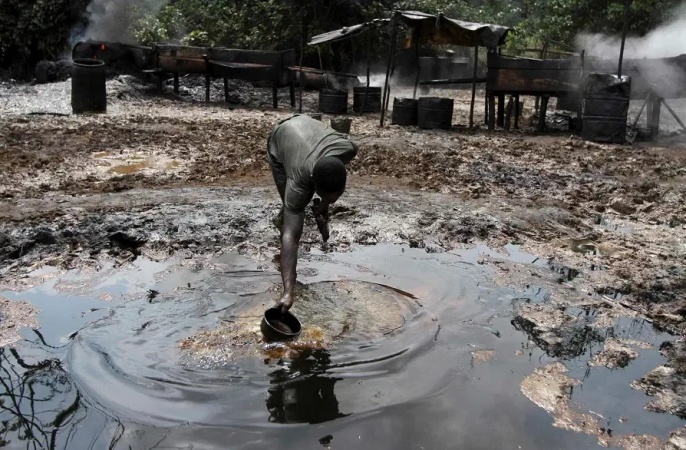
The people of Ogoni in Rivers State have expressed willingness to allow oil exploration on their land, but with certain conditions.
Recently, the Federal Government disclosed plans to resume oil exploration in Ogoniland after a 30-year hiatus, targeting to boost daily production to 2.5 million barrels.
Led by the National Security Adviser (NSA), the move aims to secure Ogoniland and tap into the extensive reserves of Oil Mining Lease (OML) 11. While supported by some local stakeholders, it faces resistance from groups demanding environmental remediation and justice for past pollution.
However, the people, speaking through an environmentalist, Eric Dooh, expressed joy that exploration activities are resuming on their terms.
Dooh disclosed this at the Inclusive Environments Nigeria Workshop in Lagos, which gathered journalists, activists, and other stakeholders to examine a research work entitled ‘Developing a framework for Collective Environmental Justice’ by a United Kingdom (UK)-based research team led by Prof. Chantal Davies. Other members of the teams are Dr Egbosa Ekhator, Dr Holly White, and Dr Kim Ross.
While Eghosa is from the University of Derby, others are from the University of Chester. According to the Ogoni, before the exploration activities can resume, a proper Environmental Impact Assessment (EIA) should be conducted; all legal issues pending in court must be resolved, possibly out-of-court; an inclusive meeting of impacted and host communities should be called, and a proper Needs Assessment of projects should be carried out.
From the UK perspective, Eghosa noted that the government does not use the term “environmental justice,” but “environmental equality,” which could mean environmental sustainability. He added that environmental justice is difficult to define clearly.
Meanwhile, the research noted that environmental justice is more than a buzzword, stating: “At its core, environmental justice asks one critical question: who benefits from environmental progress, and who bears the cost? As climate change intensifies and institutions make bold sustainability pledges, the question becomes not just urgent, but unavoidable.
“Historically, certain communities, especially those marginalised by race, income, disability or geography, have been systematically excluded from environmental decision-making while disproportionately exposed to pollution, displacement and environmental harm. Environmental justice challenges this imbalance by centring equity in sustainability efforts. It ensures that the voices of those most affected are not only heard but help to shape the decisions that impact their lives.” (The Guardian)