
Updating your news feed...
NEWS EXPRESS is Nigeria’s leading online newspaper. Published by Africa’s international award-winning journalist, Mr. Isaac Umunna, NEWS EXPRESS is Nigeria’s first truly professional online daily newspaper. It is published from Lagos, Nigeria’s economic and media hub, and has a provision for occasional special print editions. Thanks to our vast network of sources and dedicated team of professional journalists and contributors spread across Nigeria and overseas, NEWS EXPRESS has become synonymous with newsbreaks and exclusive stories from around the world.

























Loading banners
Loading banners...

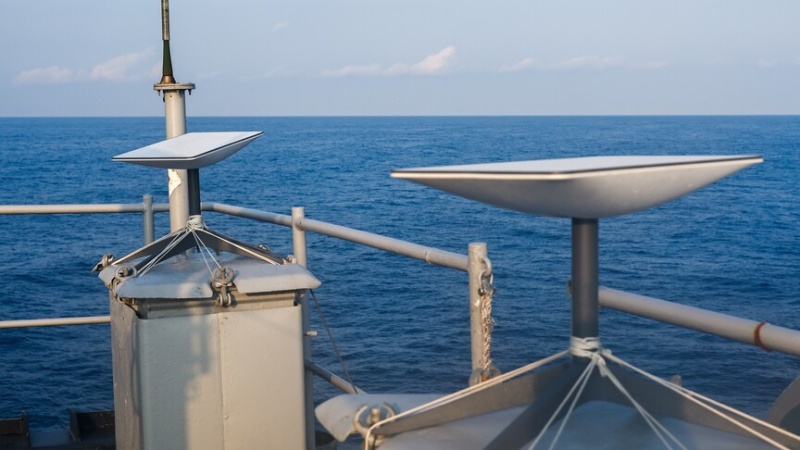
Plans to launch reflective satellites and up to 1 million additional spacecraft in low Earth orbit could disrupt human sleep, wildlife, and ecosystems, scientists have warned.
“The proposed scale of orbital deployment would represent a significant alteration of the natural night-time light environment at a planetary scale,” said the presidents of four international chronobiology societies, according to The Guardian.
Charalambos Kyriacou, a geneticist at the University of Leicester and president of the European Biological Rhythms Society (EBRS), added: “We’re saying, please think before you go through with this, because this could have global implications for things like food security. Plants need the night. You can’t just get rid of it.”
Reflect Orbital aims to beam sunlight onto 5- to 6-kilometer (3.1-3.7-mile) areas “on demand,” while Elon Musk’s company SpaceX plans up to 1 million satellites for a solar-powered AI network.
“While ideas like mirrors on satellites beaming ‘sunlight on demand’ … may sound like science fiction, these proposals are very real,” said Ruskin Hartley of DarkSky International.
Miroslav Kocifaj of the Slovak Academy of Sciences added that satellite reflections already raise night sky brightness and could approach thresholds set to preserve dark skies by 2035.
Tami Martino, head of the Canadian Society of Chronobiology, said: “Circadian systems are sensitive to light levels far below what humans typically perceive as bright. If the night sky becomes permanently brighter, the consequences could ripple through ecosystems in ways we do not yet fully understand.” (AA)




