ADAD
ADADUpdating your news feed...

NEWS EXPRESS is Nigeria’s leading online newspaper. Published by Africa’s international award-winning journalist, Mr. Isaac Umunna, NEWS EXPRESS is Nigeria’s first truly professional online daily newspaper. It is published from Lagos, Nigeria’s economic and media hub, and has a provision for occasional special print editions. Thanks to our vast network of sources and dedicated team of professional journalists and contributors spread across Nigeria and overseas, NEWS EXPRESS has become synonymous with newsbreaks and exclusive stories from around the world.




The Federal Government has proposed N135.22bn in the 2026 budget for what it described as “Electoral Adjudication and Post Election Provision,” pointing to a fresh multi-billion-naira commitment to managing disputes and obligations that typically trail Nigeria’s elections.
The provision was contained in the House of Representatives Order Paper for March 31, 2026, which carried the report on the 2026 Appropriation Bill, as seen by The PUNCH on Monday.
It was observed that the allocation was captured under the Service-Wide Votes, a centrally managed pool of funds used by the Federal Government to finance obligations not tied to a specific ministry, department, or agency.
Service-Wide Votes are widely regarded as the government’s contingency or general-purpose fund within the budget.
It has been described as a central provision used to cover expenditures that cut across multiple agencies, including unforeseen obligations, national commitments, and liabilities that cannot be easily assigned to a single institution.
In some cases, the fund also accommodates items that require further approval or are not fully determined at the time of budget preparation.
Within this framework, the N135.22bn provision for post-election matters indicates that the government expects ongoing fiscal pressure from election-related legal disputes, settlements, and administrative processes.
Further analysis of the appropriation document showed that the provision sits within the broader Consolidated Revenue Fund charges, reinforcing its classification as a centrally managed obligation rather than a direct allocation to any single agency.
The budget schedule showed that total CRF charges stood at N3.70tn, meaning the electoral adjudication and post-election line alone accounted for about 3.65 per cent of that segment of spending.
The allocation came alongside a much larger N1.01tn statutory transfer to the Independent National Electoral Commission in the 2026 fiscal proposal.
The PUNCH observed that INEC is the largest recipient in this category, accounting for 21 per cent of the total statutory transfers of N4.80tn.
Statutory transfers are compulsory allocations backed by law and the Constitution, paid directly to government institutions such as INEC, the National Assembly, and the National Judicial Council.
These funds are released as a first-line charge from the Consolidated Revenue Fund and are not subject to direct executive control.
This means agencies receiving statutory transfers have a degree of financial autonomy and are guaranteed funding to carry out constitutionally mandated functions, particularly those tied to governance, democracy, and institutional oversight.
The PUNCH reported earlier in February that INEC informed the National Assembly it required N873.78bn to conduct the 2027 general elections. The agency also demanded N171bn to fund its operations in the 2026 fiscal year.
The N873.78bn proposed for the 2027 elections represents a significant increase over the N313.4bn released by the Federal Government for the 2023 general election.
The PUNCH further observed that the N135.22bn included in the 2026 appropriation bill is a new line item, which was not stated in the proposed 2026 budget.
Parties question allocation
However, opposition parties and civil society organisations have questioned this new allocation.
The People’s Democratic Party and the African Democratic Congress have raised concerns about the N135.22bn provision for post-election legal matters, questioning the allocation’s transparency and rationale and calling for greater accountability in its use.
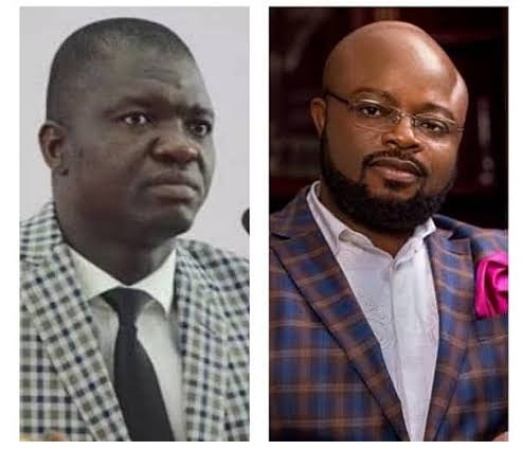
The National Publicity Secretaries of the PDP and the ADC, Ini Ememobong and Bolaji Abdullahi, in an exclusive interview with The PUNCH, expressed concern that the provision suggests INEC is expecting legal disputes, implying a lack of preparedness to conduct free, fair, credible, and acceptable elections in 2027.
The PDP National Publicity Secretary said the provision raises concerns about transparency in Nigeria’s electoral process. He argued that the allocation suggests INEC is anticipating disputes, adding that greater openness would “drastically reduce” post-election litigation.
Ememobong said, “It means that INEC itself is anticipating that it will not do well and that people will not accept the outcome of the results. Because if INEC becomes very transparent, post-election litigation will be reduced drastically. It is the lack of transparency and the obvious opacity of INEC during elections that result in post-election litigation.
“However, INEC, in every election, is meant to be neutral. So I am wondering what they are funding.”
He questioned the need for extensive legal funding, noting that “most of the lawyers should be in-house,” while alleging that external counsel may be influenced by political interests.
Ememobong warned that weak institutions and poor electoral conduct have historically undermined democracy, urging authorities to “learn from history” and prioritise governance over politics ahead of the 2027 elections.
My advice is that the APC-led Federal Government, INEC, and everyone involved in the 2027 elections should take a step back to ensure we protect the country and democracy before talking about elections and partisanship,” he said.
On his part, the ADC Publicity Secretary said it is normal for the Independent National Electoral Commission to prepare for post-election litigation, noting that the electoral body is often joined in legal disputes arising from elections.
However, he raised concerns about the size of the N135bn provision, describing it as excessive given expectations of credible polls. Abdullahi questioned the basis for such a large budget for legal services and the number of cases being anticipated.
He argued that if elections are free and transparent, litigation should be minimal, warning that while the principle is valid, the amount raises accountability concerns.
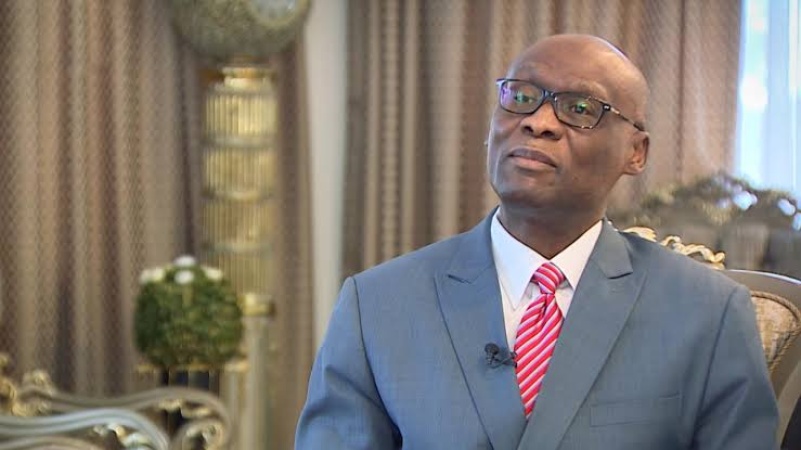
Also reacting, a renowned political economist, Prof Pat Utomi, questioned why the Federal Government should make budgetary provisions for elections, insisting that elections are contested by individual candidates, not the government.
Speaking to The PUNCH, Utomi said, “It is not the Federal Government that goes to elections, it is the individual candidates, so why should the Federal Government have a budget for it? They should not.”
When asked whether such provisions could be meant for the Independent National Electoral Commission, which is often involved in post-election litigation, he maintained that the commission should manage its own budget.
“If the budget is for INEC, then it should be in the INEC budget, not the FG’s budget. Although the budget process in Nigeria is broken and has been a pure mess,” he added.
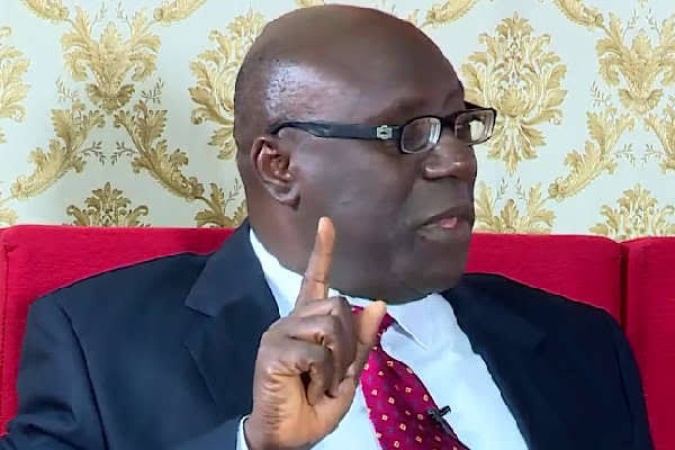
On his part, human rights lawyer, Femi Falana (SAN), has criticised the proposed expenditure on election-related legal matters, describing it as excessive and unjustifiable.
Falana speaking to The PUNCH on Monday, said, “It is on the very high side. Apart from the fact that INEC has its legal department that services all its offices in the 36 states of the Federation, INEC does not pay more than N3m per brief, even to a senior advocate. This is due to the fact that INEC maintains a neutral position in the majority of pre-election cases.”
He noted that in 2023, the Independent National Electoral Commission was involved in a relatively limited number of legal disputes. “In 2023, INEC was joined as a party in less than 3,500 pre-election cases, election petitions, and appeals arising from them,” he said.
The senior advocate further argued that recent legal developments are expected to reduce the volume of such cases.
“With the ouster of the jurisdiction of the courts in the internal affairs of political parties, the number of pre-election cases will be substantially reduced, and if INEC conducts credible elections, there may be few election petitions and appeals,” Falana added.
He maintained that overall spending on election litigation should remain significantly lower than projected. “Altogether, INEC may not spend up to N20 billion on election legal battles,” he said.
Bodies react
The provision, approved by the National Assembly, has also sparked criticism from Civil Society Organisations, which questioned both the intent and implications of allocating such a substantial sum for anticipated electoral litigation.
The Executive Director of #FixPolitics Africa, Anthony Ubani, has raised concerns over the allocation for post-election legal battles, warning that it reflects deeper flaws in Nigeria’s electoral system.
Ubani said, “The N135.22bn allocation for post-election legal battles is a troubling signal about the state of our democracy”.
While he acknowledged that election disputes are part of the post-election period, he stressed that making a budget as high as the proposed sum calls for concern. He argued that the growing reliance on courts to determine electoral outcomes undermines public confidence in the democratic process.
“Yes, electoral disputes are normal, and the judiciary must be funded. But when a country begins to budget this heavily for post-election litigation, it suggests that elections are no longer expected to be trusted; they are expected to be contested.
“A credible electoral system should settle outcomes at the ballot box, not in the courtroom. But in Nigeria, elections are increasingly fought in three stages: primaries, voting day, and then the tribunal. This weakens public confidence and shifts the real battleground away from the people,” he said.
Ubani added that the trend encourages manipulation and reduces accountability among political actors.
“When politicians believe the final outcome will be decided in court, compliance drops, manipulation increases, and the system begins to reward strategy over integrity. Instead of fixing the root causes, weak electoral laws, poor transparency, weak enforcement, and flawed processes, we are budgeting to manage the consequences. That is backward.”
He called for reforms to strengthen electoral credibility, including real-time transmission of results.
“Just including mandatory real-time electronic transmission of results in the electoral law is enough to checkmate 55 per cent or more of the malpractices, opacity, and fraud in the electoral process. This, in turn, will necessarily cut the litigation budget at least by half.
“Nigeria must invest more in electoral integrity than in electoral disputes. The goal should be clear: elections that are credible enough to be accepted, not endlessly litigated. Anything less keeps us trapped in a cycle of distrust, cost, and democratic decline,” the political group emphasised.
Reacting to the development, the Executive Director of the Centre for Anti-Corruption and Open Leadership, Debo Adeniran, said the allocation could only be justified under specific conditions.
“It could only be appropriate if it is allocated for legal battles by or against INEC. But if it is for legal battles involving the ruling party, that would be unwarranted. That would be abnormal,” he said.
Adeniran noted that budgeting for legal disputes reflects contingency planning but warned against duplication of responsibilities, particularly if the Independent National Electoral Commission already has provisions covering such expenses.
He added that the scale of potential litigation across political parties and jurisdictions could significantly drive up costs. “The research, evidence, and witnesses will also be compiled. All of these things really cost money. So legal fees can be very hefty sometimes, but because it is a plan, whatever is not spent is expected to be returned to the treasury,” Adeniran said.
However, he questioned why the Federal Government should shoulder such a responsibility if INEC already receives substantial funding. “So it would be like double appropriation. If INEC has already received nearly a trillion naira, it ought to have included legal battles in its appropriation,” he said.
He stressed that as an independent body, INEC should manage its legal funding through its own budgetary framework. Adeniran further warned against using public funds to support political parties in election-related litigation.
Also speaking, the Executive Director of the Civil Society Legislative Advocacy Centre, Auwal Rafsanjani, described the allocation as troubling, suggesting it signals an expectation of widespread electoral disputes.
“The idea of this huge amount of money for an anticipated legal tussle on the election shows that there appears to be already a premeditated plan to create conditions for an election dispute,” he said.
Rafsanjani questioned the rationale behind allocating large sums for elections that should ideally be conducted transparently and efficiently. “And why is it that Nigeria is spending so much money to conduct an election, and the election ends up in unsatisfactory conduct?” he asked.
He argued that credible electoral processes would significantly reduce the need for post-election litigation. “Conducting free and fair elections will actually help us to minimise waste and duplication of resources if we are honest and sincere about organising an election,” Rafsanjani stated.
He also raised concerns about fairness, warning that such funds could disproportionately benefit ruling party candidates. “So both INEC and the ruling party must not take advantage and undermine the other opposition political parties in the country if we really want to ensure that we are fair and balanced,” he said. (The PUNCH)