Updating your news feed...

NEWS EXPRESS is Nigeria’s leading online newspaper. Published by Africa’s international award-winning journalist, Mr. Isaac Umunna, NEWS EXPRESS is Nigeria’s first truly professional online daily newspaper. It is published from Lagos, Nigeria’s economic and media hub, and has a provision for occasional special print editions. Thanks to our vast network of sources and dedicated team of professional journalists and contributors spread across Nigeria and overseas, NEWS EXPRESS has become synonymous with newsbreaks and exclusive stories from around the world.













Loading banners
Loading banners...

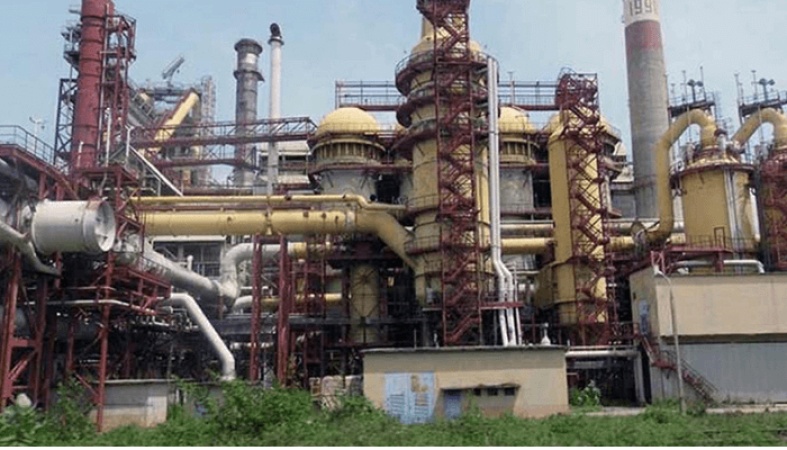
Nigeria’s decades-long ambition to revive the Ajaokuta Steel Company faces renewed scrutiny as the federal government advances a £746 million export finance deal with the UK.
The pact, signed by President Bola Ahmed Tinubu, aims to modernise Lagos’s busiest seaports, but stakeholders say it primarily strengthens Britain’s steel industry.
The deal includes a £70 million contract for British Steel to supply 120,000 tonnes of steel billets for the port upgrade project. While this boosts UK manufacturing, critics argue it highlights Nigeria’s dependence on imported steel, despite having one of Africa’s largest steel plants lying dormant.
“The Nigerian government has explored alternative partnerships, including talks with a Chinese firm over a $2 billion investment to revive Ajaokuta Steel.”
Meanwhile, citizens on social media had criticised the deal, alleging that the larger gains will go to the United Kingdom and its citizens.
Obedient Prince, in his Facebook post, criticised the deal’s structure: “75–80% of the project’s value, including equipment, logistics, and expertise, will benefit UK companies. If and when we repay everything, then and only then will Nigeria begin to benefit. But that ‘then’ may not arrive until 2050–2060.”
Similarly, Dolapo Bright added that “the deal also aims to streamline administrative processes for deporting overstayers and failed asylum seekers from the UK.”
However, industry players and economists see this differently.
Ibrahim Audu Abdurrahman, chairman of the Iron and Steel Senior Staff Association of Nigeria (ISSSAN) at Ajaokuta, stresses steel’s broader economic role: “Steel production drives industrial development, creates jobs, attracts investment, supports local industries, and can diversify Nigeria’s oil-dependent economy. Abandoning Ajaokuta poses a serious threat to socio-economic development.”
Abdurrahman elaborates on the potential benefits of the UK deal, noting that it could facilitate technology transfer.
“There could be a transfer of technology from the UK to Nigeria. By developing their steel sector, the same knowledge can be transferred to our industry. That is the positive side we must look at.”
He, however, cautioned against prioritising foreign-backed supply chains.
“If the UK industry is strengthened while Nigeria’s own is abandoned, then the positive impact becomes negative for our economy. We are not looking to paint the government in a negative light. We are looking for what will help Nigeria work.”
Also speaking, Daniel Onyejiuwa, head of the Economics department at Glorious Vision University, lauds the initiative, saying, “The agreement must be concluded and achieved within the time agreed to give it meaning.
“If the governments can complete the agreement within the agreed timeline, it will not only be a plus to both nations but will also enhance job creation and boost the Nigerian economy.”
Similarly, Kehinde Ola, senior lecturer at Glorious Vision University, described the port upgrade deal as a pragmatic short-term approach: “This supply is to boost our production and complete the Lagos Port Complex in Apapa and Tin Can Island Port.”
Ola notes public reactions questioning why Nigeria is partnering externally on steel-related infrastructure while Ajaokuta remains underutilised:
“At this period, we have not produced steel for more than 40 years. Maybe there is a need for the government to do something differently.”
The Ajaokuta plant, conceived in 1979, remains idle despite multiple revival efforts. Forty out of 42 plant units are technically complete, but decades of mismanagement and policy inconsistencies have stalled progress.
Experts argue that Nigeria must balance immediate infrastructure gains with long-term industrial revival. “A robust steel sector can attract investment, support local industries, and diversify Nigeria’s economy,” Abdurrahman says. “Each year Ajaokuta remains idle, the country misses opportunities for industrialisation and job creation.”
The Nigerian government has explored alternative partnerships, including talks with a Chinese firm over a $2 billion investment to revive Ajaokuta Steel.
As the country navigates this deal, questions remain about its steel industry’s future and whether it can transform Ajaokuta into a catalyst for economic growth.
The port upgrade is expected to reduce cargo delays, strengthen Nigeria’s position as a regional maritime hub, and improve trade efficiency. However, stakeholders emphasise that these gains should not come at the expense of domestic industrial development.
“Ajaokuta’s revival is crucial for Nigeria’s economic diversification,” says Ola. “The government should prioritise policies that support local steel production and job creation.”
As the debate continues, one thing is clear: Nigeria’s steel industry hangs in the balance, awaiting a decisive move towards self-sufficiency or further dependence on foreign supply chains. (Business Day)