Updating your news feed...

NEWS EXPRESS is Nigeria’s leading online newspaper. Published by Africa’s international award-winning journalist, Mr. Isaac Umunna, NEWS EXPRESS is Nigeria’s first truly professional online daily newspaper. It is published from Lagos, Nigeria’s economic and media hub, and has a provision for occasional special print editions. Thanks to our vast network of sources and dedicated team of professional journalists and contributors spread across Nigeria and overseas, NEWS EXPRESS has become synonymous with newsbreaks and exclusive stories from around the world.




Loading banners
Loading banners...

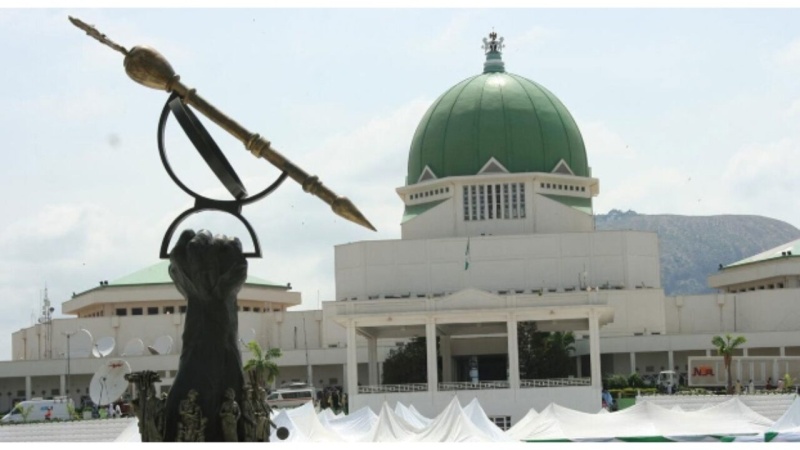
National Assembly in plenary
As the National Assembly prepares to resume plenary on Tuesday after its Eid break, lawmakers are returning to a packed legislative calendar, with the passage of the 2026 Appropriation Bill, renewed push for state police, and a fresh wave of political defections expected to shape proceedings in the weeks ahead.
The resumption comes against the backdrop of prolonged budget defence sessions, which had earlier forced a shift in plenary sittings to allow committees to conclude engagements with Ministries, Departments, and Agencies (MDAs).
Topping the legislative priorities is the expected passage of the 2026 budget, which has lingered before the National Assembly following extensive scrutiny by lawmakers.
Both chambers had delayed plenary to enable committees to complete detailed budget defence sessions—an indication of the scale and complexity of the fiscal proposal.
With most of the defence process now concluded, lawmakers are expected to fast-track harmonisation and passage of the budget upon resumption, in line with commitments to sustain the January–December budget cycle.
Sources within the Assembly indicate that leadership of both chambers is keen on avoiding further delays, especially amid economic pressures and expectations for capital project implementation.
Beyond the budget, constitutional reform, particularly the creation of state police is expected to dominate legislative discourse.
The issue has gained renewed urgency amid worsening insecurity across parts of the country, including recent attacks on security personnel and civilians in northern Nigeria.
President Bola Tinubu has repeatedly called for legislative backing for state policing as part of broader security reforms, urging lawmakers to review existing laws to allow sub-national policing structures.
Within the National Assembly, committees reviewing the 1999 Constitution are already considering frameworks that would decentralise policing while embedding accountability safeguards to prevent abuse.
The Nigeria Police Force has also submitted a comprehensive proposal to lawmakers, further signalling growing institutional alignment on the issue.
Analysts say debates around state police will likely centre on concerns over political misuse, funding, and operational control—issues that have historically stalled previous attempts.
Speaking on this, the Senate, disclosed that the National Assembly has begun work on a decentralised policing framework designed to emphasise accountability and curb abuse by the political class.
He observed that Tinubu “has already lent his voice to the creation of a decentralised police model as part of efforts to safeguard lives, private property, and public infrastructure across the federation.”
According to him, the proposed model seeks to devolve policing powers to sub-national authorities to ensure effective governance, even in the most remote parts of the country.
“This is one request that the National Assembly has been treating with priority,” he said.
The Senate Leader added that the proposed framework “will incorporate accountability mechanisms to prevent abuse of power by the political class, strengthen the administration of justice, discourage impunity, and establish safeguards for the protection of fundamental human rights.”
He assured Nigerians that the framework would align with global best practices and reinforce transparency in policing.
“All these initiatives are at the core of the shared conviction between the Presidency and the National Assembly to secure Nigeria more effectively,” he said.
Another major issue expected to shape proceedings is the continued wave of political defections within the National Assembly, driven by ongoing realignments ahead of the 2027 general elections.
Recent developments within opposition circles, including coalition talks around platforms such as the African Democratic Congress (ADC), have triggered renewed speculation of high-profile cross-carpeting among lawmakers.
The trend, which has already altered party configurations in both chambers, is raising concerns among civil society groups and political observers about its impact on legislative independence and policy consistency.
Some analysts warn that frequent defections could weaken opposition oversight and tilt the balance of power further in favour of the ruling party, potentially affecting the quality of debate on critical national issues.
The resumption is also taking place amid heightened national security concerns and economic reforms that continue to shape public discourse.
From mass abductions to insurgent attacks and communal violence, insecurity remains a dominant national challenge, increasing pressure on lawmakers to deliver concrete legislative solutions.
At the same time, ongoing fiscal and tax reforms by the executive are expected to require legislative backing and oversight, further expanding the Assembly’s workload.
As plenary resumes, the interplay between governance priorities and political calculations is expected to define the tone of legislative business.
While the 2026 budget and state police proposal present opportunities for decisive action, the undercurrent of defections and political maneuvering could complicate consensus-building within both chambers. (BusinessDay)