
Updating your news feed...
NEWS EXPRESS is Nigeria’s leading online newspaper. Published by Africa’s international award-winning journalist, Mr. Isaac Umunna, NEWS EXPRESS is Nigeria’s first truly professional online daily newspaper. It is published from Lagos, Nigeria’s economic and media hub, and has a provision for occasional special print editions. Thanks to our vast network of sources and dedicated team of professional journalists and contributors spread across Nigeria and overseas, NEWS EXPRESS has become synonymous with newsbreaks and exclusive stories from around the world.



















Loading banners
Loading banners...

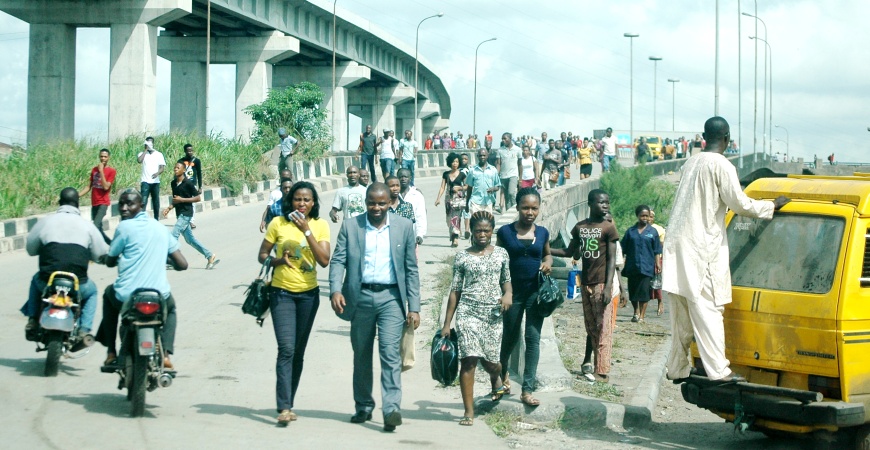
Commuters trekking
As transport fares rise, driven by higher petrol prices, most commuters are cutting costs by trekking longer distances, taking cheaper routes, and reducing daily trips.
After weeks of fighting between the United States, Israel and Iran led to the closure of key trade routes for commodity and energy products, domestic fuel and diesel prices have skyrocketed.
Nigeria’s fuel prices have surged 47 percent since the war started three weeks ago, from N839 per litre to N1,232. Prices of diesel also surged by 65 percent within the period, from N970 in January to N1,600 in Lagos.
The price increases are affecting transportation costs, food prices, and overall economic activity. A survey conducted by BusinessDay revealed that transportation costs for commuters across various cities in Nigeria has increased significantly, with spending now above N20,000 on a weekly basis for most commuters.
To cope with the rising costs, commuters now use cheaper routes, switching to public transport and reducing their trips or appointments.
Peniel Williams, a Lagos based student and content creator, told BusinessDay that rising transport costs have significantly disrupted her daily routine and income, as attending brand events and creative workshops, which is a key part of her work, has become difficult due to high fares, forcing her to decline opportunities.
Williams cited a recent trip from Ikorodu to Egbeda where ride-hailing fares rose from about N13,000 to N20,000, after drivers demanded higher payments due to fuel costs. On another occasion, she combined public transport and ride-hailing to cut costs on a trip to Ikoyi, but still spent about N8,500.
“When I attended an opening ceremony in Ikoyi. The prices I saw on Bolt from Ikorodu to Ikoyi were extremely high, I’m talking N34,000 and above. I was forced to take public transport to Obalende before getting a ride from there to the venue.
“Now that school has resumed, I don’t even want to think about how much I’ll be spending on transportation, especially since I don’t live close to campus. It used to cost me around N700 daily, but now I’ll be spending about N1,200,” she said.
To cope, Williams said she now relies more on public transport, limits travel to nearby locations, and has increased her rates, which has led to lost collaborations and reduced income, with earlier bookings now running at a loss.
Charles Orizu, who owns Amaze Logistics, a logistics company in Enugu, stated that from moving between his home and shop to sourcing supplies and making deliveries, are now strictly calculated to minimise fuel expenses.
Orizu said he now prioritises only essential trips, postpones others until they align with existing routes, and raises service charges, which often leads to complaints from customers.
“Now you calculate any movement you have to make because of the cost of fuel, as it’s affecting my pricing list for my customer who would in turn complain of the price to deliver services for them,” he noted.
With petrol prices increasing by over 40 percent in recent weeks, which has also placed Nigeria as the second country with the sharpest increase globally, despite being a major crude producer, making the cost of transportation in the country skyrocket across cities, eating deep into some household incomes.
“I’ve started budgeting strictly for transportation and prioritising only necessary trips. I group activities together, sometimes I use alternative options like walking short distances or using cheaper buses instead of more convenient but expensive rides,” Agina Onyinyechi said.
Adebola Olorunfemi, a worker in Ado-Ekiti said that the surge in transport costs is reshaping how she works, as she now adjusts her daily schedule.
Adebola noted that some physical meetings have shifted to virtual formats to reduce travel, while her workplace has introduced a roster system to limit commuting days.
“I could afford the transport fare, which was usually between N1,200 and N1,300.
“There’s a government shuttle I used to avoid because it leaves as early as 7am, but now I make sure I catch it since it’s free. On days I can’t afford transport, I sometimes stay at home instead,” she said.
Henry Okpala, a Lagos businessman also stated that he now travels less frequently and only when necessary, with his movements planned strategically by combining errands into a single trip and choosing more cost-effective routes, even if they take longer.
“I’ve reduced unnecessary travel, using more affordable modes of transportation, such as traveling with night buses because it’s cheaper, sharing rides when possible, and walking shorter distances instead of using public transport.
“Commuting has become more financially demanding, which in turn affects daily productivity and overall well-being. On a recent occasion, a sudden increase in transport fares caused delays and disrupted my schedule, highlighting the growing challenges associated with daily commuting.
Experts warn that beyond the immediate financial strain on commuters, rising transport costs are creating wider economic and safety concerns that could affect productivity and long-term urban mobility.
Anthony Igbinosun, road transport safety expert, said that common coping strategies such as trekking long distances, reducing trips, and informal carpooling are largely short-term survival mechanisms rather than sustainable solutions.
“Trekking long distances, for instance, raises safety concerns, particularly in cities with limited pedestrian infrastructure, contributes to reduced workforce reliability and business productivity, and it also has health implications and reduces worker energy levels.
“Reducing trips, while prudent in some situations, may negatively impact access to economic opportunities and healthcare. Carpooling can offer some relief, but in the absence of structured systems, it remains inconsistent and difficult to scale,” Igbinosun said.
According to him, while short-term measures like transport subsidies and fuel price interventions can provide relief, long-term solutions lie in expanding affordable alternatives such as CNG- and electric-powered transport, alongside stronger investment in infrastructure and supportive policies to ease the burden on commuters. (BusinessDay)