
Updating your news feed...
NEWS EXPRESS is Nigeria’s leading online newspaper. Published by Africa’s international award-winning journalist, Mr. Isaac Umunna, NEWS EXPRESS is Nigeria’s first truly professional online daily newspaper. It is published from Lagos, Nigeria’s economic and media hub, and has a provision for occasional special print editions. Thanks to our vast network of sources and dedicated team of professional journalists and contributors spread across Nigeria and overseas, NEWS EXPRESS has become synonymous with newsbreaks and exclusive stories from around the world.














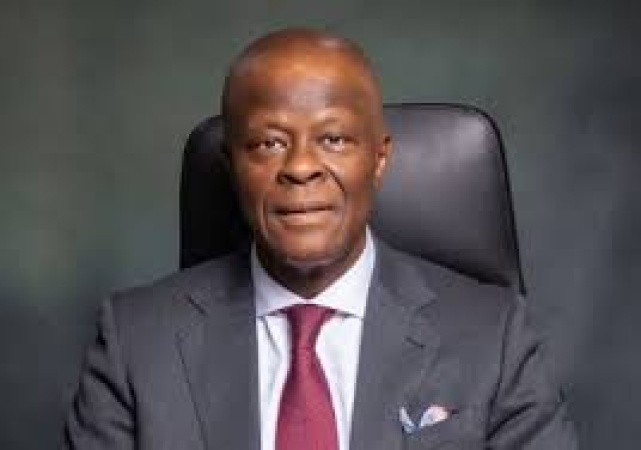
Minister of Finance, Wale Edun
…as CBN holds 2026 Monetary Policy Forum
The Federal Government is targeting economic transformation that will boost Nigeria’s Gross Domestic Product (GDP) growth to 7 per cent, while reducing inflation and high interest rates.
Speaking at the 2026 Monetary Policy Forum organised by the Central Bank of Nigeria (CBN), the Minister of Finance and Coordinating Minister of the Economy, Wale Edun, charged relevant stakeholders within the economy to continue the implementation of reforms that will curb inflation, ease hardship, and encourage growth.
“Our broader objective remains economic transformation. In the near term, we are targeting GDP growth of about 7 per cent—roughly double the pace of inflation. Growth at that level would be strong enough to lift millions of Nigerians out of poverty”.
He stated, “Let me begin by saying, I am pleased to increasingly recognise the work of the team at the Monetary Policy Committee (MPC), their extensive engagement with stakeholders has both challenged and empowered them to deliver commendable outcomes.
“This session is both timely and well-judged. One of the key objectives is to obtain clear constructive feedback from stakeholders. That feedback is essential in sharpening MPC responsibilities, particularly on the monetary policy side”.
He said, “Let me offer some observations. MPC is responsible for monetary policy, but it is also a platform in which we all have a role to play. One of the key tools available to tackle inflation is interest rates.
“When interest rates are high, the cost of financing rises across the board, affecting the government on the fiscal side, as well as households and businesses.
“However, as reforms take hold and inflation begins ease, we can reasonably expect interest rates to decline over time, subject to decisions by the relevant authorities. This is an important dynamic to keep in mind.
“It is also important to recognise that macroeconomic stability cannot be achieved by any single institution. As earlier noted, it requires policy coherence, institutional discipline, and sustained collaboration across monetary, fiscal, and broader economic authorities.
“In this regard, continued efforts to improve foreign exchange market transparency are commendable. Strengthening market integrity and deepening confidence in the policy environment are critical steps”.
Edun explained that these efforts, combined with close coordination between fiscal and monetary authorities, are helping to reduce uncertainty, support disinflation, and reinforce macroeconomic stability. “This momentum must be sustained.
“I would also like to acknowledge the Central Bank of Nigeria for advancing the transition towards an inflation-targeting monetary policy framework. This is a significant institutional step.
“Such a framework helps to anchor inflation expectations, strengthen policy credibility, improve communication with markets and citizens, and enhance transparency and accountability.
“Over time, it can reduce uncertainty and create a more stable foundation for planning, saving, and investment, ultimately supporting sustainable and inclusive growth”.
The minister noted that Nigeria is now moving from a phase of stabilisation towards growth and acceleration.
“This transition will require even stronger coordination and deeper collaboration across policy institutions. The CBN’s emphasis on technical cooperation is therefore both timely and necessary.
“The relationship between growth and inflation will remain a key focus going forward. The challenge is to strike the right balance—keeping inflation under control while sustaining growth. This is not unusual; many economies, including the United States after COVID-19, experienced periods where moderate inflation coexisted with recovery and expansion.
“Ultimately, the goal is to ensure that growth is driven by investment and savings, and that it translates into meaningful improvements in living standards,” he stated.
In his address, the Deputy Governor, Economic Policy Directorate of the CBN, Dr. Muhammad Sani Abdullahi (PhD), said the Monetary Policy Forum has evolved into an indispensable platform for open dialogue between the Central Bank and critical stakeholders across the Nigerian economy.
“In an era where monetary policy outcomes depend increasingly on credibility, communication, and expectations, it is essential that we meet periodically to ensure that policy directions are well understood and that stakeholders’ perspectives are incorporated into the broader policy framework.
“This engagement enhances transparency, strengthens trust, and helps improve the alignment between policy intentions and real-sector outcomes, thereby enriching our collective understanding of the dynamics shaping Nigeria’s monetary and financial stability”.
Abdullahi noted that since the last Monetary Policy Forum held in January 2025, Nigeria’s macroeconomic environment has improved markedly, reflecting the cumulative impact of wide-ranging structural and policy reforms.
“Most notably, inflation has decelerated significantly, while conditions in the foreign exchange market have also improved considerably. In addition, investor confidence has strengthened, including improvements in fiscal–monetary policy coordination.
“Despite these encouraging developments, we recognise that the journey towards sustainable macroeconomic stability is an ongoing process rather than a destination, as macroeconomic stability cannot be achieved by the Central Bank alone. It requires consistent and disciplined actions across all sectors of the economy.
“It is therefore imperative that we sustain the current momentum of reforms, strengthen policy coordination, and deepen dialogue between policymakers and stakeholders. To achieve this, the Central Bank considered it necessary to convene the 2026 Monetary Policy Forum with the theme: “Strengthening Nigeria’s Macroeconomic Stability Through Effective Monetary Policy: The Role of Critical Stakeholders."
He reiterated that “this theme underscores a fundamental principle, which is: macroeconomic stability is a shared responsibility”. While the Central Bank is responsible for monetary policy, its effectiveness depends on the response and behaviour of a broad spectrum of economic actors.
“Distinguished ladies and gentlemen, the value of this forum lies not only in the perspectives shared by policymakers, but also in the feedback received from stakeholders across the economy. We therefore encourage all participants to engage in robust and constructive dialogue in the course of our deliberations.
“We are particularly interested in understanding how adjustments to monetary policy impact your respective sectors. Beyond the macroeconomic statistics that we analyse at the Central Bank, it is important for us to hear directly from you, discuss your experiences, how policy changes influence your investment decisions, credit conditions, production costs, pricing behaviour, and expectations.
“As we begin today’s deliberations, I would like to once again express the Central Bank of Nigeria’s sincere appreciation to all stakeholders present here for your continued engagement and commitment to constructive policy dialogue. Your participation reflects a shared dedication to building a more stable, resilient, and prosperous Nigerian economy,” he stated.(Nigerian Tribune)