Updating your news feed...
NEWS EXPRESS is Nigeria’s leading online newspaper. Published by Africa’s international award-winning journalist, Mr. Isaac Umunna, NEWS EXPRESS is Nigeria’s first truly professional online daily newspaper. It is published from Lagos, Nigeria’s economic and media hub, and has a provision for occasional special print editions. Thanks to our vast network of sources and dedicated team of professional journalists and contributors spread across Nigeria and overseas, NEWS EXPRESS has become synonymous with newsbreaks and exclusive stories from around the world.










Loading banners
Loading banners...

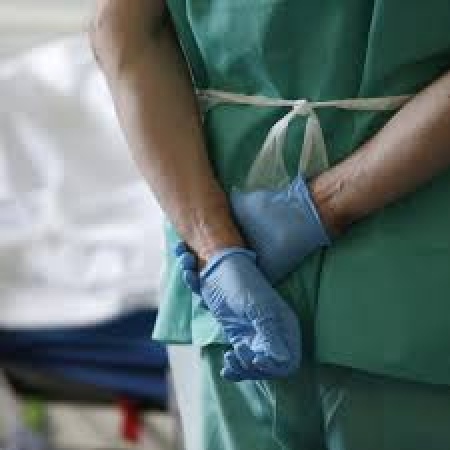
An overhaul of the General Medical Council is expected to lead to more doctors that face accusations of racism and antisemitism on social media being struck off.
The Department of Health and Social Care (DHSC) has launched a consultation on changes to the legislation governing the regulation of doctors, saying the move will lead to the biggest reform of the medical regulator, the GMC, in four decades.
However, the line when it comes to the expression of anti-Zionist and pro-Palestinian views is expected to be a continuing point of contention.
Doctors facing disciplinary proceedings over wearing symbols and over social media posts have been bringing lawsuits against hospital trusts over the last year, arguing that their beliefs are protected under the Equality Act 2010.
The DHSC says there have been “too many” recent examples of doctors using racist and antisemitic language, particularly on social media, without swift action.
Recommendations from the Labour peer John Mann, who was commissioned to perform a rapid review of antisemitism and other forms of racism in the health service in November, are expected to follow imminently.
Mann has described the current system as “too slow and too cumbersome”.
Ministers plan to consult on the first recommendations from the review, including giving the GMC new powers to challenge interim decisions of the Medical Practitioners Tribunal Service (MPTS), which makes decisions on the cases the GMC prosecutes.
Meanwhile, the Professional Standards Authority, the body that oversees all health regulators, will also be given greater powers to scrutinise and challenge decisions.
The health secretary, Wes Streeting, said: “The NHS is a universal health service, which means that everyone, regardless of race, religion or belief should feel safe seeking its care.
“It is unacceptable that this is not the current reality for many patients and staff, and I will not allow it to continue.”
Mann said: “Racism, including anti-Jewish racism, has no place in the health sector or our NHS, and those who engage in it should face swift and meaningful consequences.”
The GMC’s chief executive and registrar, Charlie Massey, said: “These proposed reforms will allow us to respond more quickly and flexibly when patient safety is at risk.
“They will also allow us to further improve our efficiency and effectiveness, while at the same time enabling us to help patients navigate the complaints and concerns process more easily.
“This is an important and long-awaited step towards a more responsive and compassionate approach to healthcare regulation.”
An incredible self-own
In 1936, John Scott, son of the late Guardian owner and legendary editor CP Scott, did something unheard of for a media heir: he gave up his stake for the greater good.
After inheriting the newspaper, Scott renounced all financial benefit – bar his salary – in the Guardian (worth £1m at the time and around £62m today) and passed ownership over to the newly formed Scott Trust. The Trust would evolve to have one key mission: to secure the financial and editorial independence of the Guardian in perpetuity.
That means the Guardian can’t be bought. Not by private equity, not by a conglomerate, and definitely not by a billionaire looking for a political mouthpiece. So here are three good reasons to make the choice to support us today.
1. Our quality, investigative journalism is a scrutinising force at a time when the rich and powerful are getting away with more and more.
2. We are independent and have no billionaire owner controlling what we do, so your money directly powers our reporting.
3. It doesn’t cost much, and takes less time than it took to read this message.
This unique model also means we depend on readers like you from Nigeria to help fund our work. Our independence means we can say what we want, report on who we want, challenge who we want, and stand up at a time when others are sitting down. If you would rather the news you read was the result of decisions made by journalists and editors, not shareholders or ultra-wealthy tech bros, then, well, you know what to do: Support the Guardian on a monthly basis.