Updating your news feed...
NEWS EXPRESS is Nigeria’s leading online newspaper. Published by Africa’s international award-winning journalist, Mr. Isaac Umunna, NEWS EXPRESS is Nigeria’s first truly professional online daily newspaper. It is published from Lagos, Nigeria’s economic and media hub, and has a provision for occasional special print editions. Thanks to our vast network of sources and dedicated team of professional journalists and contributors spread across Nigeria and overseas, NEWS EXPRESS has become synonymous with newsbreaks and exclusive stories from around the world.

























Loading banners
Loading banners...

By STELLAMARIS ASHINZE
E-hailing drivers in Nigeria have raised concerns over what they describe as growing digital exploitation by ride-hailing platforms, calling for urgent regulatory intervention to protect their welfare.
Mr Kolawole Aina, the Southwest Zonal Chairman of the Amalgamated Union of App-Based Transporters of Nigeria (AUATON), made the call in an interview with the News Agency of Nigeria (NAN) in Lagos on Monday.
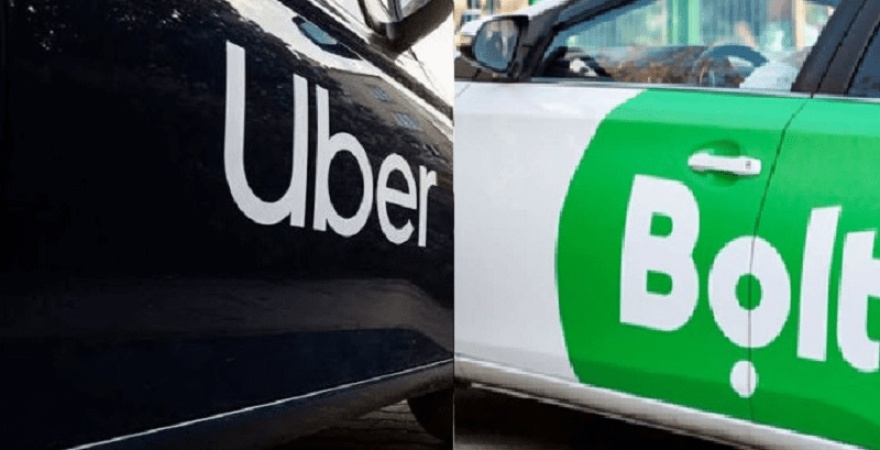
Aina said that companies such as Uber, Bolt and inDrive entered the Nigerian market with promises of flexibility and improved earnings for drivers but had evolved into systems that place disproportionate burdens on operators.
According to him, the algorithm-driven nature of these platforms has created what he termed an “invisible boss,” determining trip allocation, pricing and driver ratings without transparency or accountability.
“Drivers are subjected to decisions they cannot question, while their income is increasingly controlled by systems they do not understand,” he said.
He added that high commission rates, often ranging between 25 and 35 per cent, further reduced drivers’ earnings, notwithstanding operators bearing the full cost of fuel, vehicle maintenance, loans and security risks.
Aina also decried inconsistent and opaque fare structures, noting that drivers frequently accepted trips based on projected earnings, only to receive lower-than-expected payouts.
“This unpredictability makes it difficult for drivers to earn sustainable income in the current system,” he said.
He said the classification of drivers as independent contractors rather than employees allowed platform companies to avoid responsibility for welfare, while still exercising significant control over their operations.
The union leader said the situation had led to growing frustration among drivers, with some resorting to informal coping mechanisms to survive economic pressures.
He called for reforms, including transparent pricing systems, reduced commission rates, improved data transparency and stronger welfare protections for drivers.
Aina also urged the Federal Ministry of Labour and Employment and the Federal Ministry of Transportation to introduce national regulations for app-based transport services.
He further advocated better rider profiling to enhance driver safety.
Commenting on recent industry claims of improved driver earnings, Aina questioned their accuracy, arguing that rising operational costs significantly erode drivers’ take home income.
He said Issues such as vehicle repossessions by mobility financing firms and the decline of some app-based taxi schemes indicated deeper structural challenges within the sector.
“Technology should empower, not exploit. Until fairness is restored, the system will continue to favour platforms at the expense of drivers,” he said.
Aina emphasised the need for greater transparency from platform operators regarding revenue, operational costs and data monetisation practices.
He said addressing these concerns was critical to ensuring a fair and sustainable digital transport economy in Nigeria. (NAN)