
ADVERTISEMENT

ADVERTISEMENT

ADVERTISEMENT

ADVERTISEMENT

























Loading banners


NEWS EXPRESS is Nigeria’s leading online newspaper. Published by Africa’s international award-winning journalist, Mr. Isaac Umunna, NEWS EXPRESS is Nigeria’s first truly professional online daily newspaper. It is published from Lagos, Nigeria’s economic and media hub, and has a provision for occasional special print editions. Thanks to our vast network of sources and dedicated team of professional journalists and contributors spread across Nigeria and overseas, NEWS EXPRESS has become synonymous with newsbreaks and exclusive stories from around the world.
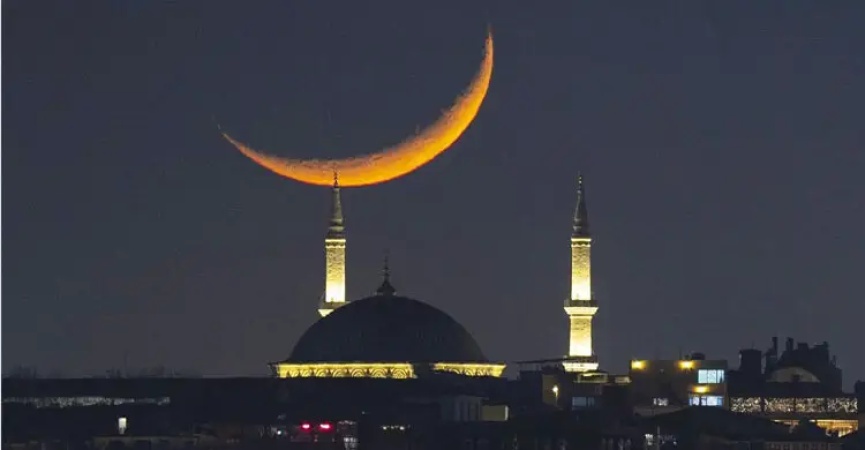
Saudi Arabia and several Arab and Islamic countries are observing the Shawwal crescent on Wednesday to determine the date of Eid Al-Fitr 2026, amid astronomical predictions that sighting the moon will be “impossible.”
The Saudi Supreme Court called on Muslims across the Kingdom to sight the crescent of Shawwal on the evening of Wednesday, 29 Ramadan, to determine whether Eid will fall on Thursday or Friday.
Meanwhile, Riyadh Municipality has completed preparations at designated moon-sighting observatories in Tumair, Shaqra and Al-Hariq ahead of the observation.
The International Astronomy Center said that for countries observing the crescent on Wednesday, March 18, sighting the moon will be impossible due to the moon setting before the sun and the conjunction occurring after sunset.
In a statement posted on X, the center said Wednesday corresponds to the 29th of Ramadan in several countries, including Saudi Arabia, the UAE, Qatar, Bahrain, Kuwait, Yemen, Palestine, Lebanon, Sudan and parts of Iraq, all of which will attempt to sight the crescent after sunset.
However, it stressed that “the crescent will be impossible to see from all regions of the world” on that day due to astronomical conditions.
The center added that Thursday, March 19, will mark the 29th of Ramadan in several other countries, including Turkey, Indonesia, Malaysia, Brunei, Singapore, India, Bangladesh, Pakistan, Iran, parts of Iraq, Oman, Jordan, Syria, Egypt, Libya, Tunisia, Algeria, Morocco and Mauritania, where moon sighting will take place that evening.
It noted that sighting the crescent on Thursday will also be unlikely in eastern parts of the Islamic world and difficult in central regions.
The International Astronomy Center also published a global visibility map showing that crescent sighting is impossible in areas marked in red due to the moon setting before sunset.
In blue areas, sighting is only possible using telescopes, while in pink zones it may be seen with telescopes and possibly with the naked eye under ideal conditions.
In green areas, the crescent may be visible to the naked eye, while in unshaded areas sighting remains unlikely despite the moon setting after sunset.
Earlier, 28 countries, including Saudi Arabia, Qatar, Yemen, Bahrain, Kuwait, Lebanon, Palestine, Sudan, Somalia and parts of Iraq, began Ramadan on February 18, while others, including Jordan, Oman, Morocco, Syria, Egypt, Algeria, Libya and Tunisia, started fasting a day later.
This difference means that for some countries, Thursday, March 19, will mark the 29th day of Ramadan, potentially leading to variations in the date of Eid Al-Fitr depending on moon sighting. (Saudi Gazette)


