Updating your news feed...

NEWS EXPRESS is Nigeria’s leading online newspaper. Published by Africa’s international award-winning journalist, Mr. Isaac Umunna, NEWS EXPRESS is Nigeria’s first truly professional online daily newspaper. It is published from Lagos, Nigeria’s economic and media hub, and has a provision for occasional special print editions. Thanks to our vast network of sources and dedicated team of professional journalists and contributors spread across Nigeria and overseas, NEWS EXPRESS has become synonymous with newsbreaks and exclusive stories from around the world.









.webp)



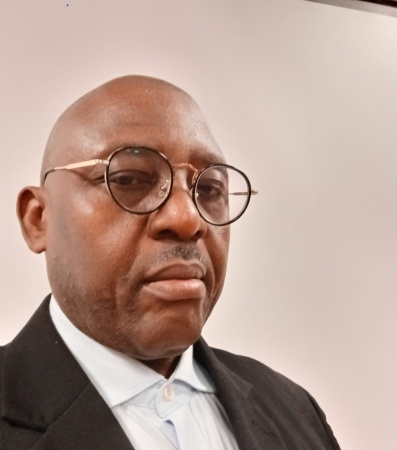
Prof Ojo Emmanuel Ademola
By Prof. OJO EMMANUEL ADEMOLA
Nigeria’s political class has, over the decades, perfected a troubling paradox: the ability to be visibly active yet substantively ineffective. Leaders appear constantly engaged—commissioning projects, issuing statements, inaugurating committees, and promising reforms—while the nation’s structural challenges deepen. This pattern, which may be described as the engaging failures of Nigeria’s political class, has become a defining feature of the country’s political culture. It is a cycle in which motion is mistaken for progress, performance is equated with governance, and political theatre is mistaken for national transformation. The consequences are profound. A nation with extraordinary human and natural resources remains trapped in a loop of underdevelopment, not because of a lack of ideas or potential, but because its political class has not yet embraced the rigour, discipline, and long-term vision required for genuine governance.
The Triumph of Political Performance Over Statecraft
A defining feature of Nigeria’s political landscape is the dominance of political performance over substantive leadership. Leaders often prioritise optics—flag-offs, media appearances, and symbolic gestures—over the hard, often unglamorous work of institution-building. The political class excels at appearing engaged: visiting disaster sites, announcing task forces, and promising investigations. Yet these engagements rarely translate into measurable improvements in security, infrastructure, education, or economic stability.
This creates a governance environment where activity is abundant but impact is scarce. Citizens witness a flurry of political motion, but the nation remains largely stationary. The gap between political rhetoric and lived reality widens, eroding public trust and normalising a culture where underperformance is not only tolerated but sometimes rewarded.
Short-Termism and the Fragility of Institutions
Nigeria’s institutions are weakened not only by corruption or inefficiency but by a political culture that rewards short-term gains over long-term planning. Policies are frequently reactive rather than strategic, driven by electoral cycles rather than national vision. Programmes are launched without continuity, reforms are announced without implementation, and national plans are drafted without execution.
This short-termism is further reinforced by patronage networks that prioritise loyalty over competence. The political class becomes more invested in maintaining influence than in building institutions capable of outlasting individual tenures. As a result, governance becomes episodic rather than systemic, and progress becomes accidental rather than intentional. The nation is left with a governance architecture that is perpetually provisional, unable to sustain momentum or deliver lasting transformation.
The Normalisation of Mediocrity
One of the most troubling aspects of Nigeria’s political culture is the normalisation of mediocrity. Public office is often treated as a reward rather than a responsibility. Underperformance rarely carries consequences; instead, it is frequently recycled into new appointments or political opportunities. This creates a leadership pipeline where excellence is optional and accountability is negotiable.
Over time, citizens—fatigued by decades of unmet expectations—have adjusted their standards downward. What should be considered basic governance, such as stable electricity, functional healthcare, reliable security, and quality education, has become aspirational. This shift in expectations allows the political class to continue engaging failure without facing sustained public pressure for transformation. Mediocrity becomes institutionalised, and the nation’s development trajectory remains stunted.
The Politics of Blame and the Erosion of Responsibility
Another hallmark of the political class’s engaging failures is the persistent deflection of responsibility. Leaders frequently attribute national challenges to predecessors, global conditions, or external conspiracies. While contextual factors certainly matter, the habitual outsourcing of blame prevents the emergence of a culture of ownership.
When everyone is blamed, no one is accountable. When every failure is inherited, none is corrected. When leadership becomes a relay of excuses, governance becomes a cycle of stagnation. This erosion of responsibility undermines democratic accountability and weakens the social contract between leaders and citizens. A nation cannot progress when its leaders are more committed to explaining away failures than confronting them.
Citizens as Spectators in Their Own Democracy
The political class’s ability to engage failure is sustained by a citizenry that is often sidelined from meaningful participation. Elections, though regular, do not always translate into genuine democratic empowerment. Public consultations are rare, civic education is weak, and political parties are frequently personality-driven rather than ideology-based.
As a result, citizens become spectators—observing governance rather than shaping it. This distance between the governed and the governing allows the political class to operate with minimal scrutiny, reinforcing the cycle of underperformance. A disengaged populace inadvertently strengthens the hands of leaders who thrive on low expectations and limited accountability.
Lessons from Nations Whose Political Class Chose Rigour Over Performance
History offers compelling examples of nations that broke free from cycles of underperformance when their political class embraced discipline, accountability, and long-term vision. Singapore’s transformation from a resource-poor island to a global economic powerhouse was not accidental. Its political leadership prioritised meritocracy, institutional discipline, and zero tolerance for corruption. The political class chose Competence over theatrics and long-term planning over short-term populism, demonstrating that national transformation is possible when leaders commit to genuine governance.
Rwanda, emerging from one of the darkest chapters in modern history, rebuilt itself through a political culture that emphasised national unity, institutional efficiency, and measurable outcomes. Its leadership embraced the rigour of governance, focusing on security, infrastructure, and public service delivery. The nation’s progress, though not without controversy, illustrates the power of disciplined political will.
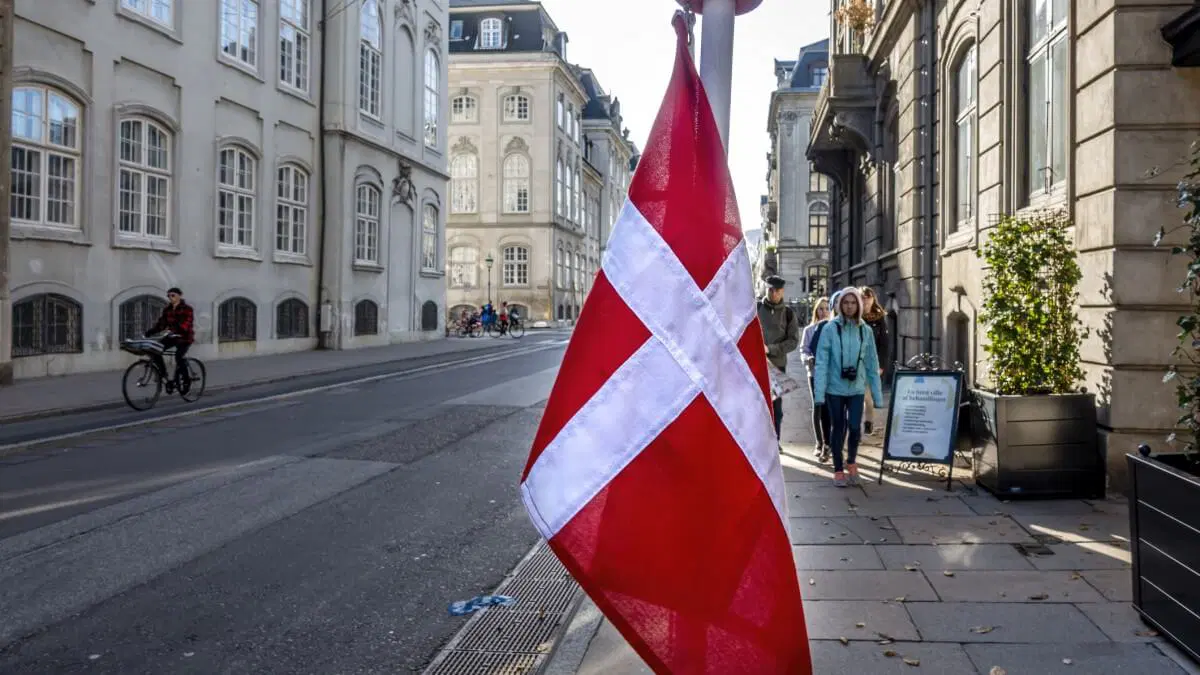
South Korea’s journey from military rule and poverty to technological and industrial prominence similarly underscores the importance of visionary leadership. Its political class invested in education, industrialisation, and institutional reforms, understanding that national transformation required consistency, sacrifice, and strategic planning. The Nordic countries—Denmark, Sweden, Norway, and Finland—offer further evidence that political cultures grounded in transparency, social trust, and policy continuity can produce some of the world’s most stable and prosperous societies.
These examples demonstrate that national transformation is not a mystery. It is the product of political classes that choose substance over spectacle, governance over performance, and national interest over personal gain. Nations rise when their leaders embrace the discipline of statecraft rather than the theatrics of politics.
Towards a New Political Ethos in Nigeria
Breaking Nigeria’s cycle of engaging failure requires more than replacing individuals; it demands a transformation of political culture. A new ethos must emerge—one grounded in competence, accountability, and a shared national vision. This transformation requires strengthening institutions so they function independently of personalities, elevating civic consciousness so citizens demand accountability, and redefining leadership as service rather than entitlement. It also requires prioritising long-term national interests over short-term political gains and cultivating a political culture where excellence is rewarded and mediocrity is penalised.
Nigeria’s potential remains vast, but potential alone does not build nations. It is the disciplined, sustained, and visionary application of leadership that transforms societies.
Until the political class moves beyond engaging failure and embraces the rigour of genuine governance, Nigeria will continue to oscillate between promise and disappointment. The nation stands at a crossroads where the future depends not on the energy of political performance but on the courage to confront entrenched patterns of failure. The question is whether the political class is willing to evolve—or whether citizens will eventually demand a new social contract that makes such evolution unavoidable.
•Ojo Emmanuel Ademola is First African Professor of Cybersecurity and Information Technology Management, Global Education Advocate, Chartered Manager, UK Digital Journalist, Strategic Advisor & Prophetic Mobiliser for National Transformation, and General Evangelist of CAC Nigeria and Overseas.