
Updating your news feed...
NEWS EXPRESS is Nigeria’s leading online newspaper. Published by Africa’s international award-winning journalist, Mr. Isaac Umunna, NEWS EXPRESS is Nigeria’s first truly professional online daily newspaper. It is published from Lagos, Nigeria’s economic and media hub, and has a provision for occasional special print editions. Thanks to our vast network of sources and dedicated team of professional journalists and contributors spread across Nigeria and overseas, NEWS EXPRESS has become synonymous with newsbreaks and exclusive stories from around the world.














.webp)

Loading banners
Loading banners...

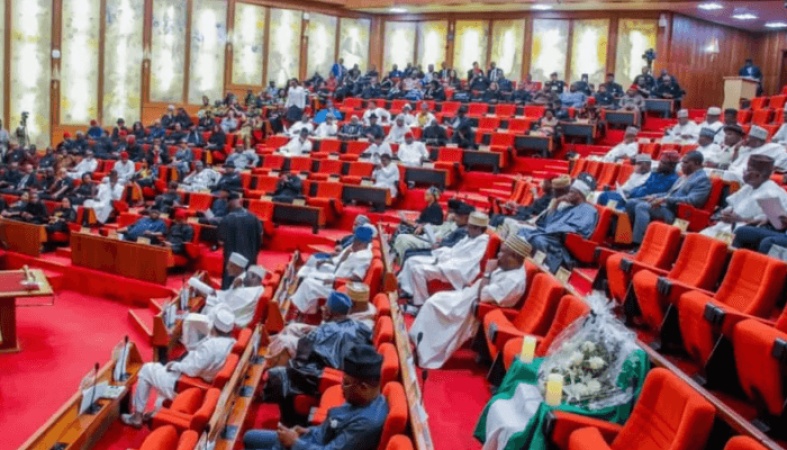
Senate during plenary
The passage of the N58.472 trillion 2026 Appropriations Bill has suffered a setback following Senate’s decision to shift its resumption date.
The shift has raised fresh concerns over possible delays in the implementation of the nation’s fiscal plans.
The upper chamber had, shortly before adjourning plenary last week, postponed its resumption to March 31, effectively slowing down legislative work on the budget, which was initially expected to be finalised after the break.
Senate President Godswill Akpabio had, prior to the adjournment, urged the Senate Committee on Appropriations to ensure that work on the budget report was concluded in time for consideration and passage upon resumption.
However, the revised legislative calendar now casts doubt on the timeline.
The 2026 Appropriations Bill, presented to the National Assembly by President Bola Ahmed Tinubu, is expected to fund critical sectors including infrastructure, security, education and healthcare. Its timely passage is considered crucial to sustaining government operations and maintaining economic stability.
There are also indications that lawmakers are taking extra time to scrutinise allocations amid growing public concern over rising debt levels, inflationary pressures and revenue shortfalls. Some senators are said to be pushing for adjustments to ensure more realistic projections and improved oversight of government spending.
The delay could have ripple effects on capital project implementation, as ministries, departments and agencies may be unable to begin planned programmes without an approved budget.
Analysts warn that prolonged uncertainty around the budget may also affect investor confidence and slow economic activities.
Historically, Nigeria has struggled with delays in budget passage, often leading to disruptions in the budget cycle.
In recent years, however, the National Assembly had made efforts to return the country to a predictable January–December budget cycle, a move widely seen as critical for effective fiscal planning.
The current development, therefore, represents a potential setback to those gains, unless lawmakers are able to expedite consideration of the Appropriations Bill upon their return.
Observers say all eyes will be on the Senate and the House of Representatives at resumption, with expectations that the legislature will prioritise the budget to avoid delays and ensure that the 2026 fiscal year is not adversely impacted. (The Nation)