ADAD
ADADUpdating your news feed...

NEWS EXPRESS is Nigeria’s leading online newspaper. Published by Africa’s international award-winning journalist, Mr. Isaac Umunna, NEWS EXPRESS is Nigeria’s first truly professional online daily newspaper. It is published from Lagos, Nigeria’s economic and media hub, and has a provision for occasional special print editions. Thanks to our vast network of sources and dedicated team of professional journalists and contributors spread across Nigeria and overseas, NEWS EXPRESS has become synonymous with newsbreaks and exclusive stories from around the world.














Loading banners
Loading banners...

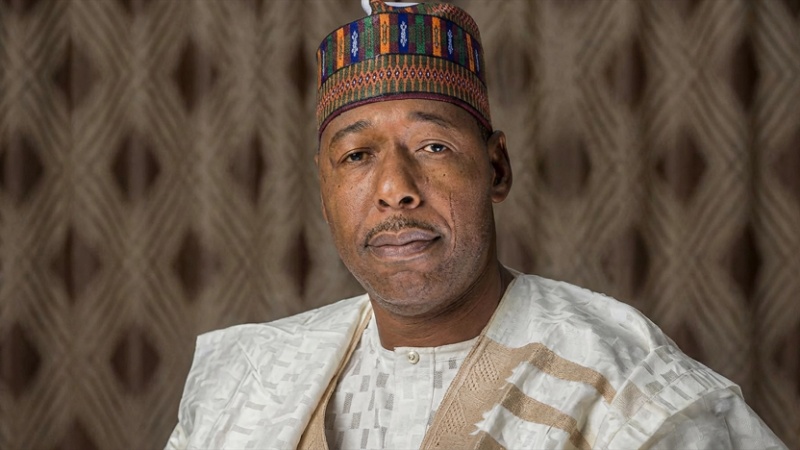
Borno State Governor, Prof Babagana Zulum
The calculations for the next gubernatorial election in Borno State rest on a mix of confidence and conjecture, especially as they concern the gubernatorial succession plan of outgoing Governor Babagana Umara Zulum, NJADVARA MUSA reports.
As Borno State Governor, Professor Babagana Umara Zulum, gradually approaches the end of his constitutionally permitted two terms in office, political attention in the insurgency-scarred state has shifted from governance performance to an increasingly delicate question: who succeeds him in 2027?
For nearly seven years, succession politics remained largely dormant in Borno, overshadowed by security concerns and reconstruction priorities. But recent pronouncements by the governor, declaring that he has no preferred successor, have unexpectedly opened political space, triggering intense speculation within the ruling All Progressives Congress (APC) and among elite stakeholders across the state.
Although Zulum insists that the achievements of his administration have firmly positioned the APC for victory in future elections, his admission that he neither knows nor intends to determine who becomes the party’s next governorship candidate has introduced uncertainty into a political environment historically shaped by elite consensus.
The governor described the APC as the “workhorse” of Nigerian politics and expressed confidence that the party remains strategically positioned to win the 2027 general elections. Yet, beneath the confident rhetoric lies a succession debate that may ultimately define the closing phase of his administration.
Congress as political signal
Zulum’s remarks came during the APC state congress held in Maiduguri, where thousands of delegates gathered to elect new party executives ahead of the next electoral cycle.
Addressing about 1,560 delegates at the defunct Kashim Ibrahim College of Education (KICE), the governor emphasised unity within the party, declaring that the APC in Borno operates a cohesive political structure devoid of factional divisions.
“Today’s elections have shown that the state operates a unified political system within our party hierarchy. APC has no divisions among its numerous members in the state,” he said.
The congress produced 38 state executive committee members through consensus, a process party leaders described as evidence of internal harmony. The chairman of the Congress Committee, Jones Erue, noted that the rancour-free exercise demonstrated the party’s maturity and reinforced Borno’s reputation as one of the most stable APC chapters nationwide.
However, beyond formal exercise, political observers viewed the gathering as more than an organisational routine. To many stakeholders, it served as an early rehearsal for the larger political negotiations that will precede the 2027 governorship race.
The presence of influential figures, including former governor Ali Modu Sheriff; Senate Chief Whip, Mohammed Tahir Monguno; Senators Ali Ndume and Kaka Shehu Lawan (SAN); former deputy governors; members of the National Assembly and State Assembly; commissioners; and officials of the Independent National Electoral Commission (INEC), underscored the strategic importance attached to the congress.
While Zulum praised party unity and avoided direct references to succession politics, many stakeholders interpreted his comments as a subtle indication that the eventual governorship candidate may emerge through broader consultations rather than personal endorsement.
Particularly noteworthy was his acknowledgement of the political foundation laid by his predecessor and current Vice President, Kashim Shettima. Observers expected the governor to hint at how the vice president might influence succession arrangements, but Zulum refrained from making explicit political commitments.
Instead, he focused on strengthening party cohesion and managing internal expectations.
“All former party executives from the state to the ward level will not be left behind. They will be streamlined into our party structure as ex-officio members and assigned other relevant responsibilities because of their immense contributions,” he assured.
He added: “We will not allow anybody without the required capacity to come and take over the affairs of the party. The party will remain resolute under my leadership and, Insha Allah, we shall succeed.”
The remarks, analysts say, simultaneously project openness while signalling that competence, rather than mere political ambition, will shape the succession process.
The declaration that changed the narrative
Barely a week after the congress, Zulum made what many observers regard as his most consequential political statement since assuming office: he has no anointed successor.
“I have no anointed candidate for the forthcoming gubernatorial election in the state,” he declared, adding that only God knows who will eventually take over leadership in Borno.
The statement disrupted months of speculation suggesting that a senior government official had already secured the governor’s backing.
Earlier in the year, Zulum had convened a high-level stakeholders’ meeting of the ruling party, cutting short his annual leave to attend. At the meeting, he pledged fairness in the distribution of elective positions and urged long-serving party executives, some of whom had occupied positions for up to eight years, to relinquish roles or seek alternative responsibilities to allow new entrants into leadership.
The intervention was widely interpreted as an attempt to reset internal power balances ahead of party congresses across the 27 local government areas.
Political analysts believe the governor’s move was aimed at preventing early factionalisation that could weaken party cohesion before the election season.
Zulum’s insistence on neutrality has drawn mixed reactions. While some observers see it as a commitment to democratic norms, others argue that succession politics in Nigeria rarely unfolds without elite influence.
Sources within the APC in Maiduguri disclosed that quiet consultations among aspirants and interest groups, including youth and women organisations, have intensified despite the governor’s public neutrality.
Rumours of a preferred successor had earlier generated tension within party ranks, prompting fears of internal divisions. The stakeholders’ meeting, insiders say, was partly convened to calm nerves and restore confidence in the party’s internal process.
For many analysts, Zulum’s posture marks a potential departure from Nigeria’s post-1999 political tradition, where outgoing governors often openly shape succession outcomes.
Whether the governor ultimately maintains strict neutrality or plays a behind-the-scenes role remains one of the biggest unanswered questions ahead of 2027.
Governance versus politics
As succession debates gather momentum, stakeholders have expressed concern that political manoeuvring should not overshadow governance in a state still navigating post-insurgency recovery.
Unlike conventional electoral contests defined by partisan rivalry, Borno’s political transition will unfold within a fragile socio-economic environment shaped by years of conflict, displacement and reconstruction.
It is argued that leadership selection in such circumstances carries implications far beyond electoral victory.
While there is speculation about who will succeed the incumbent, citizens of Borno believe that security is one of the foremost factors shaping the state’s politics.
The foremost determinant of the 2027 race will be security credibility, as governance in Borno remains inseparable from counter-insurgency management. Although coordinated military operations have restored relative stability to many communities, pockets of insurgent activity persist in remote areas. As a result, voters are likely to prioritise candidates perceived as capable of sustaining collaboration with federal security agencies and protecting resettled populations.
In Borno’s political environment, security competence often translates directly into electoral legitimacy.
Equally important is the question of continuity. Zulum’s administration has built a governance identity around aggressive reconstruction, resettlement of internally displaced persons, education revival and grassroots engagement.
These interventions have reshaped citizens’ governance expectations, with citizens now associating political leadership with visible developmental outcomes.
The 2027 contest is therefore expected to revolve less around new policy visions and more around who can consolidate ongoing rebuilding efforts.
A senior APC stalwart who preferred anonymity noted that voters and political elites may favour a candidate capable of sustaining institutional stability and maintaining the confidence of federal authorities and international development partners supporting reconstruction programmes.
The source also said internal party negotiations will play a decisive role.
“Historically, Borno politics has been shaped less by inter-party competition than by consensus among influential blocs within the ruling establishment,” he said.
Some stakeholders believe the APC primary election could prove more consequential than the general election itself, as elite negotiations involving federal actors, legislative leaders and established party structures may determine the eventual candidate.
Zoning considerations are also expected to play a prominent role. Although informal, power rotation among Borno’s three senatorial districts, Central, North and South, remains an influential political principle.
With recent leadership largely associated with Borno Central, agitation for a power shift may intensify as 2027 approaches. Negotiations around equity and regional inclusion could significantly influence both parties’ calculations and voter sentiment.
Finally, elite consensus may ultimately determine the outcome. In politically sensitive environments such as Borno, stability often depends on negotiated political settlements among influential actors rather than adversarial contests.
Observers note that maintaining unity among political heavyweights could be prioritised over competitive primaries to avoid divisions capable of undermining reconstruction efforts.
Taken together, these dynamics suggest that Borno’s next governorship race will be defined less by ideological competition and more by leadership suitability in a fragile post-conflict environment.
Security management, continuity of reforms, intra-party cohesion, zoning expectations and reconstruction governance will collectively shape the emergence of Zulum’s successor.
As the governor enters the final stretch of an administration widely defined by crisis management and rebuilding, the central political question confronting the APC is no longer whether it will retain power, but who possesses the credibility, experience and consensus appeal to guide Borno into its next phase of recovery.
For now, Zulum’s refusal to anoint a successor has both stabilised and complicated the political equation, stabilised it by discouraging premature factional battles, and complicated it by opening the field to multiple ambitions.
In the months ahead, consultations within the ruling party are expected to intensify quietly, even as public rhetoric continues to emphasise unity.
Ultimately, the emergence of Borno’s next governor may depend not only on political calculations but also on the delicate balance between democratic openness and elite negotiation, a balance that has historically defined the state’s political evolution.
Whether Zulum’s experiment with a non-imposed succession model will reshape political culture in Borno or eventually give way to familiar power arrangements remains to be seen. What is certain, however, is that the road to 2027 has begun far earlier than many anticipated, and the choices made in the coming months will shape not just an election, but the trajectory of a state still rebuilding from conflict toward stability and long-term development. (The Guardian)