Updating your news feed...
NEWS EXPRESS is Nigeria’s leading online newspaper. Published by Africa’s international award-winning journalist, Mr. Isaac Umunna, NEWS EXPRESS is Nigeria’s first truly professional online daily newspaper. It is published from Lagos, Nigeria’s economic and media hub, and has a provision for occasional special print editions. Thanks to our vast network of sources and dedicated team of professional journalists and contributors spread across Nigeria and overseas, NEWS EXPRESS has become synonymous with newsbreaks and exclusive stories from around the world.


























Loading banners
Loading banners...

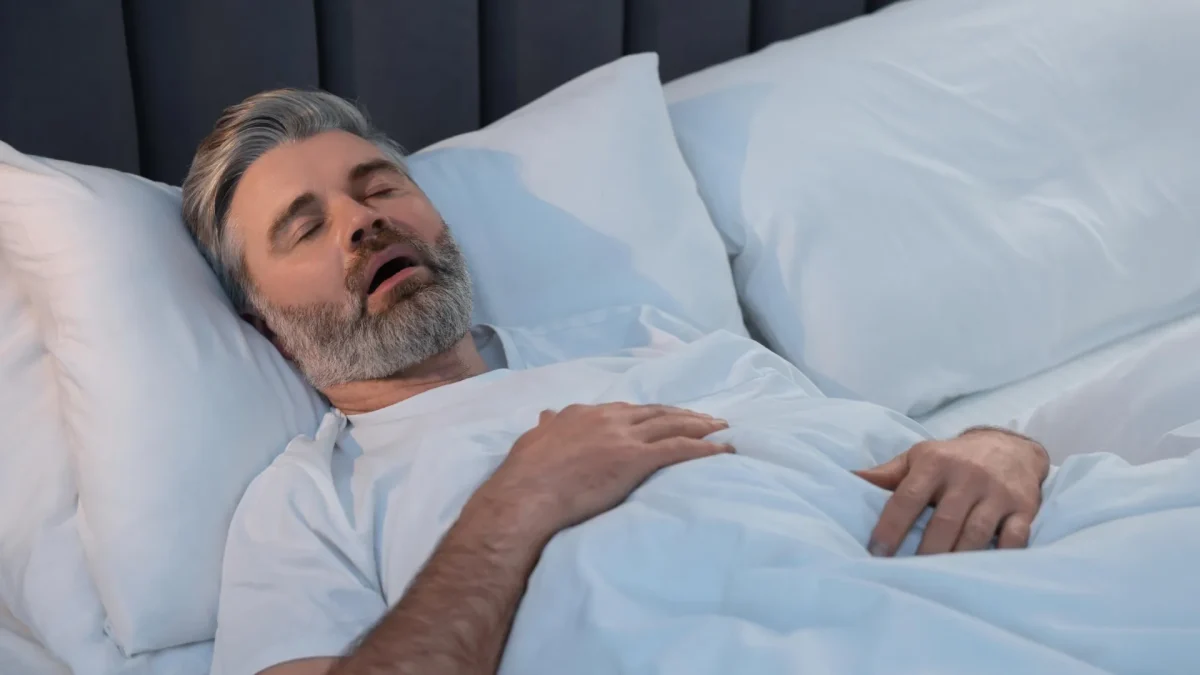
Scientists have found a drug that can significantly reduce breathing interruptions in people with moderate to severe sleep apnoea, paving the way for a pill-based alternative to CPAP machines.
In a European clinical trial, researchers found that the drug sulthiame significantly reduced breathing interruptions in individuals with moderate to severe sleep apnoea. The findings were published in The Lancet.
Obstructive sleep apnoea occurs when the upper airway repeatedly collapses during sleep. These episodes cause breathing to stop temporarily, reduce oxygen levels, and repeatedly disrupt sleep.
Over time, untreated sleep apnoea increases the risk of serious health problems, including high blood pressure, cardiovascular disease, stroke, and type 2 diabetes.
The European clinical trial, which included researchers from the University of Gothenburg, involved 298 individuals with moderate to severe sleep apnoea across four European countries. One quarter of the participants received a placebo, while the remainder were treated with varying doses of sulthiame.
Patients who received higher doses of sulthiame experienced up to 47 per cent fewer breathing interruptions during sleep compared to those given a placebo. They also showed improved oxygen levels overnight.
Sulthiame is an existing medication previously approved for treating a form of childhood epilepsy. Researchers are now investigating its potential as a drug treatment for sleep apnoea.
The medication appears to work by stabilising the body’s control of breathing and increasing respiratory drive. This helps reduce the likelihood of upper airway collapse during sleep, which is the main cause of obstructive sleep apnoea. Most side effects reported during the trial were mild and temporary.
Jan Hedner, senior professor of pulmonary medicine at the Sahlgrenska Academy, University of Gothenburg, stated that the trial results show that sleep apnoea can indeed be influenced pharmacologically.
“It feels like a breakthrough, and we now look forward to larger and longer studies to determine whether the effect is sustained over time and whether the treatment is safe for broader patient groups,” Jan Hedner said.
Even though sleep apnoea is common, there is currently no medication that directly treats its underlying cause. The most common treatment is continuous positive airway pressure (CPAP), which uses a mask to keep the airway open during sleep.
While CPAP is highly effective, many patients find it difficult to use. Up to half stop using the device within a year because the mask can feel uncomfortable or interfere with sleep. (Tribune)