
Updating your news feed...
NEWS EXPRESS is Nigeria’s leading online newspaper. Published by Africa’s international award-winning journalist, Mr. Isaac Umunna, NEWS EXPRESS is Nigeria’s first truly professional online daily newspaper. It is published from Lagos, Nigeria’s economic and media hub, and has a provision for occasional special print editions. Thanks to our vast network of sources and dedicated team of professional journalists and contributors spread across Nigeria and overseas, NEWS EXPRESS has become synonymous with newsbreaks and exclusive stories from around the world.























Loading banners
Loading banners...

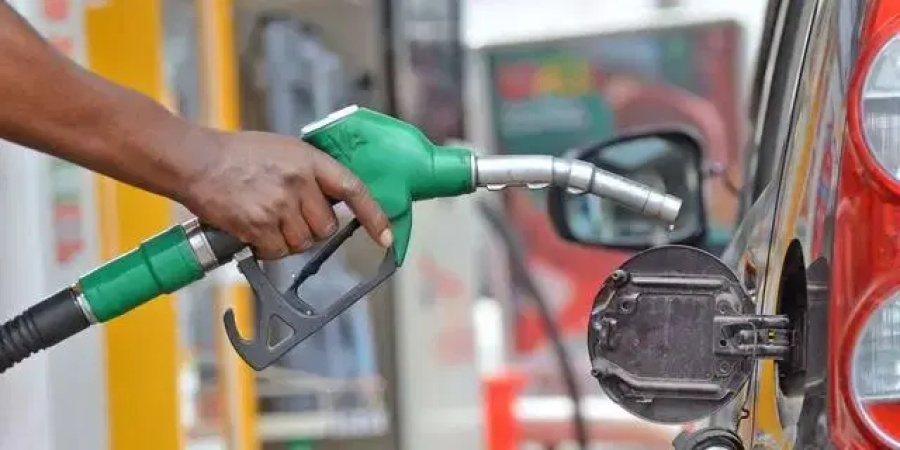
The escalating tensions in the Middle East is having a negative impact on Nigeria’s oil sector and the economy in general as oil prices and inflation may continue to rise in the weeks to come.
Last weekend, the United States launched major combat operations alongside Israel against Iran in an operation code-named “Epic Fury” by the US, and “Lion’s Roar by Israel.” The strikes, which led to the death of Iran’s Supreme Leader, Ali Khamenei, followed the collapse of nuclear talks with Tehran and triggered retaliatory missile attacks across the region.
The geopolitical tension has already rattled global energy markets, with oil majors and trading houses suspending crude and fuel shipments through the Strait of Hormuz — a critical maritime corridor in the Middle East through which a fifth of global oil supply are ferried.
The development has pushed both oil and gas prices higher, creating anxiety across global markets over the implications for fragile economies.
As of Friday, oil prices had climbed above $80 per barrel. Brent crude, the international benchmark, traded at $85.19 per barrel, while the US grade, West Texas Intermediate, stood at $80.72.
In the gas market, QatarEnergy declared a force majeure after suspending production of Liquefied Natural Gas (LNG) and associated products at its facilities in Ras Laffan Industrial City and Mesaieed Industrial City in Qatar.
A force majeure is a formal contractual notice issued when an unforeseen event such as war or natural disaster prevents a party from fulfilling its obligations.
Earlier, Qatar’s Defence Ministry said the country had been attacked by two drones launched from Iran.
For Nigeria, the crisis presents a mix of opportunities and risks. Current oil prices are above the country’s 2026 budget benchmark of $64.85 per barrel, potentially translating into higher government revenues. However, higher oil prices could also worsen inflation and foreign exchange pressures, increasing the cost of goods and services and deepening hardship for consumers.
Industry analysts say the situation highlights the strategic importance of domestic refining capacity while warning that prolonged geopolitical tensions could trigger fresh inflationary pressures and economic uncertainty.
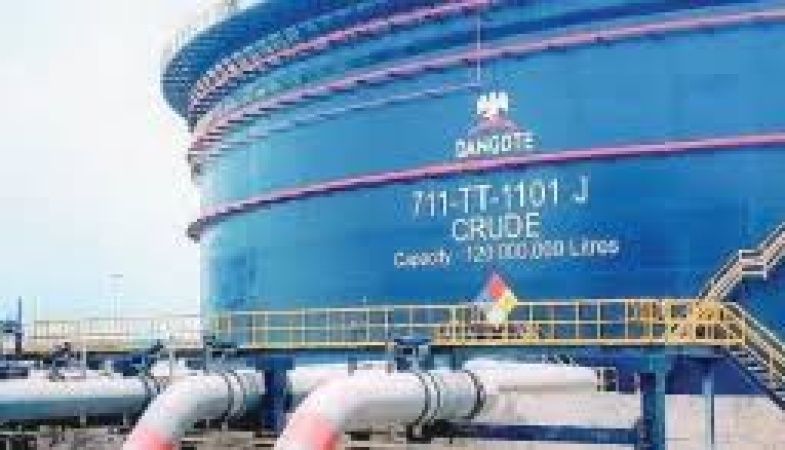
Chief Executive Officer of Finance with Muktar, Muktar Mohammed, said the situation in Nigeria’s downstream sector could have been worse, particularly following the recent increase in the ex-depot petrol price by Dangote Refinery from ?774 to ?875 per litre.
According to him, the Naira-for-Crude arrangement brokered by the Federal Government with the Dangote Refinery and other local refineries helped moderate potential shocks.
“The impact could have been far more severe without that arrangement. When you combine policy support with the presence of a major local refinery like Dangote, it changes the narrative significantly. The government deserves some credit for facilitating that deal because it has helped stabilise prices to some extent,” he said.
Mohammed added that international oil companies could face additional pressures as their operating margins are already thin globally.
“When you look at refining and upstream margins, many operators are working with around 20 per cent or even less. Continued geopolitical tensions affecting supply chains and costs could make profitability harder to sustain,” he said.
He, however, dismissed projections that petrol prices could rise to ?1,450 per litre, arguing that the Naira-for-Crude policy would help limit such increases.
Partner at Zedcrest, Samuel Gbaye, said Nigeria is somewhat insulated from external shocks because of domestic refining capacity.
According to him, countries that rely heavily on imported refined products face additional costs, including higher insurance premiums for vessels navigating conflict-prone maritime routes.
Those insurance costs alone can add as much as $50 per barrel to crude or refined product prices. If tensions escalate, the costs could rise further,” he said.
Gbaye warned that prolonged geopolitical tensions could push oil prices sharply higher, feeding inflation globally.
“If crude prices surge toward extreme levels — say $200 or even $300 per barrel — that would create major macroeconomic challenges and force central banks to adopt more aggressive monetary tightening,” he said. He stressed that domestic refining capacity remains a strategic national asset, noting that increased local refining reduces freight and insurance costs previously incurred when importing petroleum products and helps conserve foreign exchange.
Research analyst at Afrinvest Investment, Prosper Olushola, said the outlook across the oil and gas value chain differs depending on the segment.
For upstream operators, she noted, higher oil prices generally translate to increased revenue, while downstream players and consumers bear the burden of rising refined product prices.
“The key challenge is balancing production gains with consumer price stability,” she said, adding that she does not expect petrol prices to exceed N1,250 per litre in the near term.
Energy policy analyst and partner at Bloomfield Law Practice, Ayodele Oni, said rising crude prices could provide a revenue boost for Nigeria.
“With Brent trading well above the 2026 budget benchmark of $64.85, export receipts could exceed projections and increase inflows to the federation account,” he said.
He, however, warned that higher oil prices also come with domestic costs, including inflationary pressure driven by more expensive refined products, higher transport costs and disruptions to international travel and cargo routes in the Middle East.
Oni said if the conflict persists beyond a month, domestic fuel prices could rise further.
“With global crude above $80, ex-depot prices have already moved from about N774 to ?875 per litre. If pressures persist, prices could approach N1,000,” he said.
He added that sustained high oil prices could strain foreign exchange reserves and raise transportation costs across the economy.
Despite the potential revenue gains, Oni warned that Nigeria’s ability to benefit fully from higher prices depends on maintaining production levels, which remain constrained by pipeline vandalism, oil theft and underinvestment.
“In essence, the conflict offers a fiscal opportunity, but its net benefit depends on sustaining production and managing inflationary pressures,” he said.
Meanwhile, the Dangote Refinery has warned that inadequate crude supply from upstream producers, as required under the Petroleum Industry Act (PIA), is forcing it to source crude through international traders at additional cost.
The PIA introduced the Domestic Crude Supply Obligation to ensure that part of Nigeria’s crude production is reserved for local refining rather than export.
Despite the challenge, the refinery said it remains committed to stabilising the domestic market amid global supply disruptions.
The refinery noted that the Middle East conflict has forced the shutdown of some refineries worldwide and reduced global refining output, creating a scarcity of petroleum products.
China has also banned exports of gasoline and diesel, further tightening global supply.
Dangote Refinery said Brent crude prices have risen by about 26 per cent within a short period to above $84 per barrel, prompting a measured increase of N100 per litre in its ex-depot petrol price.
According to the company, Nigerian crude is currently priced $3 to $6 above the Brent benchmark, with additional freight costs of about $3.50 per barrel, pushing landing costs to between $88 and $91 per barrel.
The refinery said it currently receives about five cargoes per month from the Nigerian National Petroleum Company but requires about 13 cargoes to meet domestic demand, forcing it to purchase additional crude using foreign exchange from international traders. It added that although operating in a deregulated environment, it has absorbed about 20 per cent of cost increases to cushion the domestic market.
Despite the pressures, the refinery said large-scale domestic refining helps reduce exposure to global supply disruptions, moderate foreign exchange demand and protect Nigeria from severe fuel shortages during periods of global instability.
Meanwhile, analysts say Nigeria could record limited gains in the global LNG market following Qatar’s declaration of force majeure.
Former President of the Nigerian Liquefied Petroleum Gas Association, Dayo Adeshina, said Nigeria could see short-term opportunities in markets such as Europe and the United States.
He noted that most of Nigeria LNG’s supply agreements are long-term contracts, making it difficult to divert volumes for short-term profit.
Chairman of the Society of Petroleum Engineers Nigeria Council, Francis Nwaochei, said Nigeria could benefit from rising LNG prices as global gas markets react to the crisis.
“Most LNG contracts are long-term commitments, but pricing clauses may allow adjustments when gas prices spike. That is where Nigeria could see some gains,” he said. Former Chairman, Liquefied Petroleum Gas Retailers (LPGAR) branch of NUPENG, Mr. Chika Umudu, raised the alarm that the effect of the Middle East crisis is already having a toll on the domestic price of cooking gas. He said as at last week, a kilogramme of cooking gas sold for N1,100, saying as at Friday prices have risen to N1200 to N1300 per kilogramme, depending on the location.
He further warned that should the crisis not abate anytime soon, Nigerians should brace up a spike in the cost of cooking gas.
Similarly, the crisis has affected the price of Automotive Gas Oil (AGO), otherwise called diesel. Checks on petroleumprice.ng, an online petroleum products trading platform indicated a hike of N100 per litre in diesel price compared to last week.
at Friday, diesel prices rose to N1,400 as against N1,300 last week.
The latest suspension comes against the backdrop of the refinery’s earlier warning that the Middle East crisis could disrupt operations and affect supply stability.
Dangote Refinery had cautioned that geopolitical tensions in the region might impact crude supply, refining schedules, and ultimately pricing in the domestic market.
Analysts say the current halt may reflect the refinery’s continued strategic response to global uncertainties.
Depot operators, marketers, and bulk buyers are recalibrating supply expectations, while Nigerians remain alert for potential new petrol price adjustments.
Market participants say all eyes are on Dangote Petroleum Refinery for confirmation of any fresh pricing directive. (The Sun)




