Updating your news feed...
NEWS EXPRESS is Nigeria’s leading online newspaper. Published by Africa’s international award-winning journalist, Mr. Isaac Umunna, NEWS EXPRESS is Nigeria’s first truly professional online daily newspaper. It is published from Lagos, Nigeria’s economic and media hub, and has a provision for occasional special print editions. Thanks to our vast network of sources and dedicated team of professional journalists and contributors spread across Nigeria and overseas, NEWS EXPRESS has become synonymous with newsbreaks and exclusive stories from around the world.






















Loading banners
Loading banners...

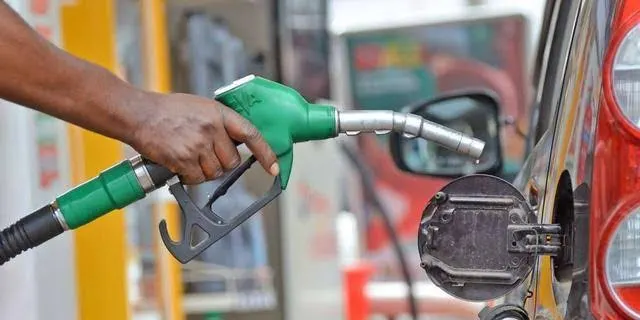
The escalating conflict between the US, Israel and Iran which has nearly shut down the Middle East has started taking its tolls on Nigerians as filling stations have started adjusting pump price of premium motor spirit (PMS) otherwise known as petrol.
Following the surge in prices of crude oil, Dangote Refineries had on Monday adjusted its gantry by N100, pushing the ex-depot rate to N874 per litre from N774.
In response to this, filling stations immediately adjusted pump prices across the country.
In Abuja, some retail stations belonging to the Nigerian National Petroleum Company Limited (NNPCL) adjusted pump price to N960 from N875.
Checks in Lagos along Ogunnusi Road indicated that none of the NNPC stations was dispensing but other filling stations had adjusted pump price to reflect the new price.
For instance a Bovas filling station increased its pump price from N835 per litre to N935.
There are fears prices of PMS would increase further as there is no end in sight to the conflict in Iran which was fuelled by the Saturday’s attacks on Iran by US-Israel in a joint strike which claimed the live of Iran’s Supreme Leader Ayatollah Khamenei.
Iran had responded with ceaseless attacks on US military bases and interests in neighbouring Middle East countries including UAE, Qatar, Bahrain, Saudi Arabia, among others.
The development has disrupted global oil supply with crude oil prices recording sharp increases across board.
Brent Crude surpassed $80 on Monday and it currently trades at $84.2 per barrel.
While this implies increased revenue from oil receipts for Nigeria, Nigerians are also going to pay more for PMS; the development which threatens to worsen inflation and economic shocks for Nigerians.
Meanwhile, petroleum marketers under the umbrella of the Petroleum Products Retail Outlets Owners Association of Nigeria (PETROAN) have raised fresh concerns over the escalating crisis in the Middle East, warning that the geopolitical tensions could significantly disrupt Nigeria’s fuel market and worsen domestic pump prices.
The marketers said the growing military confrontation involving the United States, Iran, Israel and their allies is already sending shockwaves through global energy markets, with crude oil prices trending upward amid fears of supply disruptions.
The marketers’ position was contained in a statement signed by Dr Joseph Obele.
National PRO of PETROAN.
Speaking in Abuja, PETROAN’s National President, Dr. Billy Gillis-Harry, described the situation as a major threat to energy-importing countries like Nigeria, noting that instability around the strategic Strait of Hormuz — a key global oil transit chokepoint — has heightened uncertainty in the international petroleum market.
According to him, about 20 per cent of the world’s crude oil and a substantial portion of global liquefied natural gas (LNG) shipments pass daily through the Strait, making any disruption in the corridor a serious risk to global supply chains.
He noted that recent hostilities in the region have affected energy infrastructure and maritime activities, with ripple effects on international oil benchmarks. Brent crude, he said, has climbed toward $80 per barrel, while analysts warn that prices could exceed $100 per barrel if tensions persist or shipping through the Strait is restricted for a prolonged period.
The marketers warned that Nigeria’s heavy reliance on imported refined petroleum products makes the country particularly vulnerable to such external shocks.
“With the deregulation of the downstream sector, pump prices are largely determined by global crude oil prices and foreign exchange rates. Any sustained increase in crude prices will inevitably reflect at the retail level,” Gillis-Harry said.
He explained that beyond higher fuel prices, the country could also face intensified pressure on foreign exchange reserves, increased transportation costs, and rising inflation if the crisis lingers.
In response to the unfolding developments, PETROAN called on the Federal Government to urgently prioritise and strengthen domestic refining capacity as a buffer against global volatility.
The association stressed the need for consistent and adequate crude oil supply to local refineries, as well as policies that would ensure optimal performance of refining facilities across the country.
Marketers also advocated for the sustained implementation of the Naira-for-Crude policy to reduce dependence on foreign exchange for petroleum imports and help stabilise local fuel prices.
They further urged the government to accelerate the rehabilitation and full operationalisation of Nigeria’s four state-owned refineries, arguing that revamping them would significantly cut import dependence and shield the economy from geopolitical shocks.
According to PETROAN, strengthening local refining is not only an economic necessity but also a strategic imperative for national energy security.
The association assured Nigerians that it would continue to monitor global market trends and engage relevant stakeholders to ensure that consumers are protected from excessive price volatility.
It also called for diplomatic efforts and peaceful resolution of conflicts in energy-producing regions to safeguard global petroleum supply chains and prevent further disruptions that could impact countries like Nigeria. (Daily Trust)