
Updating your news feed...
NEWS EXPRESS is Nigeria’s leading online newspaper. Published by Africa’s international award-winning journalist, Mr. Isaac Umunna, NEWS EXPRESS is Nigeria’s first truly professional online daily newspaper. It is published from Lagos, Nigeria’s economic and media hub, and has a provision for occasional special print editions. Thanks to our vast network of sources and dedicated team of professional journalists and contributors spread across Nigeria and overseas, NEWS EXPRESS has become synonymous with newsbreaks and exclusive stories from around the world.









Loading banners
Loading banners...

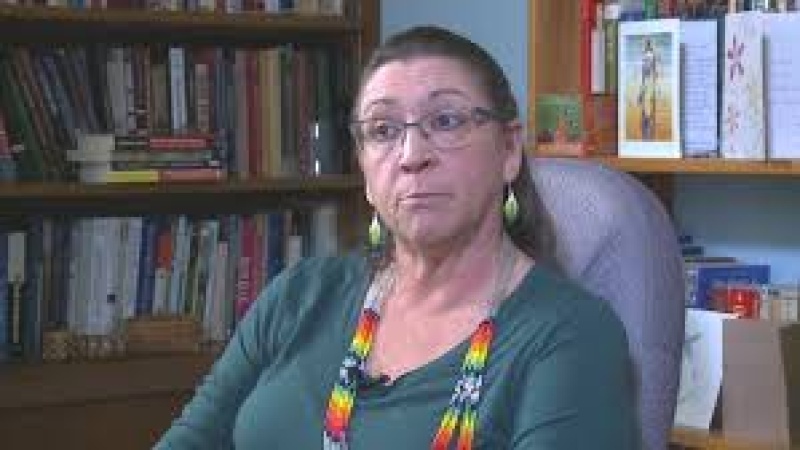
A University of Windsor professor whose academic career has been based on her self-identification as Eastern Cherokee does not have any Indigenous ancestry, according to an activist group.
On Feb. 4, Tribal Alliance Against Frauds released the results of an investigation into the genealogy claims of Sandra Muse Isaacs — who has taught Indigenous literature at the University of Windsor since 2018.
After examination of Muse Isaacs' family tree, historical Cherokee census records, and Muse Isaacs' own writings, TAAF has determined that Muse Isaacs has "zero American Indian ancestry."
"In sum, there is no evidence that Isaacs has even the most distant relations by blood to Cherokees," states TAAF, which is based in the Eastern Band of Cherokee Nation in North Carolina.
"Anyone who claims an American Indian identity has a responsibility to factually substantiate that claim."
Asked for comment, the University of Windsor told CBC News in an email statement that the institution is aware of the TAAF news release.
"The university takes these matters seriously and is reviewing the information provided," the statement reads.
"Policy development surrounding Indigenous identity is complex, and the university recognizes the importance of Indigenous-led and informed approaches in these matters."
The report by TAAF states that Muse Isaacs has personally benefited from her self-identification as Eastern Cherokee, such as obtaining the Harvey Longboat scholarship at McMaster University — which is meant for Indigenous graduate students — four times.
"In numerous instances, she has claimed for herself funding and jobs earmarked for actual Native people," the report states.
The report also takes to task the University of Windsor, saying the group found no evidence that the institution "has any vetting process at all" for those who claim scholarship from an Indigenous perspective.
Muse Isaacs was hired through the President's Indigenous Peoples Scholars Program at the University of Windsor, which was created specifically to "advance the academic careers of Indigenous scholars" and "increase the strength and diversity of Indigenous voices" on campus.
On her faculty page on the University of Windsor website, Muse Isaacs wrote that she is "of Eastern Cherokee (Ani-tsisqua, Bird Clan) and Gaelic heritage (Clan McRae)," and that she grew up in western Detroit.
Muse Isaacs did not respond to CBC Windsor's attempts to contact her about this story.
TAAF also did not respond.
Veldon Coburn, faculty chair of Indigenous relations at McGill University, notes that the case against Muse Isaacs bears striking similarities to the recent revelations about Thomas King — who was celebrated as an Indigenous author and academic for decades before the disclosure that he is not Indigenous.
Like Isaacs, King claimed to have Cherokee ancestry — and the scrutiny of TAAF was a key factor in King's eventual admission of having no connection to the Cherokee Nation.
Such cases have been "an open secret amongst Indigenous peoples," says Coburn, who is Anishinaabe from the Algonquins of Pikwàkanagàn.
"It's just that we haven't had the voice and the platform to point it out."
Coburn considers TAAF to be a reputable source. "The work that they typically do is very thorough and rigorous... I would put a great deal of credence into the report."
Along with these cases being "disheartening, frustrating, but no longer surprising," Coburn worries about them increasing general public skepticism about legitimate Indigenous people.
"That's when we lose the trust in the individuals and how they represent themselves."
Michelle Good, an award-winning Indigenous author and a recipient of the Order of Canada, believes that the consequences for falsely claiming Indigenous ancestry should be much harsher.
"You know the term 'Indigenous identity fraud?' One of the words that I feel is not being given sufficient time or consideration is the word 'fraud,'" Good says. "This is a fraud like any other fraud... This is a crime."
Good, who is a member of the Red Pheasant Cree Nation and a Sixties Scoop survivor, finds it particularly galling that non-Indigenous individuals are claiming Indigeneity now that one can draw "decent salaries and benefits" plus "public profile and fame" from doing so.
"Suddenly people want to be Indigenous," Good says with exasperation. "When I started out as an activist, I was a teenager — a white person would have considered it an insult (to be called Indigenous)."
TAAF does not hold back in its pronouncements on Muse Isaacs' culpability. The report repeatedly lambasts her as a "pretendian" — the pejorative term that Indigenous people give to those who knowingly appropriate Indigenous culture and identity.
Elsewhere in the report, Muse Isaacs is described as an exemplification of the "theft of our Indian identities" — as well as "more than a little delusional."
One sample of this, according to TAAF, is Muse Isaacs reminiscing in her writings about her father organizing "powwows" in Detroit.
"Tellingly, powwows are not Cherokee," TAAF notes. "They were created by citizens of Plains Indian Tribes."
Good says she takes no issue with the sharp language and attitude of TAAF. "Well, the whole thing enrages me."
"You know, we do have people — Indigenous people — that are brilliant, that have exceptional understanding of history, culture, language, our ways of being. Those people exist. So why should white people be taking those places?"
According to TAAF, attempts were made to approach Muse Isaacs "privately and respectfully" about her background, prior to the report being made public.
"Specifically, TAAF asked Isaacs to identify the basis of her claims to having Eastern Band Cherokee ancestry," the report states. "Isaacs chose not to respond at all to TAAF's queries."
Good agrees with TAAF that such a lack of response is typical of those whose ancestry claims do not hold up under close examination.
As for the argument that the good work people like Isaacs and King have done outweighs the controversies of their true ancestry, Good is dismissive.
"What stopped them from doing that good work as the people they are? Why did they have to do it in redface?" Good asks.
"They had to do it in redface because that is what would enrich them... It's a profound arrogance."
In 2019, Muse Isaacs was interviewed by CBC Windsor about being “the only Indigenous scholar” at the University of Windsor, at the time.
She recommended Thomas King’s book The Inconvenient Indian as a starting point for readers interested in Indigenous literature.
Muse Isaacs criticized the portrayal of Indigenous people in canonical literature — such as Injun Joe in Mark Twain’s The Adventures of Tom Sawyer.
“Am I supposed to see myself in this?" Muse Isaacs said. "There’s no one that I know, nobody in my family that was like that.” (CBC)



