Updating your news feed...
NEWS EXPRESS is Nigeria’s leading online newspaper. Published by Africa’s international award-winning journalist, Mr. Isaac Umunna, NEWS EXPRESS is Nigeria’s first truly professional online daily newspaper. It is published from Lagos, Nigeria’s economic and media hub, and has a provision for occasional special print editions. Thanks to our vast network of sources and dedicated team of professional journalists and contributors spread across Nigeria and overseas, NEWS EXPRESS has become synonymous with newsbreaks and exclusive stories from around the world.












Loading banners
Loading banners...

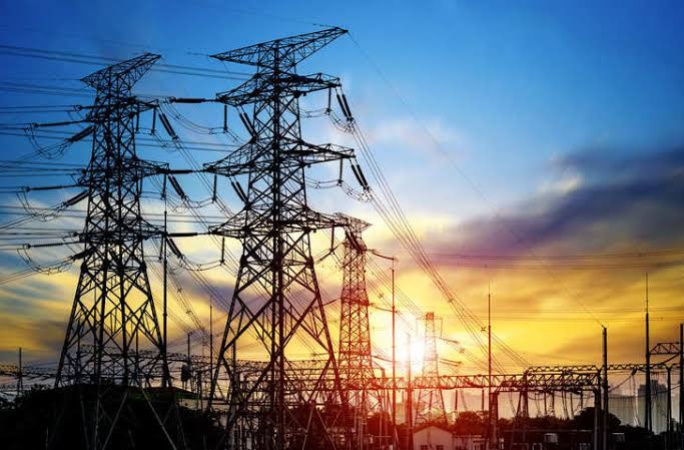
The Senate yesterday grilled the Nigerian Bulk Electricity Trading Plc (NBET) over rising debt in the power sector.
Members of the Senate Committee on Finance were told by NBET’s Acting Managing Director and Chief Executive Officer, Johnson Akinnawo, that outstanding liabilities across the electricity value chain had climbed to about N3 trillion.
The lawmakers questioned the agency’s performance, funding gaps and the persistent deficit between electricity tariffs and the real cost of power generation, transmission and distribution.
In his presentation, Akinnawo explained that regulatory income was intended to cover recurrent expenditure and reduce overheads for market participants.
He said although N858 billion was appropriated for NBET in 2025, only N60 million was released.
“At the close of the year, only N60 million was released toward the end of the year. Unfortunately, that affected our budget performance,” he said.
Committee Chairman, Mohammed Musa, noted that although market receipts appeared strong on paper, the sector remained unstable.
“In your page three, market receipts look good. We understand this is a transitional arrangement, but if performance is strong, the market should be sustainable,” Musa said.
Akinnawo, however, stressed that a structural deficit persisted.
“There remains a gap between the cost of generation, transmission and distribution of electricity and what is being recovered,” he said.
Senator Abdul Ningi questioned intervention spending, noting that nearly 60 per cent of NBET’s appropriations were for intervention.
Akinnawo explained that distribution companies remit collections which are used to pay generation companies, but payments are constrained by low collections and funding shortfalls.
“Every GenCo is paid on a pro-rata basis from whatever collections come from the DisCos. Azura is paid like every other GenCo,” he said.
He said the Federal Government, through the Ministry of Finance, covers funding gaps arising from partial risk guarantees.
The committee chairman decried the non-release of appropriated funds, saying they should have been released to bridge the gap between DisCos’ collections and payments due to GenCos.
Akinnawo also highlighted foreign exchange exposure, noting that generation tariffs are dollar-indexed.
On the debt profile, he said reconciliation was ongoing under a presidential power sector debt reduction committee chaired by the Minister of Finance, Wale Edun.
“As of now, the debt is in the region of N3 trillion,” he said.
He added that NBET’s N858 billion 2025 budget proposal was reduced to N601 billion, while the N60 million released was tied to a N200 million project that could not be implemented piecemeal under procurement rules.
The committee directed NBET to submit a clearer breakdown of revenues and expenditures for proper assessment. (The Nation)