Updating your news feed...
NEWS EXPRESS is Nigeria’s leading online newspaper. Published by Africa’s international award-winning journalist, Mr. Isaac Umunna, NEWS EXPRESS is Nigeria’s first truly professional online daily newspaper. It is published from Lagos, Nigeria’s economic and media hub, and has a provision for occasional special print editions. Thanks to our vast network of sources and dedicated team of professional journalists and contributors spread across Nigeria and overseas, NEWS EXPRESS has become synonymous with newsbreaks and exclusive stories from around the world.











Loading banners
Loading banners...

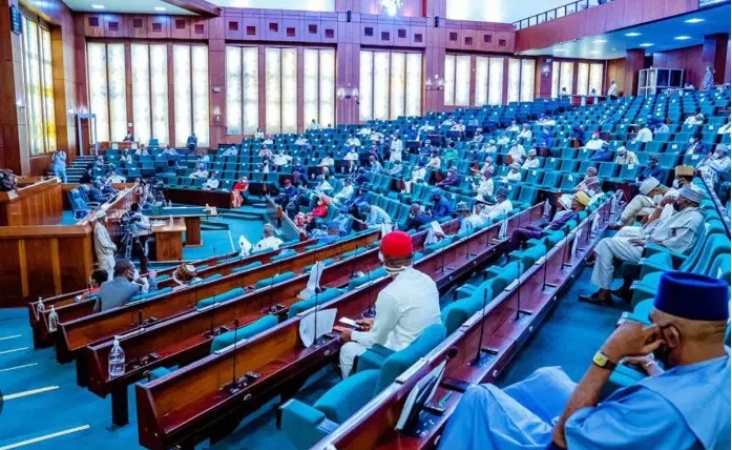
House of Representatives in session
The House of Representatives has faulted the Federal Government’s proposed ?15.88 billion allocation to the Office of the Auditor-General for the Federation (OAuGF) in the 2026 budget, describing it as grossly inadequate for an institution constitutionally mandated to audit more than 1,000 Ministries, Departments and Agencies (MDAs) and other government-funded entities nationwide.
The concern was raised during the consideration of the Auditor-General’s 2026 budget proposal at the National Assembly, with lawmakers warning that the funding level severely weakens Nigeria’s anti-corruption and public accountability framework.
Chairman of the House Committee on Public Accounts, Mr. Bamidele Salam, noted that the proposed allocation represents just 0.027 per cent of the N58.4 trillion Federal Government budget for 2026, arguing that it is unrealistic to expect the nation’s supreme audit institution to effectively scrutinise trillions of naira in public spending with such limited resources.
Salam said the scale of responsibilities assigned to the Auditor-General’s Office far exceeds the funding provided.
“You are asking an institution to audit more than 1,000 MDAs, including foreign missions, statutory agencies and intervention funds, with less than N16 billion. That is structurally designed to fail,” he said.
He disclosed that persistent funding constraints have significantly hampered the Office’s operations, revealing that it was only able to audit five out of about 100 Nigerian foreign missions in recent years, leaving most overseas expenditures unchecked.
Salam further revealed that in the 2025 fiscal year, only four per cent of the Office’s capital allocation was released, crippling its ability to conduct field audits, deploy modern audit tools and expand its professional workforce.
A breakdown of the 2026 proposal shows N5.3 billion earmarked for personnel costs, N5.6 billion for overheads and N4.8 billion for capital expenditure—figures lawmakers described as grossly insufficient to support nationwide and international audit coverage across more than a thousand MDAs.
The Committee warned that inadequate funding would continue to limit the Auditor-General’s capacity to track public funds, investigate irregularities and produce timely audit reports, creating gaps that enable corruption, waste and mismanagement to thrive.
Lawmakers referenced international best practices under the International Organization of Supreme Audit Institutions (INTOSAI), which emphasise the need for supreme audit institutions to enjoy financial independence and adequate funding to operate effectively without executive interference.
They stressed that weakening the Auditor-General’s Office through poor funding directly undermines transparency and accountability in public finance management. (The Guardian)