Updating your news feed...
NEWS EXPRESS is Nigeria’s leading online newspaper. Published by Africa’s international award-winning journalist, Mr. Isaac Umunna, NEWS EXPRESS is Nigeria’s first truly professional online daily newspaper. It is published from Lagos, Nigeria’s economic and media hub, and has a provision for occasional special print editions. Thanks to our vast network of sources and dedicated team of professional journalists and contributors spread across Nigeria and overseas, NEWS EXPRESS has become synonymous with newsbreaks and exclusive stories from around the world.


















Loading banners
Loading banners...

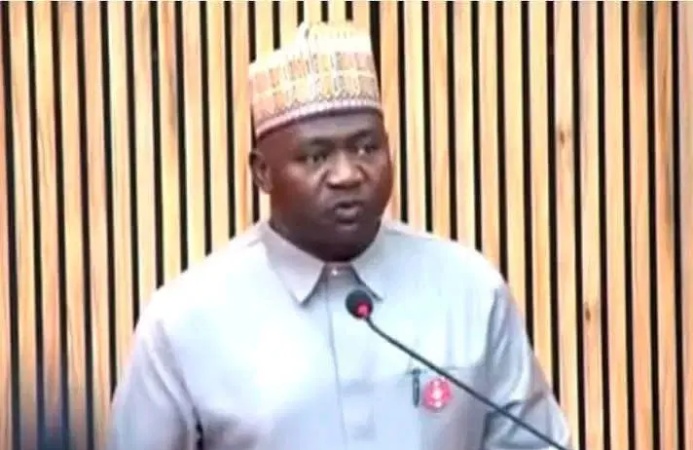
Minister of Defence, General Christopher Musa
Nigeria’s security and police institutions have stressed that robust intelligence sharing and sustained joint operations are critical to sustainable national stability.
Office of the National Security Adviser (ONSA) and the Nigeria Police Force stated this on Tuesday at day two of the National Economic Council (NEC) Conference in Abuja, where security deliberations were situated within the broader context of economic growth and social cohesion rather than as a purely enforcement responsibility.
They emphasised that deeper collaboration among agencies is fast becoming the cornerstone of the country’s evolving security framework.
Speaking on behalf of the National Security Adviser, Minister of Defence, General Christopher Musa, said the Federal Government has, since 2023, accelerated efforts to harmonise operational mandates, strengthen intelligence synchronisation and align security planning with national development priorities.
He observed that insecurity and economic decline often reinforce each other, warning that persistent threats, including terrorism, banditry, kidnapping, organised crime and cybercrime, continue to undermine livelihoods, deter investment and weaken public confidence in governance.
According to Musa, government’s recalibrated security doctrine is embedded in the Renewed Hope National Development Plan 2026-2030, which recognises security as a cross-cutting pillar linked to economic diversification, human capital development, private-sector growth and environmental sustainability.
He stressed that sustainable safety can no longer be achieved through isolated or purely force-based measures, noting that the emerging strategy places strong emphasis on intelligence fusion, inter-agency coordination and technology-driven surveillance systems.
“Sustainable security is not achieved by force alone. Intelligence fusion, coordination and technology must work together with governance and development,” Musa said.
The Defence Minister added that closer cooperation among the Armed Forces, intelligence services and law-enforcement agencies is already improving nationwide situational awareness and operational response time.
Reinforcing the call for collaboration, the Inspector-General of Police (IGP), Kayode Egbetokun, represented by the Deputy Inspector-General in charge of Information and Communication Technology, Frank Mba, said the growing convergence of operations and training among security institutions reflects a shift from rivalry to collective responsibility.
“Our priority is collective progress, not competition,” he stated, adding that modern crime trends demand unified national action.
Mba, who spoke as a panelist, noted that shared intelligence platforms and joint field exercises are strengthening the ability of agencies to track cross-border and inter-state criminal networks, explaining that crime patterns across geopolitical zones are increasingly interconnected and require predictive, data-driven policing supported by real-time information exchange.
Both officials underscored the importance of public trust and community participation, stressing that sustainable security must be built in partnership with state governments, local authorities and grassroots stakeholders to generate credible intelligence and long-term resilience.
They also highlighted the expanding deployment of data analytics, biometric identification systems and secure communications infrastructure as essential tools for modern security management, while acknowledging lingering challenges such as youth unemployment, coordination gaps and environmental pressures.
The officials maintained that lasting national stability would depend on sustained joint operations, seamless intelligence exchange and the integration of governance reforms with economic and social policies, describing collaborative security planning as key to strengthening unity and unlocking Nigeria’s development potential.
In his closing remarks, Musa expressed optimism about the country’s outlook, urging Nigerians to embrace collective responsibility in addressing security challenges and emphasising the need for both kinetic and non-kinetic measures.
“The future is bright if we work together. No organisation or community can do it alone. Good governance, fairness, trust and inclusion must go hand in hand with security operations,” he said, noting that local governments and communities remain crucial to early warning and preventive action.
(THISDAY)
• Minister of Defence, General Christopher Musa,
Toyota to launch first three-row electric highlander in 2027
Automobile company Toyota has confirmed it will unveil the all-new 2027 Highlander EV on February 10, marking its first three-row electric SUV for the U.S. market.
The confirmation came in a third teaser released one day ahead of the official reveal, ending weeks of speculation after earlier previews showed the vehicle’s exterior and three-row interior layout.
The latest teaser highlights the rear of the SUV, featuring “BEV” badging that identifies it as a battery-electric vehicle, along with an “AWD” badge indicating a dual-motor setup.
Based on Toyota’s two-row NZ Woodland, which produces 375 horsepower, the electric Highlander is expected to offer similar output.
“Meet the all-new 2027 Highlander. Featuring sleek, modern lines, an electric powertrain, and a spacious three-row cabin with comfort for the whole crew,” said Toyota.
The Highlander nameplate debuted in the United States in 2001. The current fourth-generation model has been in production since 2019, though its relevance has declined following the launch of the larger and more affordable Grand Highlander.
Toyota has not said whether the gas-powered Highlander will continue alongside the electric version.
Earlier interior teasers showed seating for at least six passengers, second-row captain’s chairs, blue ambient lighting, and large digital displays for the driver.
Pricing and full specifications have not been announced. However, with the two-row bZ Woodland starting at $45,300, the Highlander EV is expected to cost more and compete with models such as the Kia EV9 and Hyundai Ioniq 9, which start around $55,000.
Toyota appears to be positioning the Highlander EV as a more premium and performance-focused option within its electric lineup, following the mixed reception of the bZ4X.
The company recently reintroduced the C-HR as an electric model, also priced higher than its previous gas version.
The all-new 2027 Highlander EV will be fully revealed on February 10. (Nigerian Tribune)