Updating your news feed...
NEWS EXPRESS is Nigeria’s leading online newspaper. Published by Africa’s international award-winning journalist, Mr. Isaac Umunna, NEWS EXPRESS is Nigeria’s first truly professional online daily newspaper. It is published from Lagos, Nigeria’s economic and media hub, and has a provision for occasional special print editions. Thanks to our vast network of sources and dedicated team of professional journalists and contributors spread across Nigeria and overseas, NEWS EXPRESS has become synonymous with newsbreaks and exclusive stories from around the world.


















Loading banners
Loading banners...

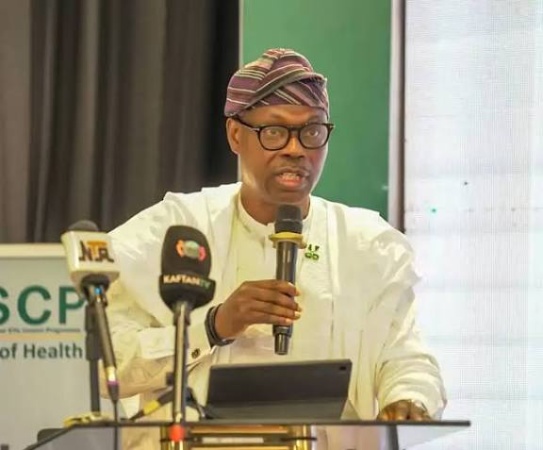
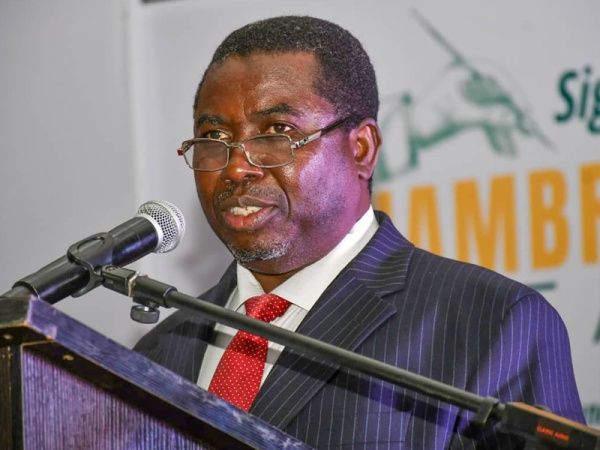
Minister of State for Health and Social Welfare, Dr Iziaq Salako
By JUSTINA AUTA
The Federal Government has begun Cardiopulmonary Resuscitation (CPR), Basic Life Support (BLS), and Automated External Defibrillator (AED) training for Federal Ministry of Health staff.
This is in a bid to strengthen emergency response capacity to incidents such as cardiac arrest.
The exercise is with support from the Nigerian Cardiac Society (NCS) and the Society for Public Health and Social Development.
Dr Iziaq Salako, the Minister of State for Health and Social Welfare, inaugurated the exercise on Thursday in Abuja.
Salako said that the initiative was part of the resolutions of the last National Council on Health.
He said that the council recognised sudden cardiac arrest as a public health emergency, and emphasised the urgent need to build life-saving capacity beyond hospital walls.
“Today’s event is therefore not just a training exercise; it is a deliberate policy action aimed at saving lives.
“Sudden cardiac arrest can occur anywhere—at home, in offices, at public gatherings, or within institutions such as ours.
“When it happens, every second counts. The difference between life and death often lies in the presence of a trained first responder who can promptly recognise the emergency, initiate CPR, and deploy an AED where available.
“By equipping our staff with these essential skills, the ministry is strengthening emergency preparedness within the workplace while reinforcing its leadership role in promoting patient safety, emergency response, and public health resilience.”
He said that the initiative also aligned with the ministry’s commitment to preventive healthcare, occupational safety, and quality service delivery.
According to him, the exercise will also be cascaded to communities nationwide to equip citizens with skills to recognise sudden cardiac arrest, initiate CPR promptly, and use an AED where available.
“This initiative will not stop within the walls of the Federal Ministry of Health. It is our intention that the knowledge and skills acquired here today will be cascaded to communities across the country.
“We envision a Nigeria where citizens are empowered to recognise sudden cardiac arrest, initiate CPR promptly, and use an AED where available.
“By extending this training beyond government offices into communities, schools, workplaces, and public spaces, we are building a nationwide network of first responders and strengthening community resilience to medical emergencies,” he said.
The minister expressed appreciation to NCS and other partners for their expertise, time, and resources in supporting the training aimed at advancing health outcomes and building a safer society.
Dr Olanrewaju Olatunji, Deputy Director, Trauma Emergency Disaster Response Programme, Hospital Services Department at the ministry, emphasised the need for every individual to learn CPR, BLS, and AED to save lives.
“It is important for every person to know how to perform CPR; at least know what to do in the first step before calling for rescue.
“That involves that once someone collapse or slums, the first thing is to check the environment, if it is safe.
“If the environment is safe and you call the person’s name, if you know the person, then you commence the process of CPR.
“It is very significant, because the first four minutes is very important in depriving the brain of oxygen. Once the brain is deprived of oxygen, the person might remain vegetative or eventually die,” he said.
According to him, that is why it is important to commence that CPR immediately.
It is important for everybody, whether you are a health worker or not to know how to perform CPR,” he said.
Olatunji further said that slumping may be due to neurological, cardiovascular, or endocrine causes, as well as comorbid conditions such as hypertension, hemorrhaging, ischemic stroke, among others.
Prof. Augustine Odili, President, NCS, said that the council was developing training modules, standardisation and quality assurance measures, as well as certification processes to assist in CPR, BLS, and AED.
Odili, who is also a Consultant Cardiologist at the University of Abuja Teaching Hospital, said that many Nigerians who have training in CPR had American Heart Association certification.
“What NCS is doing is to develop a certification process. We need to develop protocols. So part of what we launched today is the protocol for installation and maintenance of public access defibrillator.”
He attributed most causes of cardiac arrest to cardiovascular diseases that affect the heart, such as hypertension, diabetes, cigarette smoking, and sedentary lifestyle, which are major risk factors. (NAN)