Updating your news feed...
NEWS EXPRESS is Nigeria’s leading online newspaper. Published by Africa’s international award-winning journalist, Mr. Isaac Umunna, NEWS EXPRESS is Nigeria’s first truly professional online daily newspaper. It is published from Lagos, Nigeria’s economic and media hub, and has a provision for occasional special print editions. Thanks to our vast network of sources and dedicated team of professional journalists and contributors spread across Nigeria and overseas, NEWS EXPRESS has become synonymous with newsbreaks and exclusive stories from around the world.

.webp)





Loading banners
Loading banners...

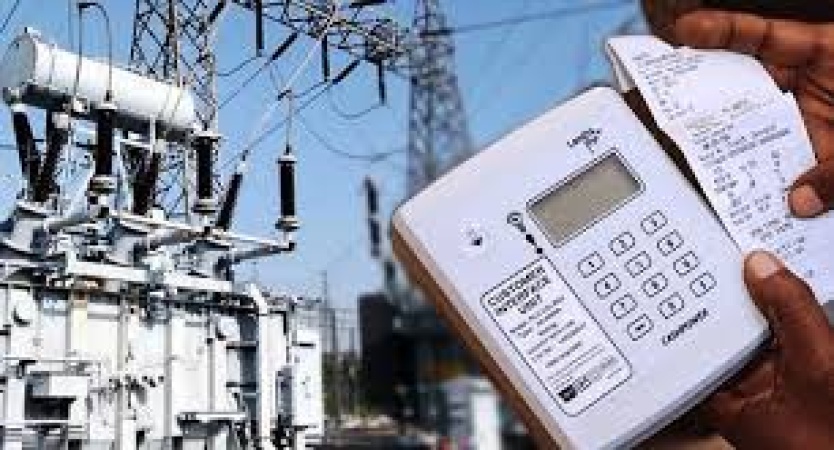
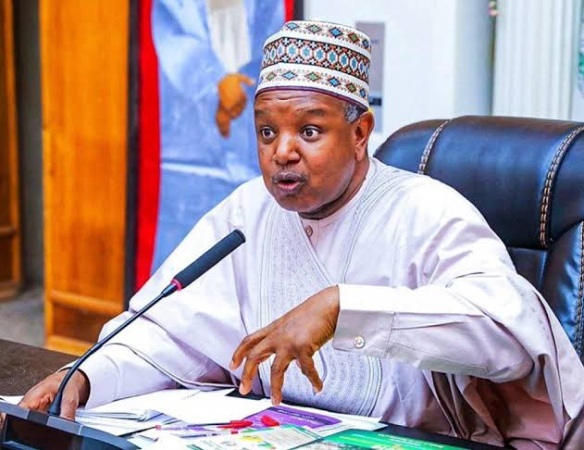
Speaking at a training for staff of Ministries, Departments and Agencies (MDAs) on the 2026 post-budget preparation using the Government Integrated Financial Management Information System, Director-General, Budget Office, Tanimu Yakubu, said that if Nigerians want stable power, they must be ready to pay for it.
“If we want a stable power sector, we must pay for the choices we make. When tariffs are held below cost, a gap is created. That gap is a subsidy. And a subsidy is a bill. In 2026, we will stop pretending that this bill can be left to the Federal Government alone—especially where the policy choice or the political benefit is shared across tiers of government.
“The president’s directive is to invoke the electricity-sector legal framework to make burden-sharing practical and transparent. This means subsidy costs must be explicit, tracked and funded—so they do not return as arrears, liquidity crises or hidden liabilities in the market.
“It also means that if any tier of government chooses affordability interventions, the funding responsibilities must be clear, agreed and enforceable. This is not punishment. It is alignment. When everyone carries a fair share of the cost, everyone also has an incentive to support cost-reflective efficiency, targeted protection for the vulnerable and a power market that can actually deliver,” the DG stated.
Tanimu, who was represented by the Director, Expenditure, Budget Office, Mr Yusuf Muhammed, told 2026 budget planners to make subsidy-related costs visible in their planning and submissions, urging them not to push liabilities into the market as arrears or unfunded commitments.
“Support transparent, rules-based attribution and financing of affordability decisions,” he charged.
Tanimu lamented that rollover budgeting and fragmented project lists have weakened execution.
According to him, such a policy reduces clarity, dilutes accountability and creates hidden obligations.
“We must speak plainly. Rollover budgeting and fragmented project lists have weakened execution. They reduce clarity. They dilute accountability. They create hidden obligations.
“The 2026 Budget corrects this. It is built as one coherent implementation framework. In line with Mr President’s directive, the approach is to consolidate commitments into a single, visible pipeline and manage them as a disciplined programme of delivery. This is what I call the ‘single-train’ approach,” he said. (The Sun)