ADAD
ADADUpdating your news feed...

NEWS EXPRESS is Nigeria’s leading online newspaper. Published by Africa’s international award-winning journalist, Mr. Isaac Umunna, NEWS EXPRESS is Nigeria’s first truly professional online daily newspaper. It is published from Lagos, Nigeria’s economic and media hub, and has a provision for occasional special print editions. Thanks to our vast network of sources and dedicated team of professional journalists and contributors spread across Nigeria and overseas, NEWS EXPRESS has become synonymous with newsbreaks and exclusive stories from around the world.
















Loading banners
Loading banners...

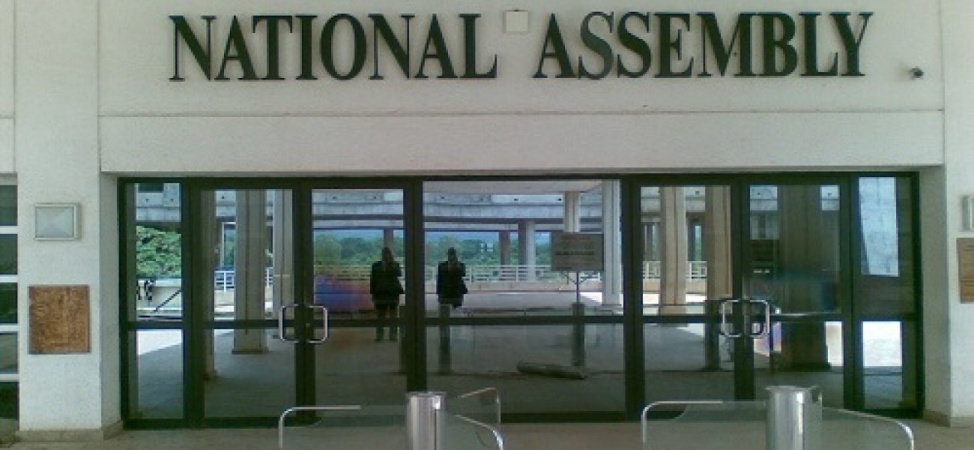
UNLESS the National Assembly concludes its work on the amendment of the Electoral Act within three weeks and gets President Bola Tinubu to assent immediately, the 2027 election may be postponed or conducted with the 2022 electoral law.
Fresh anxiety over the fate of the 2027 general elections heightened over the weekend following Thursday’s decision of the House of Representatives to step down consideration of the Electoral Act Amendment Bill.
This was amid concerns by opposition parties and civil society organisations that delays by the National Assembly could disrupt the country’s tightly regulated electoral timetable.
Last week, the Senate appointed a seven-member committee to harmonise the contributions of senators on the bill and present its report tomorrow.
If the polls were to be conducted on February 20, 2027, with the 2022 Electoral Act, the Independent National Electoral Commission, INEC, must issue the notice on or before February 24.
Why? Section 28(1) of the Electoral Act 2022 mandates INEC to issue a notice of election not later than 360 days before polling day. The last presidential election was held on February 25, 2023; the next presidential election is due on February 20 2027.
INEC running out of time
This means INEC is rapidly running out of time, even with the old law. Without postponement, a host of good amendments proposed by stakeholders and legislators cannot be implemented in 2027.
More alarming is the proposed amendment seeking to shift presidential and gubernatorial elections to November 2026.
With the existing 360-day notice requirement still intact and no amended law in force, that timetable has become practically unworkable, exposing a widening gap between legislative ambition and legal reality.
At a joint public hearing on October 13, 2025, lawmakers proposed that presidential and gubernatorial elections should hold not later than 185 days before the expiration of incumbents’ tenure on May 29, 2027.
Section 4(7) of the draft amendment states: “Elections into the office of the President and Governor of a State shall be held not later than 185 days before the expiration of the term of office of the last holder of the office.”
By this calculation, elections would fall in November 2026. But without an amended law in place, and with the 360-day notice requirement still binding, the proposal is already colliding with statutory timelines.
Proposed sweeping reforms
The National Assembly is considering far-reaching changes, including: holding all elections in one day; mandatory electronic transmission of results; early voting for security personnel and election officials; diaspora voting; and conclusion of election disputes before swearing-in.
Chairman of the House Committee on Electoral Matters, Adebayo Balogun, explained that the reforms were designed to compress litigation timelines and stabilise the electoral calendar.
“To ensure that all manner of election litigations are dispensed with before the swearing in of winners, we are proposing an amendment that will reduce 180 days of tribunal judgement to 90 days… which will all not exceed 185 days,” he disclosed.
The draft bill also proposes early voting: “There shall be a date set aside for early voting not later than 14 days to the day of the election.”
Section 60(5) further mandates electronic transmission of results and prescribes penalties for electoral misconduct by officials.
Reforms may wait till 2031
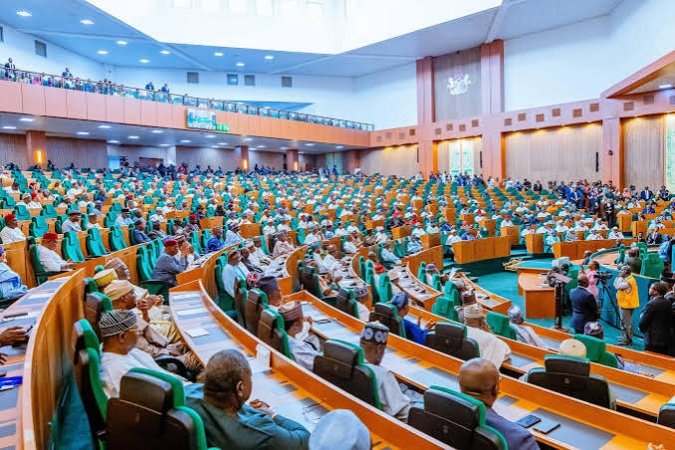
The House of Representatives shelved debate on the bill after it emerged during plenary that there were insufficient copies of the proposed amendments for lawmakers, a development that forced the Speaker, Tajudeen Abbas, to halt proceedings on the item.
Ruling on the matter, Abbas stressed that lawmakers must be adequately furnished with legislative documents to enable informed debate and effective lawmaking, directing that consideration of the Electoral Act be deferred until enough copies were made available.
The decision came as the House also adjourned plenary for two weeks to allow standing and ad hoc committees engage in the defence of the 2026 budget with ministries, departments and agencies, MDAs, effectively pushing consideration of the critical electoral reforms further into the legislative calendar.
Plenary is expected to resume after the budget defence exercise, with the Electoral Act amendment among pending items, but the pause has intensified fears within political and civil society circles that time may be running out for meaningful reforms, ahead of 2027.
Senate sets up ad-hoc committee
In contrast, the Senate announced the constitution of a seven-member ad hoc committee to harmonise and distil senators’ positions on the Electoral Act, 2022 (Repeal and Enactment) Bill, 2025.
Senate President, Godswill Akpabio, disclosed this after a closed session that lasted about two hours, explaining that the committee was mandated to streamline contributions and fast-track final deliberations.
The Chairman of the committee is Senator Adeniyi Adegbonmire, with members including Senators Adamu Aliero, Aminu Tambuwal, Adams Oshiomhole, Danjuma Goje, Tony Nwoye and Titus Zam. The Clerk of the Senate, Emmanuel Odo, will serve as secretary.
Akpabio said the committee had 48 hours to conclude its assignment and report back at plenary next week, noting that the closed session was convened to allow senators thoroughly examine the proposed amendments and supporting documents before further debate.
Key amendments proposed
Among the highlights of the proposed amendments are stricter controls on election spending, tougher penalties for electoral offences, and stronger safeguards for transparency in voting, collation and result transmission.
The bill proposes an upward review of fines for offences related to nomination, increasing penalties from ¦ 50 million to ¦ 75 million, as well as harsher sanctions for buying and selling voters’ cards, including fines of up to ¦ 5 million and a 10-year ban from contesting elections.
Other provisions include mandatory electronic transmission of results in real time to the INEC Result Viewing Portal (IREV), expanded use of the Bimodal Voter Accreditation System (BVAS), clearer rules on withdrawal of candidates, stricter regulation of party primaries, limits on campaign expenses, and measures to prevent abuse of visually impaired and incapacitated voters.
The bill also seeks to tighten timelines for inspection of electoral materials, regulate party conventions and congresses, and strengthen sanctions against the inducement of delegates during primaries.
ADC alleges deliberate stalling
However, despite these proposed reforms, the African Democratic Congress, ADC, accused the APC-dominated National Assembly of deliberately slowing down passage of the bill to undermine the credibility of the 2027 elections. In a statement by the National Publicity Secretary, Mallam Bolaji Abdullahi, the party said the continued delay had raised suspicions of calculated stalling, aimed at weakening key safeguards designed to make elections more transparent and difficult to rig.
ADC warned that failure to promptly pass the bill for presidential assent could leave political parties and INEC grappling with uncertainty over applicable rules and guidelines.
The party drew attention to existing legal provisions requiring INEC to publish notices of election at least 360 days before the polls, noting that time for compliance was already narrowing.
According to ADC, lack of clarity over the electoral framework can create “booby traps” for opposition parties and severely constrain INEC’s ability to prepare adequately, set timelines and issue clear guidelines within the law.
It urged the National Assembly to act swiftly, warning that any further delay could pose serious risks to the integrity of the 2027 elections and undermine public confidence in the entire process.
Lawyers, CSOs, INEC raise alarm
Legal practitioners warned that prolonged delay could create a legal minefield, with late amendments triggering pre-election litigation and conflicting judicial interpretations.
The Civil Society Legislative Advocacy Centre, CISLAC, said electoral reforms lose value if not concluded early enough for proper implementation, stressing that INEC and political parties required certainty to plan effectively.
INEC, though cautious in its public statements, has consistently maintained that early passage of the Electoral Act is critical for logistics, procurement, training and voter education, warning that compressed timelines increase the risk of operational failures.
Uncertainty hangs over 2027
With the House stepping down the bill and the Senate still consulting, uncertainty now hangs over the pace and outcome of electoral reforms, fuelling anxiety about the smooth conduct of the 2027 polls.
As pressure mounts on the National Assembly, stakeholders insist that only swift, transparent and bipartisan action can restore confidence in the electoral process and avert a looming crisis. (Vanguard)