Updating your news feed...

NEWS EXPRESS is Nigeria’s leading online newspaper. Published by Africa’s international award-winning journalist, Mr. Isaac Umunna, NEWS EXPRESS is Nigeria’s first truly professional online daily newspaper. It is published from Lagos, Nigeria’s economic and media hub, and has a provision for occasional special print editions. Thanks to our vast network of sources and dedicated team of professional journalists and contributors spread across Nigeria and overseas, NEWS EXPRESS has become synonymous with newsbreaks and exclusive stories from around the world.




Loading banners
Loading banners...

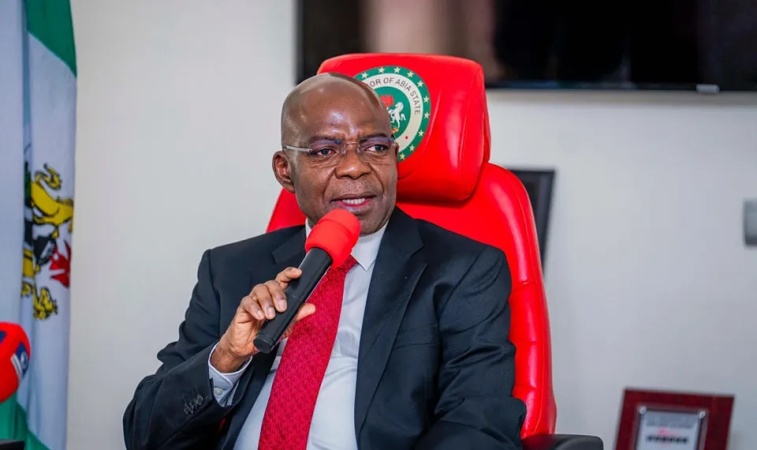
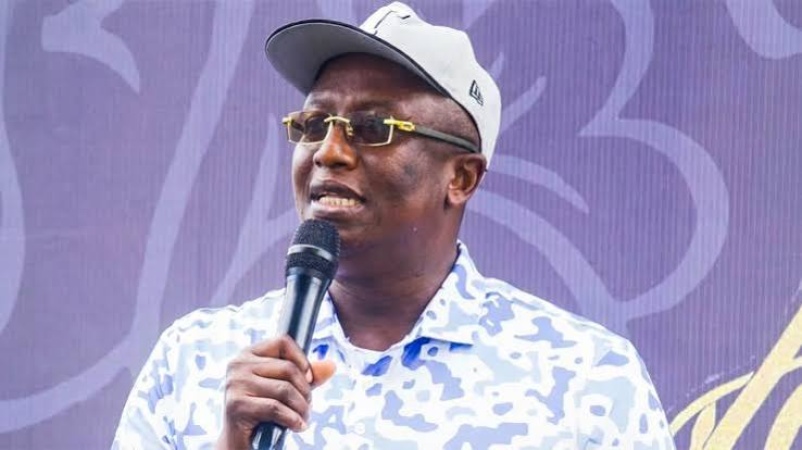
Governor Otti
Governor Alex Otti of Abia State has said that the state is no longer experiencing power failure caused by frequent collapse of the National Grid system, as his administration is now investing in converting organic waste products into electricity.
He disclosed this while addressing the media at the state’s government house on Thursday.
According to him, waste products are now being converted from biogas into renewable energy for Abians, adding that the state is no longer under the control of the Nigerian Electricity Regulatory Commission (NERC).
He also disclosed that the new arrangement had been negotiated and accepted by the utility firm Enugu Electricity Distribution Company (EEDC) in charge of power in the state.
“This is a pilot programme. Instead of throwing away waste, we can turn it into clean energy, and we will be able to power a lot of places, particularly the Umuhaia in-farms.
“I had reported earlier that our offers to EEDC have been accepted, and we are in the process of raising the funds to pay off EEDC.
“On the 24th of December, the Abia state electricity regulation authority took over the regulation of power from the Nigerian Electricity Regulatory Commission. So everything about distribution, generation, and transmission is going to be regulated within the state.
“The whole idea is to ensure regulation of efficiency and independence in the state, just like the Aba Power provides power for the Aba in-farms.
“I am sure you would have been aware that some of the disasters (national grid collapses) that happened recently, our state was not affected, because a whole part of our power assets is within our authority.
“That is the whole idea of acquiring the whole Umuahia in-farms.
“I am happy we are making a lot of progress in that regard”, he said.
Grid Collapses
The National Grid system on Tuesday recorded its second collapse in 2026, causing widespread power outages across the country.
Grid collapses have been attributed to a combination of technical faults, inadequate maintenance of transmission lines, and fluctuations in generation capacity.
Electricity generation dropped sharply from over 4,500 megawatts to as low as 0 megawatts as of 11:00 AM.
Checks showed that all 23 power generation plants connected to the grid reportedly lost output during the incident, resulting in zero power allocation to each of the 11 electricity distribution companies.
Peter Obi Condemns Grid’s 5,000MW Capacity
Former Labour Party (LP) presidential candidate, Peter Obi, last week criticised the collapse, describing it as a continuation of a deepening national crisis.
In a statement posted on X titled “2026: The Collapse Continues”, Obi said the grid failure recorded in January 2026 mirrored events of the previous year, when the first collapse of 2025 also occurred in January and was followed by several others.
“In January 2025, we witnessed the first grid collapse of that year, which was followed by several other collapses. Now in January 2026, the national shame has commenced with Saturday’s collapse,” he said.
Obi lamented Nigeria’s poor access to electricity, noting that the country had remained at the bottom of global rankings for three consecutive years.
“It is utterly disappointing that for three consecutive years, from 2023 to 2025, our nation has been ranked as having the least access to electricity globally, with nearly 100 million citizens left without power,” he said.
The former Anambra State governor compared Nigeria’s power generation capacity with that of other African countries, describing the gap as alarming.
“When we compare our situation to other African nations, the disparity is stark. When we compare our situation with that of other African nations, the disparity is stark. South Africa, with its population of about 64 million, generates and distributes over 40,000 megawatts. Egypt, with a population of about 115 million, also generates over 40,000 megawatts. Algeria, with a population of around 48 million, generates and distributes over 50,000 megawatts of electricity.
“Meanwhile, Nigeria, the giant of Africa and its most populous nation with over 240 million people, produces a mere 5,000 megawatts, an absurdly low figure that severely hampers our productivity,” Obi said.
According to Obi, the persistent power crisis was rooted in governance failures, stressing that the sector required capable leadership to function effectively.
“This power crisis is a direct result of continuous leadership failures. The power sector is critical and requires competent and committed leadership to thrive,” he said.
While providing long-term solutions to the system failure, the Nigeria National Grid (NNG) listed metering and grid expansion as part of the long-term panacea to the constant system collapse.
“Metering is a huge part of the long-term solution.
“Nigeria’s supply still depends on how much power is generated, transmitted, and how stable the grid is.
“So even with a meter, outages can still happen if there’s not enough electricity on the grid or if there are infrastructure failures.
“However, metering is a critical foundation for improved supply. When DisCos are properly paid for the electricity actually consumed, their revenues improve”, it said in part.
Metering, it said, reduces debt across the value chain.
“Also, customers stop paying estimated bills, which could be outrageous sometimes.
“The positives: GENCOs get paid, gas suppliers get paid, and maintenance improves.
“Over time, this creates the financial confidence needed to invest in transformers, lines, substations, and better customer service.
“Proper metering brings fairness, transparency, and trust, then constant power comes later.
"The grand is when metering is combined with grid expansion, better transmission capacity, gas availability, and strong regulation”, the Grid noted.
Although the grid currently generates about 5,000MW, former power minister Babatunde Fashola, at one time, said the facility has capacity for up to 12, 000MW.
Experts have noted that Nigeria requires well over 30, 000MW to attain power supply sufficiency for its more than 240 million population. (Channels TV)