
Updating your news feed...
NEWS EXPRESS is Nigeria’s leading online newspaper. Published by Africa’s international award-winning journalist, Mr. Isaac Umunna, NEWS EXPRESS is Nigeria’s first truly professional online daily newspaper. It is published from Lagos, Nigeria’s economic and media hub, and has a provision for occasional special print editions. Thanks to our vast network of sources and dedicated team of professional journalists and contributors spread across Nigeria and overseas, NEWS EXPRESS has become synonymous with newsbreaks and exclusive stories from around the world.







.webp)

.webp)

.webp)




Loading banners
Loading banners...

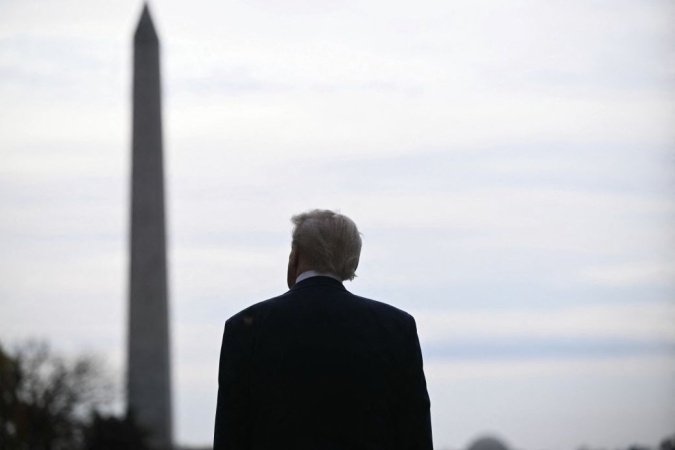
“Unreliable,” “untethered to the facts” and “simply not credible.”
As the Trump administration’s immigration crackdown moved from Los Angeles to Portland to Chicago last year, that is how federal judges described claims made by the government in court.
Now, as the administration battles fresh lawsuits over its immigration operations in Minnesota and Illinois, it faces accusations of aggressive tactics, unlawful treatment of protesters and retaliatory detentions – all of which it has defended itself against before.
In Chicago, the government will again face US District Court Judge Sara Ellis, who has already accused one of its top immigration officials of lying under oath. And in Minnesota, where lawsuits have been filed by protesters, residents and state officials, another judge said federal attorneys have yet to turn over “meaningful” evidence to support some of their claims.
Justice Department lawyers have turned over hours of body camera footage and reams of incident reports in an effort to provide evidence of what they say are American cities plagued by criminal migrants and law enforcement targeted, threatened and injured by violent protesters. The disclosures have revealed a string of inconsistencies, misrepresentations and, in one instance, “outright lying,” according to rulings against the administration written by federal judges.
While several judges have acknowledged that parts of the Trump administration’s narratives may be true, a mounting pattern of unreliability appears to have made some reluctant to accept the government’s claims at face value.
Ellis noted that the Trump administration “may argue that the Court identifies only minor inconsistencies” – a thrown rock, a scuffle with agents, a dismissed criminal charge.
Nonetheless, she wrote in a November opinion, “every minor inconsistency adds up, and at some point, it becomes difficult, if not impossible, to believe almost anything that Defendants represent.”
“You’re gonna get gassed, you’ve been warned,” an agent told the crowd.
He was speaking to protesters who stood shoulder-to-shoulder across an intersection in Chicago’s Albany Park neighborhood on October 12, using bodies, bicycles and cars in what immigration agents said was an attempt to block them from leaving the street where they had just finished an arrest.
Approximately 50 protesters and onlookers had gathered on the road and sidewalk, agents later reported — a familiar scene in a city that had become a primary battleground in Trump’s sweeping national immigration crackdown.
After agents repeatedly ordered protesters to move out of the road, a tear gas canister was unleashed on the crowd.
Agents later wrote that “multiple warnings” were given, and a “considerable amount of time” passed before the canister was thrown.
Body camera footage, however, shows about five seconds elapsed between an agent’s first warning and when gas was deployed.
Agents’ actions on this day would become one of many examples highlighted by Ellis of times when agents’ accounts were directly contradicted by their own body camera footage. The pattern ultimately contributed to her decision to grant a temporary order strictly limiting how agents could use force in Illinois.
Though Ellis’ restraining order was blocked by an appeals court for being “too prescriptive,” she still chose to release a 233-page opinion explaining the basis for her decision and disputing the government’s claims.
CNN has reached out to DHS for comment but has not heard back.
As people scattered in Albany Park, an agent claimed in a situation report that one protester “threw a bicycle toward the agent who deployed the munition.”
But body camera footage shows the opposite: It was an agent who picked up the bike and tossed it to the side before shoving a person to the ground.
Government attorneys have argued that agents’ use of tear gas, pepper balls and physical force has been proportionate in response to “professional agitators” who they say regularly interfered with immigration enforcement on the streets of Chicago. At a Department of Homeland Security facility in the city suburb of Broadview, they said “dangerous crowds” have targeted agents, often throwing bottles and rocks, according to October court filings. On one occasion, agents found a makeshift bomb, they said. More than 30 agents have been reported injured during clashes at the facility.
Ultimately, Ellis – an Obama appointee – rebuked what she called an “unprecedented swath of indiscriminate uses of force,” saying in her November opinion that the government’s overall narrative “simply is untrue.”
In a statement to CNN, the Department of Justice did not directly address Ellis’ comments, but noted, “We will not tolerate any violence directed toward our brave law enforcement officials who are working tirelessly to keep Americans safe.”
It remains to be seen how Ellis will rule in the separate lawsuit filed by Chicago and Illinois this month, which accuses the Trump administration of overstepping states’ rights. The judge, who has been by far one of the most critical of the federal government, decided last week she will preside over the state’s case.
On several occasions, agents unleashed tear gas on crowds that were predominantly peaceful, Ellis said.
The judge homed in on one October 14 incident in east Chicago where agents appeared to preemptively plan to gas a crowd, even as they acknowledged the scene was under control.
That day, about two dozen Customs and Border Protection agents responded to the scene of a car collision between agents and a driver they had chased through a residential neighborhood. A crowd of 50-150 onlookers grew around the intersection while agents waited for tow trucks, according to the opinion.
“While some protesters were angry and yelling at the agents, multiple agents noted that the crowd remained relatively calm and under control,” Ellis wrote. One agent said the gathering was “pretty chill.” Another, “It’s actually pretty normal, pretty easy,” body camera footage shows.
Even so, “many of the agents believed that the protesters would inevitably become violent,” the judge said.
“We’re definitely gassing them when we leave. Just start throwing s**t,” one agent in a gas mask told another, body camera video shows.
There had been some “incidents of isolated aggression” that resulted in arrests, Ellis noted: Two protesters who threw objects and another who was detained for trying to push past agents to get to his cousin who was being detained. None faced charges at the time the judge wrote her opinion.
When agents were ready to leave, Chicago Police officers arrived to monitor the crowd so they could drive away. Soon after, federal agents began tossing tear gas toward the crowd and police, who were not wearing protective gear, video shows.
“Some agents threw canisters directly at peaceful observers who were simply standing on the sidewalk,” the judge pointed out.
A Border Patrol incident report says agents deployed gas because the crowd was “enraged towards CPD,” “began pushing and shoving CPD officers,” and “began throwing objects including what appeared to be bottles, rocks, eggs, and pieces of concrete.”
Body-worn camera footage, however, “calls this account into question,” Ellis wrote.
“Instead, it appears that agents began deploying tear gas, without warning, after one or two protesters threw objects in their direction,” she said. The video, shown below, also does not appear to show people pushing officers.
Ellis conceded that body-worn camera “does not always reveal all the circumstances that agents face in the field.” But she concluded that the extensive footage often undermined the government’s claims that agents acted appropriately.
Though agents often wear masks as they carry out enforcement, one man’s face came to symbolize the arrival of federal forces in American cities – and in Ellis’ courtroom.
The judge accused top Border Patrol official Gregory Bovino, who has orchestrated sweeping crackdowns in Los Angeles and Chicago, of “outright lying” as he defended his agents’ tactics.
Bovino has continued to draw attention this year as he took his heavy-handed tactics to Minneapolis, where two residents have been killed in confrontations with federal agents. Amid deep frustrations inside the Trump administration over his handling of the recent shooting of Alex Pretti, Bovino and some of his agents departed the city this week, sources familiar with the discussions told CNN.Roberto Schmidt/AFP/Getty Images
In Illinois, Ellis drilled in on a particularly controversial confrontation between Border Patrol agents and civilians in Chicago’s Little Village on October 23, during which Bovino and his agents unleashed tear gas and flashbangs on an angry crowd. Both Bovino and DHS claimed tear gas was thrown because Bovino was hit on the head by a rock or other object thrown by a “mob of rioters.”
But, the judge said, “Bovino admitted in his deposition that he lied multiple times about the events that occurred in Little Village that prompted him to throw tear gas at protesters.”
Bovino, on the first day of his deposition, “admitted that he was not hit with a rock until after he had deployed tear gas,” Ellis wrote. Later, he said he threw gas after a rock or projectile “almost” hit him. On the final day, Bovino corrected his testimony to say he was “mistaken.”
“I was mixed up with several other objects in a very chaotic environment and other objects that were thrown at me,” Bovino said, citing objects such as fireworks and water bottles.
Ellis also took issue with the claim from Bovino and DHS that agents felt targeted by fireworks, as well as several other claims about what happened in Little Village that day. She wrote that body camera and aerial helicopter footage “do not match up with agents’ descriptions of the alleged chaos they encountered.”
After the incident, DHS released a heavily edited video compilation of body camera and other footage, claiming that a “crowd of 75-100 rioters” surrounded and boxed in agents, threw rocks and other objects and “shot at agents with commercial artillery shell fireworks.”
“Agents properly used their training. The use of chemical munitions was conducted in full accordance with CBP policy and was necessary to ensure the safety of both law enforcement and the public,” DHS wrote in its post.
However, it was likely CBP agents’ own flashbang that caused the small explosion over agents’ heads, Ellis said. In unedited body camera footage, an agent lobs what appears to be a flashbang into the air, which explodes in the same spot seen in the DHS video.
Additional helicopter footage from Little Village “further suggests that CBP, and not protesters, were the ones throwing things that CBP and DHS then used as justification to claim that protesters posed a danger to them,” Ellis said.
As Trump sought to federalize National Guard troops to protect federal personnel and facilities in city after city, he and other administration officials painted a dire portrait of rebellion – or the looming threat of it – on American streets.
But as city officials and residents battled the deployments in court, three federal judges concluded that the reality on the ground, while at times violent, did not amount to the Trump administration’s cries of revolt.
A fundamental rift emerged: At what point does protest against government policy become revolt? For now, the judges said, that moment has not been seen.
In June, Trump decried “insurrectionists” on the streets of Los Angeles, where protesters had flooded the streets around a downtown federal detention center. DOJ attorneys wrote that “violent rioters” had injured officers, hurled concrete chunks and debris, vandalized buildings and set cars ablaze.
Thousands of California National Guard members were called into federal service. Justice Department attorneys argued the move was within the president’s power because he was “unable with the regular forces to execute the laws of the United States.”
But US District Court Judge Charles Breyer said that assertion “is not only unsupported, but actually borders on a misrepresentation.”
“It is profoundly un-American to suggest that people peacefully exercising their fundamental right to protest constitute a risk justifying the federalization of military forces,” Breyer wrote in a December opinion ordering the president to return control of California troops to the state’s governor.
In cases in Portland and Chicago, judges shared similar, but far less restrained, views.
Troops had barely made it to an immigration facility in Portland on October 4 when Judge Karin Immergut – a Trump appointee – halted their deployment. She concluded Trump’s determination that regular law enforcement was unable to execute the law “was simply untethered to the facts.”
Days earlier, Trump had posted that “conditions continue to deteriorate into lawless mayhem” in Oregon, where he said, “Antifa and Radical Left Anarchists have been viciously attacking our Federal Law Enforcement Officers.”
“Nothing in the record suggests that anything of this sort was occurring ‘every night’ outside the Portland ICE building or in the City of Portland in the days or weeks leading up to his September 27 directive,” Immergut wrote in her opinion.
The judge acknowledged early protests had at times become dangerous and destructive, with several arrests for assaults on federal officers. But after late June, Portland Police routinely handled demonstrations at the facility “with only sporadic incidents of violence and disruptive behavior,” she wrote.
The president, under established legal precedent, should be granted a “great level of deference” to determine when regular forces can no longer enforce the law, Immergut wrote.
But, she said, “’a great level of deference’ is not equivalent to ignoring the facts on the ground.”
In a statement Wednesday, White House spokeswoman Abigail Jackson said “rioters in Portland are engaging in a systematic campaign to intimidate and assault federal ICE officers while they are simply doing their jobs of deporting illegal immigrants from the country,” adding there have been charges brought against protesters.
“President Trump has taken lawful action to protect federal law enforcement officers and address the out-of-control violence towards federal officers engaged in federal law enforcement, which local residents have complained about and Democrat leaders have failed to stop,” Jackson added.
In another scathing ruling from Chicago, US District Court Judge April Perry – a Biden nominee – granted a temporary restraining order halting troop deployment into Illinois for two weeks in October.
The DHS’s assessments of the protests, she said, were “unreliable.”
“I have seen no credible evidence that there has been rebellion in the state of Illinois,” that would justify federalizing National Guard soldiers, Perry said in an oral ruling.
When making her decision, Perry was confronted with starkly different perspectives from the federal government, state and city officials, and local law enforcement. Ultimately, she wrote that she made “a credibility assessment as to which version of the facts should be believed.”
“While the Court does not doubt that there have been acts of vandalism, civil disobedience, and even assaults on federal agents, the Court cannot conclude that Defendants’ declarations are reliable,” she said in reference to the Trump administration.
There have been disruptions, some of them violent, Perry conceded. However, “they have been of limited duration and swiftly controlled by authorities.”
Perry said she was troubled by the Trump administration’s inclination to equate protests with riots. The government did not appear to acknowledge “the wide spectrum that exists between citizens who are observing, questioning, and criticizing their government, and those who are obstructing, assaulting, or doing violence,” she said.
“This indicates to the Court both bias and lack of objectivity.”
CNN sent a detailed request for comment to the Justice Department, but a DOJ spokesperson did not address comments from Breyer, Immergut or Perry in their response.
The US Supreme Court ultimately upheld Perry’s ruling in December, writing in an unsigned order that the government had “failed to identify a source of authority that would allow the military to execute the laws in Illinois.”
The ruling was a significant and rare loss for the administration on the Supreme Court’s emergency docket. Trump announced soon after that he would withdraw National Guard members from Chicago, Los Angeles and Portland, but left the door open to sending federal forces back in the future “in a much different and stronger form.”
Though the Trump administration has been met with skepticism from some judges, it has secured key victories in the courtroom, including an October appeals court reversal of Immergut’s block on National Guard deployment in Portland.
But that victory was put on hold a day after DOJ attorneys admitted they needed to correct a “factual discrepancy” in an argument they had used to persuade the three-judge appeals panel.
The government had told the judges it was unable to fully protect the Portland ICE facility from demonstrators using normal law enforcement, citing a declaration from an official with the Federal Protective Service who said 115 of its officers had to be diverted to the city from other regions between June and October.
However, “this statement was incorrect” – only 86 FPS personnel were sent there and not all of them had security roles at the building, Justice Department attorney Andrew Bernie wrote in a letter to the appeals court in October.
The inaccuracy was first pointed out by attorneys representing Portland and Oregon, who argued the figure was central to the appeals court ruling.
While the appeals court’s decision did not rely solely on the number of diverted agents, it cited the incorrect figure at least three times. Two Trump-appointed judges who wrote the majority opinion criticized Immergut for casting doubt on statements made by the FPS official.
The Ninth Circuit Court of Appeals, without citing a reason, agreed to reconsider the case with a new panel of 11 judges. Oral arguments will be heard in June.
Clashes between protesters and federal agents have at times led to hasty arrests and charges, leading some cases to crumble under court scrutiny or be voluntarily dismissed by government prosecutors after more evidence emerges.
Perhaps the most high-profile government reversal was the case of Marimar Martinez, a Chicago woman accused of driving after and ramming a CBP agent’s vehicle, who in turn shot Martinez five times in October.
But federal prosecutors ultimately asked for the felony assault charges they had filed against Martinez to be dismissed. The request came after a judge repeatedly raised concerns over the handling of the investigation, and the woman’s attorney alleged it was actually the CBP agent who sideswiped her.
The government’s case had slowly fractured as it was revealed that a key piece of evidence – the agent’s car – had been moved more than 1,000 miles away, and the agent who shot the woman had later bragged about the shooting in text messages.
US District Judge Georgia Alexakis noted that the government’s case included omissions that had caused her to tread carefully. She acknowledged the government version of events may turn out to be true, “but I can’t accept that possibility at this juncture,” she said.
After Martinez’s charges were dropped, Assistant US Attorney for the Northern District of Illinois Joseph Fitzpatrick said his office is “constantly evaluating new facts and information relating to cases and investigations arising out of Operation Midway Blitz.”
When reached by CNN for comment on the charges being dismissed, DHS at the time restated previous claims that Martinez was one of the drivers who rammed agents.
At least five other “highly unusual” cases were highlighted in another Chicago courtroom in November.
While penning an opinion dropping a felony assault charge against a protester, US Magistrate Judge Gabriel Fuentes took the opportunity to remark on a worrying trend in the five recent cases tied to Operation Midway Blitz, writing these are “not ordinary times” in the federal courthouse.
The cases all stemmed from a protest at the Broadview detention center on September 27, during which five people were arrested and charged with offenses ranging from felony assault of an officer to a misdemeanor of impeding law enforcement. In each case, judges signed off on complaints against protesters after the government assured them that the alleged criminal activity was supported by video evidence, Fuentes wrote.
In less than two months, every case had been dismissed – either after additional footage was reviewed, or a jury found the evidence was insufficient, according to the judge.
“The Court cannot help but note just how unusual and possibly unprecedented it is for the U.S. Attorney’s Office in this district to charge so hastily that it either could not obtain the indictment in the grand jury or was forced to dismiss upon a conclusion that the case is not provable,” Fuentes wrote.
“Any responsible federal prosecutor,” he wrote, knows charges against citizens should be treated with the “utmost care.”
The Department of Justice told CNN it will “continue to seek the most serious available charges against any individual who puts federal agents in harm’s way.”
“Those who attack law enforcement will be held fully accountable for their actions, despite the best efforts of activist liberal judges who are routinely wrong on the law and want to see violent criminals walk free,” a Justice Department spokesperson said in a statement.
As the new year brings fresh legal challenges to the Trump administration’s immigration crackdown in Illinois and Minnesota, the government’s mounting reputation for inconsistency may precede it.
Federal attorneys have already faced criticism from a judge in Minnesota, which has emerged as one of the most heated immigration battlegrounds so far.
Minnesota residents claim they have been unlawfully detained or subjected to excessive force by ICE – accounts that have been disputed in court filings by Acting ICE Field Office Director David Easterwood in St. Paul.
But Minnesota District Court Judge Katherine Menendez said Easterwood’s accounts include “unsworn hearsay from police reports,” noting he has not witnessed any of the alleged interactions firsthand. The judge wrote in a temporary restraining order that Easterwood’s statements are “entitled to considerably less weight” than the plaintiffs’.
The Justice Department did not address Menendez’s comments in its statement to CNN. The judge’s order, which barred federal agents from forcefully confronting or detaining lawful observers, has been temporarily paused by an appeals court.
Judges taking on new cases against the Trump administration will undoubtedly be aware of opinions – and criticisms – leveled from other federal benches, CNN Senior Legal Analyst Elie Honig said. Menendez’s order referenced opinions from Breyer in Los Angeles and Ellis in Chicago.
Under normal circumstances, “judges will ordinarily assume that DOJ has good intentions and acts in good faith,” Honig said. “But you’re starting to see that chipped away.”
“It takes years and decades to build credibility, but it can be lost quickly, as we are seeing now,” Honig said. (CNN)



