
Updating your news feed...
NEWS EXPRESS is Nigeria’s leading online newspaper. Published by Africa’s international award-winning journalist, Mr. Isaac Umunna, NEWS EXPRESS is Nigeria’s first truly professional online daily newspaper. It is published from Lagos, Nigeria’s economic and media hub, and has a provision for occasional special print editions. Thanks to our vast network of sources and dedicated team of professional journalists and contributors spread across Nigeria and overseas, NEWS EXPRESS has become synonymous with newsbreaks and exclusive stories from around the world.












Loading banners
Loading banners...


NAIRA NOTES
Since the removal of fuel subsidy and the subsequent rise in monthly allocations from the Federation Account Allocation Committee (FAAC), attention has increasingly shifted to state governments.
With more resources flowing to the states, citizens are asking harder questions: how the governors are deploying the funds, and whether or not lives are improving.
Hefty FAAC rising steadily
Nigeria’s three tiers of government shared a record N33.27trillion from Federation Account Allocation Committee (FAAC) in the first eleven months (January-November) of 2025. Representing a 30 percent increase compared to N25.46 trillion disbursed in the same period of 2024.
According to the monthly Federation Accounts Allocation Committee (FAAC) disbursement report published by the National Bureau of Statistics, this total disbursement in the period was also higher than N28.6 trillion disbursed in 2024 fiscal year.
BusinessDay’s analysis of the FAAC disbursement report, published by the National Bureau of Statistics showed that of the total amount, the federal government received the sum of N6.865 trillion, state governments received N6.713 trillion while local government allocations amounted to N4.905 trillion in the period. While cost of collection, transfers to non-oil excess account, North East Development Commission, account for the balance N14.787 trillion.
Delta State received N594 billion, followed by Rivers, Lagos and Akwa Ibom with N488 billion, N480 billion and N451 billion respectively. These were states with the highest allocation in the period.
While states with the least allocations in the period include: Niger, Ekiti, Cross river, Gombe and Ebonyi with N113.903 billion, N119 billion, N120 billion N125 billion and N127 billion, respectively.
This week, our focus is on Plateau and Abia States:
Plateau: Despite govt efforts, indigenes want security, affordable living, jobs
The Plateau State Government has rolled out a number of projects aimed at improving living standards across urban and rural communities. These include road rehabilitation in Jos North and Jos South, renovation of primary healthcare centres, payment of salary arrears, and renewed investment in agricultural support programmes, among others.
Governor Caleb Mutfwang on different occasions said these interventions reflect his commitment to inclusive development and prudent use of public resources.
Across Jos metropolis, road projects have been the most visible sign of government activity. Long-neglected inner roads in areas such as Angwan Rogo, Bukuru, and parts of Zaria Road are receiving attention. For many residents, smoother roads have reduced travel time and improved access to markets and workplaces. Transport operators say vehicle maintenance costs have also reduced slightly, easing daily economic pressures.
“The road repairs may look small, but they affect our daily survival. Before now, bad roads damaged our bikes and slowed business, but things are gradually improving”; said Yakubu Pam, a commercial tricycle operator in Bukuru.
Healthcare is another sector where the government is making progress. Several primary healthcare centres have been renovated and equipped, especially in rural local government areas. Community leaders note that improved facilities have encouraged more women to seek antenatal care and child immunisation services closer to home, reducing dependence on overcrowded urban hospitals.
However, despite these efforts, many residents say the impact of increased FAAC allocations is yet to be fully felt. Rising food prices, unemployment, and insecurity continue to weigh heavily on households.
Civil servants acknowledge the prompt payment of salaries but argue that wages are being eroded by inflation and high transportation costs.
A civil servant and mother of three in Jos East, who did not want her name in print expressed mixed feelings. “Government is trying, especially with salaries and some roads, but the cost of living is still very high. We expect more support that touches ordinary families directly.”
In rural Plateau, expectations are even higher. Farmers are calling for greater investment in agricultural inputs, storage facilities, and rural roads to ease the movement of produce to markets.
Many argue that with increased FAAC inflows, states like Plateau should prioritise food security and job creation for youths to curb rising social challenges.
Youth groups, in particular, are urging the government to channel more funds into skills acquisition and small business support. According to them, visible infrastructure is important, but long-term prosperity depends on empowering young people with employable skills and access to credit.
“We want projects that give us dignity and income, not just promises. If FAAC money is higher now, then youth empowerment should also be higher,” said Mary Davou, a youth in Bassa Local Government.
As scrutiny intensifies nationwide, analysts say Plateau State’s experience reflects a broader national mood. Citizens are more informed, more vocal, and increasingly interested in how public funds are spent.
While the Mutfwang administration has earned praises for early interventions, many residents insist that the real test lies in consistency, transparency, and equitable distribution of projects across all local governments.
Ultimately, Plateau people expect more than infrastructure—they want security, affordable living, jobs, and a clear sense that increased FAAC allocations are improving their everyday lives.
As the allocations grow, so too does the demand for accountability, making state governments central to Nigeria’s post-subsidy social contract.
Abia: Re-engineering work going on, but critics kick over non-disclosure of project costs
In Abia, Okoye, Chuka Peter, executive director, Centre for Human Rights Advocacy and Wholesome Society (CEHRAWS) said: “At present, I cannot readily point to any recent government project within my immediate ward that is specifically targeted at lifting the standard of living of residents. “
He however, noted that the Abia State Government under Governor Alex Otti deserves commendation for the successful rehabilitation and completion of the Ohanku Road, a strategically important project that has brought significant relief to residents, traders, and commuters in the area.
This intervention according to Okoye, has improved accessibility, reduced transportation costs, and enhanced socio-economic activities.
He said that more projects of that nature were urgently needed, particularly in semi-urban and rural communities that remain underserved.
“Given that local government allocations are centrally managed by the state government, there is a pressing need for strict adherence to Open Governance Principles (OGP). One practical step in this direction would be the introduction of a citizens’ budget framework, anchored on community charters of demand and participatory needs assessment.
“This approach would ensure that development projects are driven by the real and priority needs of the people, thereby guaranteeing meaningful improvements in their standard of living.”
While the state government has made visible efforts in infrastructure development, Okoye said that the persistent non-disclosure of project costs and fiscal details constitutes a serious governance gap.
Okoye however, believed that citizens are feeling the impact of the government in Abia State. “Citizens are increasingly feeling the positive impact of the present administration,” he said.
He said that the impact is evident in several areas, particularly in the rehabilitation and construction of access roads, which have significantly eased movement, boosted commercial activities, reduced travel time, and improved general connectivity, improvements that have enhanced daily living and stimulated local economic growth.
FAAC working in Enugu, but attention must be paid to people-centred impact – Ogbodo
In Enugu State, the central question is no longer whether more funds are coming in, but whether those funds are translating into real improvements in the everyday lives of citizens, says Chijioke Ogbodo, managing partner, GMTNews.ng.
In terms of visible projects, Ogbodo said that the Enugu State Government has focused heavily on road infrastructure and urban renewal. Several long-abandoned roads within Enugu metropolis, as well as key routes across Nsukka, Oji River, and other parts of the state, have either been rehabilitated or are currently under construction.
He said that the Peter Mbah-led administration has also invested in transport infrastructure, including work around transport terminals and major interchanges aimed at easing mobility and supporting commerce.
“Beyond roads, the government has embarked on the construction of smart green schools across the state, designed to modernise public education, through improved learning environments, digital tools, and sustainability-focused designs.
In the health sector, he said that the establishment and upgrading of Type 2 hospitals in strategic locations represent a deliberate attempt to strengthen secondary healthcare delivery, decongest tertiary hospitals, and improve access to quality medical services at the local level.
Some primary healthcare centres according to Ogbodo, have also been renovated, alongside reported improvements in diagnostic capacity at major state-owned hospitals.
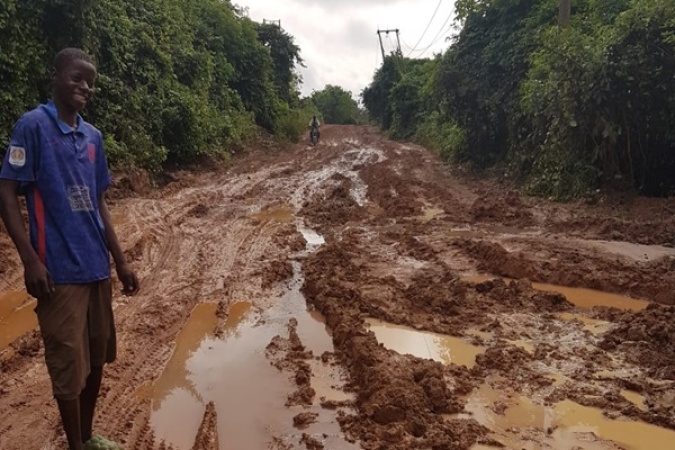
“Despite these interventions, the impact on the overall standard of living remains uneven. Residents within Enugu metropolis are more likely to feel the effects of improved road networks and urban renewal efforts, while many rural communities continue to grapple with poor access roads, limited healthcare reach, and fewer economic opportunities.
“Rising inflation, high food prices, and increased transportation costs continue to put pressure on household incomes, making it difficult for many citizens to directly associate higher FAAC inflows with improved personal welfare.”
Ogbodo, a seasoned broadcast journalist, also noted that one area that has continued to generate concern, particularly within Enugu metropolis, is the persistent shortage of potable water.
While there have been assurances of reforms and rehabilitation of water infrastructure, many residents believe that water supply–being a basic quality-of-life issue–requires more urgent and visible action.
He said that public perception of the governor’s performance reflects these contrasts.
According to Ogbodo, “There is broad acknowledgement that the administration appears more structured, intentional, and project-driven, especially in terms of planning, timelines, and physical execution.
“At the same time, there is a growing sentiment that while capital projects are important, human development outcomes, such as job creation, small business support, affordable housing, and social protection—must accelerate to match the scale of available resources.
Looking ahead, Ogbodo said that expectations from the Enugu State Government are becoming more defined.
He said that citizens are calling for greater transparency in the utilisation of Federal Accounts Allocation Committee funds, stronger emphasis on poverty reduction and economic empowerment, and sustained investment in agriculture, local manufacturing, education, healthcare, and youth skills development.
“Beyond infrastructure, people want policies that restore purchasing power, reduce the cost of living, and improve access to essential services, such as water and healthcare”.
He said that Enugu State has made visible and commendable progress in infrastructure, education, and healthcare delivery.
However, with increased FAAC inflows comes a higher burden of responsibility. The next phase of governance must deepen the shift from infrastructure-led visibility to people-centred impact, ensuring that development is not only seen, but genuinely felt across both urban and rural communities,” Ogbodo said. (BusinessDay)