Updating your news feed...
NEWS EXPRESS is Nigeria’s leading online newspaper. Published by Africa’s international award-winning journalist, Mr. Isaac Umunna, NEWS EXPRESS is Nigeria’s first truly professional online daily newspaper. It is published from Lagos, Nigeria’s economic and media hub, and has a provision for occasional special print editions. Thanks to our vast network of sources and dedicated team of professional journalists and contributors spread across Nigeria and overseas, NEWS EXPRESS has become synonymous with newsbreaks and exclusive stories from around the world.




.webp)







Loading banners
Loading banners...

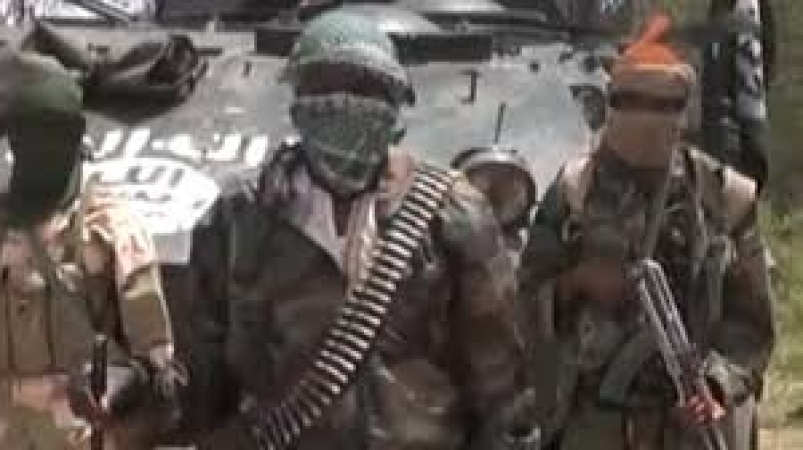
File photo of Boko Haram insurgents
When U.S. warplanes struck suspected terrorist enclaves in Sokoto State on Christmas Day, December 25, 2025, the Federal Government hailed the intervention as a boost to Nigeria’s counterterrorism campaign. Officials said the strikes had the government’s imprimatur and were intended to weaken jihadist networks.
Yet, in less than four weeks, the North and North-Central regions of Nigeria have seen a staggering spike in violence, suggesting that the airstrikes may have inadvertently exacerbated insecurity rather than containing it. From Kaduna and Zamfara to Niger, Sokoto, Borno, and Plateau, armed groups have launched coordinated attacks that have left scores dead, hundreds abducted, and communities terrorised.
The Sokoto strike: catalyst or conundrum?
On December 25, U.S. forces conducted rare airstrikes targeting Islamic State-affiliated cells in Sokoto, a state previously outside the traditional Boko Haram theatre. Washington described the operation as a decisive blow to jihadist networks operating across the Sahel-Nigeria corridor. Yet, official details—including the number of militants neutralised, civilian casualties, and territorial impact remain scarce.
Within 24 hours, the violence escalated. Villages were raided, markets attacked, and homes torched in a wave of reprisals. Security analysts warn that the strikes created a power vacuum, which armed groups—including bandits, Boko Haram, ISWAP, and the emerging Lakurawa—exploited to expand operations and increase ransom revenue.
Kaduna: Ground zero of post-strike violence
Kaduna has become a flashpoint. On January 18, armed gangs stormed three churches during worship, abducting 177 congregants. Days later, a Boko Haram suicide bomber killed five soldiers and injured scores in the Timbuktu Triangle, Borno State. Security insiders say such attacks reflect a disturbing adaptation of insurgents: when one group is weakened, another fills the void.
Boko Haram, ISWAP, and the rise of Lakurawa
In the North-East, Boko Haram and ISWAP have maintained operational capacity. Military and civilian targets remain under threat, demonstrating the resilience of these insurgent networks. Meanwhile, the North-West faces a new challenge: Lakurawa, a hybrid armed group blending ideology with criminality.
Unlike traditional bandits motivated solely by ransom, Lakurawa imposes “taxes” on communities, recruits youths, and asserts territorial control. Security officials warn that if unchecked, the group could link Sahelian jihadist networks with Nigeria’s criminal economy, creating a new theatre of insurgency.
A multi-front security crisis
Nigeria’s current insecurity is no longer confined to Boko Haram or banditry. Analysts describe it as a multi-layered conflict:
Terrorists: Ideologically driven networks like Boko Haram and ISWAP.
Bandits: Criminal gangs operating for ransom, arms trafficking, and territorial influence.
Hybrid groups: Emerging actors such as Lakurawa, combining ideology with organised crime.
This fragmentation has produced a “war without frontlines.” Military action against one group often strengthens another. “We are fighting shadows,” a senior officer admitted. “Hit one camp, and three new groups emerge elsewhere.”
Kidnapping as an industry
Kidnapping has become industrialised. Bandits operate like corporations: intelligence units identify targets, strike teams execute abductions, negotiators handle ransom, and logistics networks transport victims. Ransom payments fund weapons, recruit fighters, and sustain criminal economies, positioning Nigeria among the world’s leading kidnapping hotspots.
The numbers: December 25–January 21
According to Vanguard, a day after the U.S. airstrikes, armed militia on December 26, attacked Bokkos/ Barking Ladies in Plateau State and killed 16 persons.
On the same day, bandits attacked rural communities in Nigeria State, murdered persons and kidnapped 12.
On December 27, bandits attacked communities in Anka LGA, killed five persons and abducted 20.
December 28: Three persons were killed and 15 kidnapped by bandits I Giwa LGA, Kaduna State
December 29: Boko Haram/ISWAP terrorists killed four persons in Gwoza, Borno State.
December 30: Bandits killed two person and abducted 10 at Faskari LGA, Katsina.
December 31: Lakurawa terrorists killed six persons at Tangaza LGA, Sokoto State
January 1: Bandits attacked a market village in Niger State, killed 30 persons and kidnapped 15
January 2: One died and eight were kidnapped by bandits at Chukun LGA, Kaduna State.
January 3: Bandits killed seven persons at Maru LGA, Zamfara State.
January 4: Bandits raided a village in Niger State, killed 30 and kidnapped many people estimated at 40
January 5: Boko Haram killed three persons in Maiduguri, Borno State.
January 6: Bandits attacked rural communities in Kaduna killed two persons and kidnapped 24.
January 7: Bandits killed four persons and abducted nine at Kankara LGA, Katsina State.
January 8: Six persons lost their lives to Bandits’ onslaught at Tsafe LGA, Zamfara State
January 9: Lakurawa attacks left 10 persons dead at Gwadabawa LGA, Sokoto State.
January 10: Five persons were killed and 18 kidnapped by bandits at Shiroro LGA, Niger State.
January 11: Bandits killed three persons and abducted 12 at Birnin Gwari, Kaduna State.
January 12: ISWAP attack left six dead at Marte LGA, Borno State.
January 13: Bandits ginned down two and abducted seven at Danmusa LGA, Katsina State.
January 14: Armed militia killed killed nine persons at Mangu LGA, Plateau State.
January 15: Bandits killed two and abducted six at Kagarko LGA, Kaduna State
January 17&18: Bandits attacked three churches in Kajuru LGA, Kaduna State and abducted 177 worshippers. In a follow-up raid three persons died and 10 were kidnapped.
January 19: Bandits attacked a community in Rafi LGA, Niger State killed four and kidnapped nine
January 21: Five soldiers were killed and scores were injured when a Boko Haram suicide bomber rammed into a military convoy in Timbuktu Triangle in Borno State.
Underlying drivers
Beyond military action, structural issues—including weak rural governance, unemployment, poverty, ethnic/religious tensions, porous borders, arms proliferation, corruption, and poor coordination—continue to fuel violence. Analysts warn that without addressing these root causes, military gains will remain temporary, and Nigeria risks sliding into decentralised, prolonged conflict.
The path forward
Experts remain divided over foreign interventions. While some argue U.S. strikes are necessary to curb transnational jihadist expansion, others caution that they risk making Nigeria a new battlefield in global counterterrorism efforts. The Federal Government now faces the dual challenge of translating tactical victories into strategic stability and containing a security crisis that is more diffuse, industrialised, and lethal than at any time in recent history. (BusinessDay)