Updating your news feed...
NEWS EXPRESS is Nigeria’s leading online newspaper. Published by Africa’s international award-winning journalist, Mr. Isaac Umunna, NEWS EXPRESS is Nigeria’s first truly professional online daily newspaper. It is published from Lagos, Nigeria’s economic and media hub, and has a provision for occasional special print editions. Thanks to our vast network of sources and dedicated team of professional journalists and contributors spread across Nigeria and overseas, NEWS EXPRESS has become synonymous with newsbreaks and exclusive stories from around the world.



.webp)





.webp)

Loading banners
Loading banners...

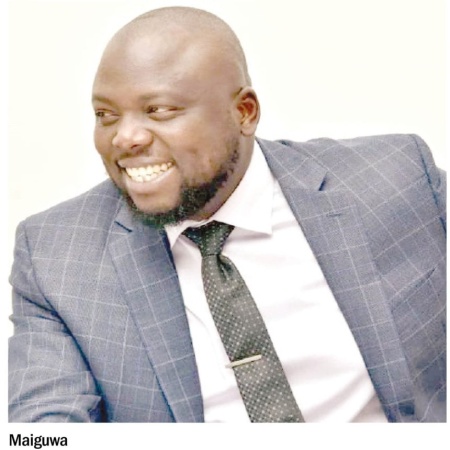
The president of the Alumni of Maritime Academy of Nigeria, Oron (AMANO), Mr Emmanuel Maiguwa, in this interview, addresses the rising tension over the alleged push on the MAN Oron Governing Council, by certain groups, including Ninth National Assembly, for the academy to be converted into a Maritime University. TOLA ADENUBI brings the excerpts.
There have been reports alleging attempts to undermine the MAN Oron Governing Council through misinformation and political pressure. How does AMANO react to these allegations, and what do you believe is fuelling hostility towards the council?
Before the graduation of the 2025 cadets, we began receiving reports of tension coming from different directions, including plans by some elements within the host community to disrupt the ceremony. We also received information about pressure on the management of the Academy and even on the Ministry of Marine and Blue Economy itself, all related to the long-standing debate over the idea of converting the Maritime Academy into a Maritime University.
Despite all this, we decided not to be distracted. The graduation went ahead, and it turned out to be one of the most memorable in the institution’s history — certainly the best in the last 20 years in terms of industry presence and confidence. The fact that about 60 percent of the cadets secured employment after graduation is a huge testament to the Academy’s growing credibility. That figure alone shows that the industry recognises the Academy as a serious training institution.
As for AMANO’s position, we stand firmly with the Governing Council. The council has warned stakeholders against actions capable of derailing professionalism within the institution, and we fully align with that position. It reflects what the alumni body has consistently defended for more than a decade — resisting attempts to convert the academy into a conventional university, a move that would compromise the professional standards required for maritime training.
Our focus is not political. We are concerned about preserving professionalism and ensuring Nigeria maintains a steady supply of competent maritime manpower. Because our members work across the industry — locally and internationally, we understand the system deeply. That is why we are insisting that nothing should be allowed to undermine the Academy’s core mandate.
Are you insinuating that some groups are deliberately attempting to destabilise the institution to influence the conversion debate?
There is no doubt that there is a deliberate push from some groups to create confusion around the institution. We have received numerous letters and seen many publications coming particularly from the Oron community. Some of them expressed anger, others issued threats, and some are framed as resistance to the Academy’s current structure. The community’s belief is that converting the Academy into a university will bring expansion, attract more infrastructure, and ultimately develop the area.
But even if that expectation were true, the real question is whether such developmental aspirations should be pursued at the cost of destabilising Nigeria’s entire maritime manpower framework. The truth is that converting MAN Oron into a conventional university will undoubtedly compromise professionalism. It will dilute standards and eliminate the specialised nature of the training that Nigeria has relied on for decades.
Nigeria is currently trying to build its marine and blue economy. This requires trained seafarers, engineers, navigators, and technical officers — not just graduates with academic qualifications that do not meet industry requirements. The stakeholders pushing the conversion seem to prioritise community benefits or political victories above national interest.
There appears to be a growing tension and widening trust gaps among stakeholders. How can AMANO help restore confidence and reduce friction around the leadership of the Academy?
Among maritime professionals, there is absolutely no division. Anyone who truly understands how the maritime sector works, knows that the academy must remain a specialised institution. The contention is not within the maritime industry, it is between the host community and the national system.
Yes, there is a need for more sensitisation so the community can understand why the academy cannot function like a typical university. But sensitisation alone is not enough. The government must take a clear, firm position. It must openly state what is in the national interest and back it up with decisive action. That is the only way to eliminate the back-and-forth. Professionals have already made their position clear. What remains is for government to reinforce that clarity at the political level.
Some advocates of a Maritime University argue that it will increase training capacity and expand research opportunities. Do these benefits outweigh the risk of altering MAN Oron’s specialised mandate?
There is no problem with research. Research is important. But research is predominantly a postgraduate function. The Maritime Academy of Nigeria was not established for postgraduate research. It was established specifically to meet IMO’s Standards of Training, Certification and Watchkeeping (STCW) requirements, which focus on training shipboard officers.
This is a practical, highly technical, and globally regulated field. It is not about academic research papers; it is about producing officers who can sail on ships across the world.
Nigeria already has several universities offering maritime-related courses at undergraduate and postgraduate levels. We even have the Maritime University in Okerenkoko, and ironically, some of their students come to MAN Oron to take certain courses because the academy has the capacity which they lack.
The real crisis today is not the absence of maritime universities; it is the shortage of experienced shipboard officers—master mariners, chief engineers, navigation officers, and others, many of whom are already over 60 years of age. If we distort MAN Oron’s specialised mandate, we will worsen that shortage. And even if the consequences are not immediately visible, they will become very clear over time. The marine and blue economy will suffer.
What exactly is the MAN Oron Governing Council doing today, that the Ministry of Education cannot replicate or oversee?
MAN Oron operates strictly under the STCW framework; a curriculum developed by the International Maritime Organisation. Nigeria’s official representative to IMO is NIMASA, and NIMASA is responsible for conducting the Certificate of Competency exams.
If you move the academy to the Ministry of Education, how will the ministry guarantee compliance with IMO standards? Will NIMASA be moved to Education as well? Will the Ministry of Education now represent Nigeria at the IMO? These questions show the impracticality of the proposal.
Under the National Universities Commission, the academy will be forced to adopt a traditional BSc structure that simply does not meet STCW requirements. We already see the consequences at Rivers State University where graduates are produced, but many cannot sail because the training is not aligned with STCW.
Furthermore, who will fund high-level simulators, master mariners’ expertise, and specialised equipment? These are not typical educational expenses. The Ministry of Marine and Blue Economy understands these needs and funds them. The Ministry of Education cannot prioritise such specialised demands over hundreds of other universities and polytechnics.
If the desire is to award degrees, it can be done — but it must be done within a specialised framework that does not distort the academy’s mandate.
What role should the Federal Government now play to de-escalate the tensions among the governing council, the host community and the alumni association?
Government has the responsibility to protect the national interest above all else. The recent change of the national anthem was implemented without a national referendum because government believed it was the right thing to do. If government can make such decisions with confidence, then resolving the MAN Oron issue should not be difficult.
The error made by the Ninth Assembly can easily be corrected through an Executive Bill. All government needs to do is take a firm stand, communicate it clearly, and bring an end to the prolonged controversy. This is not a complex issue. It simply requires decisive leadership.