Updating your news feed...
NEWS EXPRESS is Nigeria’s leading online newspaper. Published by Africa’s international award-winning journalist, Mr. Isaac Umunna, NEWS EXPRESS is Nigeria’s first truly professional online daily newspaper. It is published from Lagos, Nigeria’s economic and media hub, and has a provision for occasional special print editions. Thanks to our vast network of sources and dedicated team of professional journalists and contributors spread across Nigeria and overseas, NEWS EXPRESS has become synonymous with newsbreaks and exclusive stories from around the world.




.webp)











Loading banners
Loading banners...

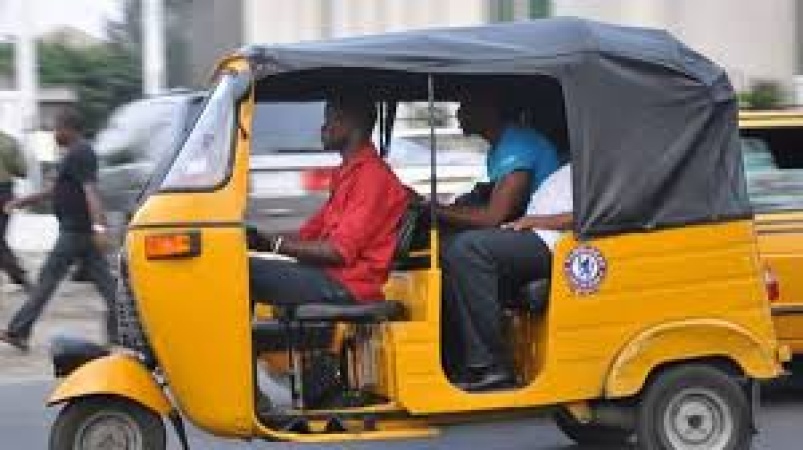
A motorist conveying a passenger to a destination
By LUCY OGALUE
Economic hardship and rising costs of living have pushed many private car owners, including civil servants in the Federal Capital Territory (FCT), to use their vehicles for transportation.
Some residents, in an interview with the News Agency of Nigeria (NAN) on Sunday in Abuja, said the practice popularly known as “Kabu Kabu”, had become more visible on major routes within the city centre.
According to the residents, the practice is a coping strategy to augment income, and to help them raise money to buy fuel and meet daily expenses.
Mr. Ibrahim Musa, a civil servant, told NAN that he started conveying passengers along the Kubwa–Wuse axis after work hours to cushion the impact of inflation.
“My salary can no longer cover basic needs for my family these days.
“So after work, I pick passengers from Wuse to Kubwa and what I make helps me buy fuel and I also use part of it to support my family,” Musa said.
Another civil servant, Mr Sadiq Lawal, said he just realised recently that many of his colleagues had adopted the practice quietly.
“It is not that we want to be commercial drivers, but things are hard. Transport fares are high and fuel is expensive. This is survival,” Lawal said.
Similarly, Mrs. Erica Ekah, said since she adopted the practice of convening passengers to and from work, the issue of money to buy fuel was history.
“I used to drive my car alone to work and back everyday without carrying passengers, except on days when I have to help a colleague in need.
“I have always been scared of carrying passengers even when I see a lot of them stuck on the way, especially since the heightened security challenges and the fear of destroying my car.
“Recently, i discovered the trick of areas where I can pick passengers without issues. And since I started, it has been helping to augment the cost of fuel,” Ekah said.
Similarly, Mrs Blessing Okorie, a private sector worker and car owner, said she began picking passengers during peak hours to cope with the rising cost of living.
Okorie said: “I am a single mother of two and I am only able to provide for my children through income made from my small business.
“So during the peak periods, I live my shop in the care of my assistant and use my car to carry passengers.
“Sometimes I only make enough to buy fuel which is okay because If I don’t do this, my car will just be parked, because I cannot afford fuel regularly,” she said.
Passengers on their part, said the development had provided some relief amid high transport fares.
Ms. Hadiza Ahmed, a trader who commutes daily from Nyanya to Area 1, said she preferred boarding private cars because they were sometimes cheaper and more comfortable.
“Some private car owners charge less than taxis, especially in the evenings. It helps people like us who are struggling,” she said.
However, some residents raised safety and regulatory concerns.
Mr. Emmanuel Aper, a resident of Gwarimpa, said while the practice was understandable, but that it required proper regulation.
“You do not know who is a registered driver or not. Government needs to look at this issue so that safety is not compromised,” Aper said.
A transport analyst, Mr. Kabir Abdullahi, said the trend reflected broader economic pressures and gaps in public transport.
“When private car owners turn to informal passenger services, it shows that incomes are under pressure and transport supply is inadequate.
“Therefore, improving mass transit will reduce this burden,” he said.
As the cost of living continues to rise, many residents say the growing use of private vehicles for income generation underscores the need for targeted economic relief measures.
They reiterated the need for the government to ensure improved urban transport systems to ease the burden on residents. (NAN)