ADAD
ADAD
Updating your news feed...
NEWS EXPRESS is Nigeria’s leading online newspaper. Published by Africa’s international award-winning journalist, Mr. Isaac Umunna, NEWS EXPRESS is Nigeria’s first truly professional online daily newspaper. It is published from Lagos, Nigeria’s economic and media hub, and has a provision for occasional special print editions. Thanks to our vast network of sources and dedicated team of professional journalists and contributors spread across Nigeria and overseas, NEWS EXPRESS has become synonymous with newsbreaks and exclusive stories from around the world.

















Loading banners
Loading banners...


Wike, Fubara
By CHUKWUMA UGBAH
In politics, as in life, loyalty remains one of the clearest tests of character. Loyalty to friends, to benefactors, and to the institutions that enable one’s rise is not an ornamental virtue—it is a foundational principle of power. As the American thinker Elbert Hubbard once observed, “If you work for a man, in heaven’s name, work for him. Speak well of him, and stand by the institution that he represents.” History is unkind to those who treat loyalty as optional.
Every enduring institution understands this truth. The military, intelligence services, religious orders, and political parties are sustained by discipline and obedience, not by personal bravado. One of the oldest surviving institutions in human history, the Catholic Church, provides a timeless illustration. At ordination, a priest takes solemn vows of obedience, chastity, and poverty. Among these, obedience is supreme. A priest who defies his bishop risks losing his ministerial faculties. The message is unmistakable: authority collapses when obedience is sacrificed on the altar of ego.
It is against this backdrop that the unfolding crisis in Rivers State must be properly understood. While critics continue to brand the Honourable Minister of the Federal Capital Territory, Nyesom Wike, as domineering or overbearing, a more fundamental and uncomfortable question is often avoided: why has Governor Siminalayi Fubara found it so difficult to remain loyal to the political structure and leadership through which power was entrusted to him?
Politics is not charity. Power is not a gift that arrives from heaven without human instruments. In Nigerian politics, loyalty is not abstract morality; it is political capital. Every serious aspirant knows that the open backing of a sitting governor or dominant political leader is an enormous advantage. To enjoy such support and later repudiate the same structure is not courage—it is political ingratitude, and history shows that it rarely ends well.
Disagreements between a predecessor and successor are not unusual. However, wisdom demands that such differences be managed with restraint and respect. When disagreements degenerate into open rebellion, public insolence, and institutional sabotage, they cease to be political disagreements and become acts of betrayal. Betrayal is costly in politics, and no serious political organisation rewards it.
Politics, like warfare, thrives on discipline, hierarchy, and respect for proven actors. The Prussian military theorist Carl von Clausewitz famously observed that “Everything in war is simple, but the simplest thing is difficult.” The Bible reinforces this logic when it teaches that obedience is better than sacrifice. Political survival is not secured by noise or moral exhibitionism, but by discipline and alignment with established authority.
History offers painful lessons. The case of Akinwunmi Ambode, former governor of Lagos State, is instructive. Despite visible developmental strides, Ambode lost his second-term ambition not because of incompetence, but because he strayed from the political structure that produced him. Rather than seek genuine reconciliation, he chose defiance—and paid the ultimate political price. Power does not forgive disobedience, no matter how well intentioned.
The parallels with the Rivers situation are striking. The manner in which Governor Fubara has reneged on multiple peace accords raises serious questions about character and reliability. Politics is a game of high stakes, and political structures are preserved through trust, loyalty, and respect for rules. Anyone who treats agreements lightly or violates political ethics sends a dangerous signal—not just to allies, but to the entire system.
Literature and history are unforgiving on betrayal. In Mario Puzo’s Omertà, the code of silence represents the moral spine of organised power. Omertà teaches that betrayal—even of one’s enemy—is deeply shameful and attracts consequences. Politics may not be fiction, but the moral lesson is the same: betrayal corrodes trust, and trust is the currency of power.
Those now rallying around Governor Fubara must therefore be circumspect. There is grave danger in encouraging the illusion that insolence, rudeness, and contempt for political ethics can be indulged without consequences. Parties that reward indiscipline undermine their own survival.
Leadership is not seized through loud rhetoric or opportunistic moral posturing. It is earned through capacity, structure, influence, and electoral delivery. On this score, Nyesom Wike’s political capital is not a matter of opinion—it is an empirical reality. His tenure as Governor of Rivers State and his contributions to national electoral outcomes speak louder than any press conference or social media commentary.
Those who seek to diminish his relevance must first present their own credentials—beginning with polling-unit results and demonstrable electoral influence. Political authority is not conferred by insults or media activism; it is validated at the ballot box.
It is also important to note that the denial of a second term to a sitting governor is rarely the act of one individual. It is usually the outcome of collective political calculations by stakeholders, many of whom were instrumental in installing that governor in the first place. To reduce such outcomes to personal vendetta is to misunderstand the mechanics of power.
As Sun Tzu warned, “The supreme art of war is to subdue the enemy without fighting.” Internal insults, factional contempt, and reckless language weaken a party from within and hand strategic advantage to external opponents.
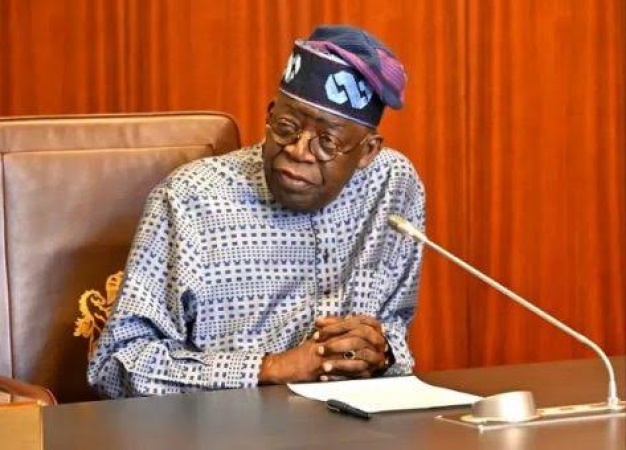
Recent political realignments further underscore this reality. Many governors who defected to the All Progressives Congress (APC) did so not out of convenience, but necessity. Their former platforms had collapsed, leaving them politically stranded. Without the Renewed Hope Agenda of President Bola Ahmed Tinubu, the Jagaban of Borgu, many would have had no viable political shelter.
Niccolò Machiavelli cautioned that “There is nothing more difficult to take in hand, more perilous to conduct, or more uncertain in its success, than to take the lead in the introduction of a new order of things.” Abrupt power grabs that disregard party history and long-standing alliances often end in political disaster.
As Nigeria approaches the critical 2027 elections, restraint, foresight, and political chivalry are no longer optional—they are imperatives. National politics is sustained by strategic tact and enduring alliances. Alliances built with patience can be destroyed by arrogance in a moment.
Loyalty is not weakness.
Obedience is not servitude.
And in politics, discipline is the difference between survival and collapse.
•Chief Chukwuma Ugbah, an APC Chieftain, writes from Delta State.