Updating your news feed...

NEWS EXPRESS is Nigeria’s leading online newspaper. Published by Africa’s international award-winning journalist, Mr. Isaac Umunna, NEWS EXPRESS is Nigeria’s first truly professional online daily newspaper. It is published from Lagos, Nigeria’s economic and media hub, and has a provision for occasional special print editions. Thanks to our vast network of sources and dedicated team of professional journalists and contributors spread across Nigeria and overseas, NEWS EXPRESS has become synonymous with newsbreaks and exclusive stories from around the world.









Loading banners
Loading banners...

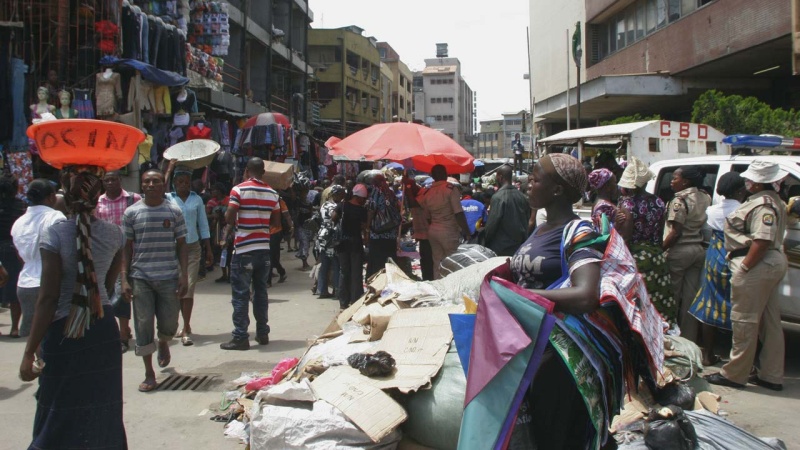
Nigerians on the streets, struggling to eke out a living
Nigerians have shared mixed experiences about the state of the economy in 2025, reflecting a year marked by easing inflation figures but persistent pressure on household incomes and living standards.
While official data show that inflation declined steadily from about 24–28 per cent at the beginning of the year to 14.45 per cent by November 2025—marking eight consecutive months of decline—many citizens say the cost of basic necessities remains high.
For Paul Oyewusi, who runs a leadership and coaching outfit in Lagos, 2025 was a test of endurance. He acknowledged the hardship brought by inflation but noted signs of improvement toward the end of the year.
“Inflation hit hard, but I’m happy it eased during the festive period. Food and fuel prices began to stabilise, and I think the government did well in that area,” he said.
Oyewusi, however, stressed the need for accountability as tax reforms take effect in 2026. “Tax is a way to develop the economy, but the government must show evidence that our money is working,” he said, adding that agencies such as the Small and Medium Enterprises Development Agency of Nigeria (SMEDAN) and the Bank of Industry should do more to support small businesses.
James Ilesanmi shared similar concerns, describing 2025 as a difficult year due to rising living costs. “Most of the policies introduced this year were not in favour of citizens,” he said, noting that his focus in 2026 would be on better personal financial planning.
He called on the federal government to ensure transparency in the implementation of tax reforms, saying, “Our taxes should translate to better roads, electricity, healthcare and lower costs of essential goods.”
“My expectations for 2026 are personal — I want to be more intentional about my finances, to double up and prepare for the future,” he added.
Others spoke of the social consequences of economic pressure. John James said inflation had significantly eroded purchasing power, pushing some Nigerians into desperation. “When income can’t meet basic needs, people start cutting corners, even resorting to crime,” he said.
Raijh Edatomola also expressed fears about the incoming tax reforms, noting that uncertainty alone was keeping prices high. “Even when fuel prices are reduced, fear of increased taxes keeps costs elevated,” he said.
“We lived the year as though it were only a shadow of what awaits us next year. Many people are afraid of the tax reforms; even when fuel prices are reduced, the fear of increased taxes keeps prices high,” he added.
In Abuja, residents described varying experiences. Ahmad Hafsat Aseku, a fashion designer in Wuse, said she was more financially stable in 2025 due to additional income streams and stricter spending habits, though food prices remained a major challenge.
“I’ve had to substitute meat with eggs sometimes to reduce costs,” she said, urging the government to prioritise power supply and security to boost productivity and food supply.
“With security measures in place and farmers working without worries, it will increase food supply and reduce prices,” she said.
Comfort Ogbe, a Kubwa resident, said transportation costs were her biggest burden despite improved income stability, while a school teacher, Chidera Vitalis Ononiwu, said nothing changed for him in 2025 as wages stagnated and unemployment remained high.
“My salary didn’t increase, and transport and healthcare costs continued to rise,” he said, calling for stronger social welfare, improved transportation and renewed focus on agriculture.
However, for Chidera Vitalis Ononiwu, a school teacher based in Abuja, nothing changed in 2025.
He said his wages remained the same, unemployment figures did not improve and the business environment stayed stagnant.
“My job was still the same with no increment in wages and unemployment remained at the same digits,” he said.
He explained that transportation and healthcare were the areas affecting him the most, noting that transport costs did not improve even after fuel subsidy removal.
In Kano, civil servant Abbas Yushau described 2025 as both rewarding and challenging, citing personal career progress alongside concerns over insecurity and uncertainty surrounding tax reforms ahead of the 2027 elections.
Kabiru Ibrahim Abaiya, a public hospital worker, said 2025 marked a gradual decline in fuel and food prices compared to 2024, attributing recent improvements to price cuts from the Dangote refinery.
He expressed hope that further fuel price reductions in 2026 would lower transportation and food costs.
Farmer Ibrahim Rufai said high fertiliser costs led to heavy losses in 2025, warning that continued neglect of farmers could discourage agricultural production. “If this continues, many farmers may abandon farming, and the consequences could be catastrophic,” he said.
“It is generally believed that the poor masses would suffer in 2026 on account of the new tax law. It is one of my fears.
“My hope is that our security challenges will be addressed once and for all in the New Year but we don’t need foreign intervention to achieve that at the same time,” he said.
Another resident Kabiru Ibrahim Abaiya, who works with a public hospital in the state, said 2025 will be remembered for the gradual drop of prices of fuel and food items compared to the previous year of 2024 when inflation hit the highest record of over 30% in the country.
Abaiya said at a time in the outgoing year he stopped using his motorcycle because of the rise of fuel pump price to nearly N1000, noting, however, that there are signs now that the price may further drop as Dangote refinery crashed the price.
Ibrahim Rufai, a farmer, said he lost some substantial investment in agriculture in the outgoing year largely because of the high cost of fertiliser and hopes that the cost of agricultural inputs will drastically reduce in 2026 to mitigate post-harvest losses among farmers.
Bayelsa residents also expressed cautious optimism. Comrade Hensley Adiokume said 2025 was the best economic year since 2023, noting sharp drops in rice and fuel prices. However, he urged the government to regulate market prices and suspend the enforcement of the new tax law, which he described as “anti-people.”
A trader at Swali Market, Ifeanyi Godspower, said although hardship had eased slightly, weak purchasing power continued to affect businesses. “People don’t have money to buy, and prices change constantly,” he said.
As Nigerians look ahead to 2026, many say their expectations rest on improved security, stable power supply, affordable transportation, effective tax implementation and tangible relief in the cost of living, hoping government policies will translate into real benefits for households and small businesses across the country.
FG urged to translate macroeconomic reforms into broad-based prosperity
Meanwhile, the federal government has been urged to ensure that ongoing macroeconomic reforms deliver tangible improvements in living standards and business growth in 2026.
The Lagos Chamber of Commerce and Industry (LCCI) in a statement signed by its president stated this while reviewing the country’s economic performance in 2025.
The institution stressed that the year 2026 should mark the transition from stabilization to shared prosperity.
“The LCCI believes that 2025 represents a turning point, from crisis management to cautious stabilization. The challenge for 2026 is to move beyond stability and translate macroeconomic reforms into broad-based prosperity,” the statement reads.
It added that the federal government should focus on boosting credit to the private sector through the banks, expressing hope to see more rate easing by the Central Bank of Nigeria.
“With disciplined policy execution, enhanced security, infrastructure expansion, and a strong focus on inclusivity. Nigeria can make 2026 the year when the benefits of reform are finally felt by businesses and households alike,” the statement reads.
However, LCCI described the year as one of tough reforms and cautious recovery, characterized by modest growth, fiscal strain, and persistent concerns about debt sustainability.
The Chamber noted that while GDP growth improved to 3.98 percent in the third quarter of 2025, it remained below the population growth rate, limiting its impact on incomes and poverty reduction.
According to the LCCI, the removal of fuel subsidies, foreign exchange liberalization, and tight monetary policy imposed short-term hardship but restored macroeconomic credibility and investor confidence.
“Key reforms such as the rebasing of GDP and inflation indices, the signing of the Tax Reform Act, and Nigeria’s exit from the FATF grey list were hailed as significant milestones.
“However, fiscal execution lagged behind targets. By the third quarter, government revenue stood at N18.6 trillion (61 percent of target), while expenditure reached N24.66 trillion (60 percent). Capital spending was especially weak at N3.10 trillion—only 17.7 percent of total—hindering infrastructure delivery and growth.
“Public debt rose to N152.39 trillion by mid-2025, with debt servicing consuming more than 65 percent of government revenue. Businesses also battled inflation, FX volatility, insecurity, and poor infrastructure, all of which dampened competitiveness and investment,” the statement reads.
Looking ahead, the LCCI urged stronger coordination between fiscal and monetary authorities to entrench disinflation, lower interest rates, and unlock private sector credit.
It also called for accelerated infrastructure investment, better food supply chains, effective tax reform implementation, and targeted support for small businesses. (Daily Trust)