Updating your news feed...

NEWS EXPRESS is Nigeria’s leading online newspaper. Published by Africa’s international award-winning journalist, Mr. Isaac Umunna, NEWS EXPRESS is Nigeria’s first truly professional online daily newspaper. It is published from Lagos, Nigeria’s economic and media hub, and has a provision for occasional special print editions. Thanks to our vast network of sources and dedicated team of professional journalists and contributors spread across Nigeria and overseas, NEWS EXPRESS has become synonymous with newsbreaks and exclusive stories from around the world.




Loading banners
Loading banners...

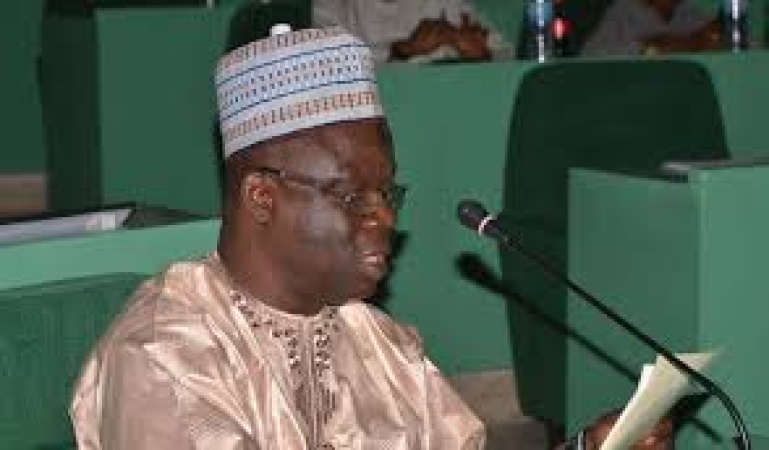
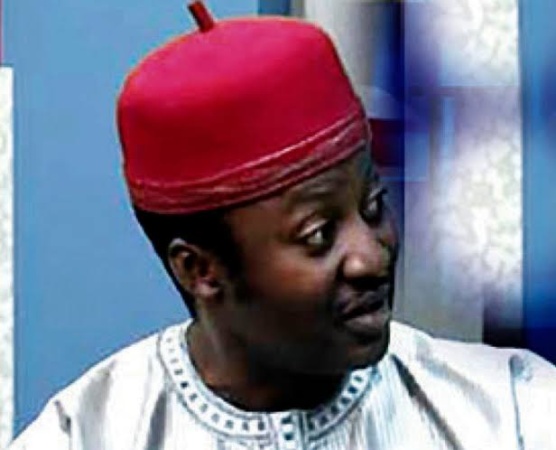
Dr Ibrahim M Zikirullahi, Executive Director, CHRICED
The Resource Centre for Human Rights & Civic Education (CHRICED) has condemned the Federal Government’s approval of a massive debt waiver for the Nigerian National Petroleum Company Limited (NNPC Ltd), amounting to $1.42 billion and N5.57 trillion owed to the Federation Account.
On Monday President Bola Ahmed Tinubu approved the cancellation of a substantial portion of the debts owed by the NNPCL to the Federation Account.
Reacting in a statement on Tuesday, CHRICED Executive Director, Comrade Dr. Ibrahim M. Zikirullahi, said the write-off is unprecedented.
According to Zikirullahi, the write-off “without public scrutiny, legislative approval, or accountability for those responsible—represents a grave assault on transparency, fiscal discipline, and constitutional governance.”
Explosion rocks Kebbi General Hospital
He added that the development is a dangerous precedent in a time of revenue crisis.
He said, “The Federal Government’s decision to cancel 96% of NNPC’s dollar-denominated debts and 88% of its Naira-denominated obligations effectively deprives the Federation Account of revenues meant to be shared among the federal, state, and local governments.
“This fiscal giveaway comes at a time when: The Nigerian Upstream Petroleum Regulatory Commission (NUPRC) is underperforming its 2025 revenue target by over N5.65 trillion cumulatively.
“In November 2025 alone, NUPRC recorded a N544.76 billion revenue shortfall, including a N538.92 billion gap in royalty collections.
“Writing off trillions of naira in receivables amid such alarming revenue deficits is not only irresponsible—it contradicts the government’s repeated claims of plugging leakages and strengthening public finance management.”
Zikirullahi argued that Nigeria’s oil and gas sector remains riddled with unresolved scandals, saying Former petroleum minister, Timipre Sylva, was recently declared wanted over the alleged diversion of $14.8 million meant for refinery construction.
He stated, “Business mogul Aliko Dangote’s petition against former NMDPRA CEO Farouk Ahmed exposed deep regulatory rot—yet its outcome remains uncertain.
“The infamous fuel subsidy fraud, involving trillions of naira in fake claims, was never fully investigated; only Farouk Lawan was prosecuted, while the principal beneficiaries walked free. Long-standing allegations of $42.37 billion in under-remittances between 2011 and 2017 remain unresolved.
“Persistent issues of crude theft, opaque swap deals, and disputed lifting figures continue to undermine national revenues. These cases illustrate a system where corruption is recycled, whistleblowers are ignored, and accountability is optional.”
According to CHRICED, in accordance with the Petroleum Industry Act (PIA), NNPC Ltd is expected to operate as a commercially driven entity governed by strict corporate standards.
It said that forgiving trillions of naira owed to its sole shareholder—the Nigerian people—undermines this claim and exposes the company’s continued political insulation.
It said, “This decision sends a troubling message to investors, development partners, and credit rating agencies: Nigeria’s fiscal governance remains unpredictable, discretionary, and vulnerable to political interference.”
CHRICED called for immediate public disclosure of the full reconciliation report and justification for the debt waiver, including the roles of all officials involved; forensic audit of NNPC’s historical and current financial obligations, with findings made public and Legislative intervention by the National Assembly. (Daily Trust)