ADVERTISEMENT

ADVERTISEMENT

















.webp&w=256&q=75)


Loading banners


NEWS EXPRESS is Nigeria’s leading online newspaper. Published by Africa’s international award-winning journalist, Mr. Isaac Umunna, NEWS EXPRESS is Nigeria’s first truly professional online daily newspaper. It is published from Lagos, Nigeria’s economic and media hub, and has a provision for occasional special print editions. Thanks to our vast network of sources and dedicated team of professional journalists and contributors spread across Nigeria and overseas, NEWS EXPRESS has become synonymous with newsbreaks and exclusive stories from around the world.

A society does not collapse only when guns are louder than laws. It also weakens when citizens begin to suspect that the text meant to govern them can be quietly edited after the constitutional ceremony has ended. When a law loses credibility, enforcement becomes a contest of power, not a discipline of legitimacy. Compliance becomes a gamble, not a civic duty. That is the unsettling shadow now hanging over Nigeria’s 2025 tax reform project. This agenda was sold as economic renewal, but it is now threatened by a credibility crisis that strikes at the heart of constitutional order.
The Tinubu administration’s tax reforms were introduced with an ambition that, on the surface, is difficult to quarrel with: modernise Nigeria’s tax system, broaden the base, reduce distortions, and create a framework that can support growth while protecting the poor. The government says the reforms will ease burdens on most workers and exempt most small businesses, while simplifying the wider regime. But reform is not merely a matter of intention. In a democracy, the process is part of the product. The integrity of lawmaking is not a procedural nicety; it is the foundation that makes hard policies tolerable because people can trust that what is being enforced is what was debated, voted on, and assented to.
Yet, from inception, the reform effort attracted scepticism—some ideological, some political, some grounded in genuine anxieties about timing and implementation. That scepticism has now hardened into something far more dangerous: an allegation that the law Nigerians are being asked to obey is not the law their representatives passed.
The controversy burst into the open from within the legislature itself. On December 17, 2025, Abdussamad Dasuki, a member of the House of Representatives, raised a matter of privilege, alleging that the gazetted tax laws available to the public differed materially from the versions debated, harmonised, and approved by the National Assembly. This is not the usual theatre of opposition politics. It is an institutional alarm bell, rung from within the chamber by someone effectively saying: "I voted for one text; the country is now being governed by another."
In the days that followed, the story did not die the way uncomfortable stories often die in Nigeria—under the weight of official silence and public fatigue. It grew teeth. The House constituted a committee to investigate the alleged discrepancies. The matter moved from rumour into formal legislative action. Then came the most revealing development. On December 26, 2025, the National Assembly leadership directed that the tax laws be re-gazetted and that Certified True Copies (CTCs) of the versions duly passed by both chambers be issued.
Re-gazetting is not the kind of administrative housekeeping you do when nothing is wrong. It is what you do when authenticity is in dispute. This happens when the state itself is no longer confident that the public record reflects the legislative record. The attempt to present it as a routine clarification may calm partisans, but it cannot calm the constitutional problem. In lawmaking, credibility is binary. Either the text is authentic, or it is not.
At the centre of this crisis is a deceptively simple question: which document is the law? In principle, gazetting exists to publish and preserve the law as enacted. It is meant to be the public mirror of legislative intent, not a creative rewrite. If the mirror is distorted—whether by error, negligence, interference, or sabotage—the public does not merely face confusion; it faces the possibility of being governed by illegality dressed in official clothing.
This is why the distinction between a clerical error and a material alteration matters. Every legislative system has typos. These may include a misnumbered section, an omitted punctuation mark, or a wrong cross-reference. Such defects are remediable. They can be corrected without shaking the constitutional order. But when the alleged differences touch substance—expanding enforcement powers, shifting oversight, changing compliance thresholds, or altering appeal conditions—the issue stops being editorial and becomes constitutional.
And the allegations, as reported by multiple outlets and analysed by stakeholders, are not about commas. They are about power. They are about whether the tax authority can reach deeper into private life with fewer guardrails; whether citizens’ rights to due process are narrowed; and whether oversight by elected representatives is diluted in the final text.
Consider the kinds of discrepancies cited in public debate. These include changes to the scope of federal tax administration, modifications to reporting obligations for financial institutions, and adjustments to the currency basis for certain computations. More controversially, commentators and legal analysts point to alleged new provisions. These would require taxpayers to deposit a percentage of disputed sums before an appeal can be heard. There are also changes that appear to expand enforcement mechanisms without the prior judicial oversight that the legislature may have contemplated. These are not merely technicalities; they concern the balance between state power and citizen protection.
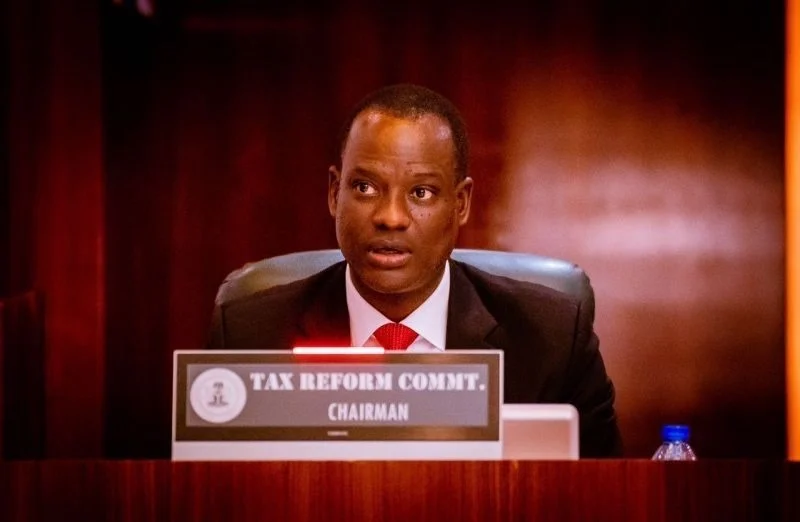
A government can argue—reasonably—that Nigeria’s fiscal condition demands urgency. And indeed, the Chairman of the Presidential Committee on Fiscal Policy and Tax Reforms, Taiwo Oyedele, has insisted that the January 1, 2026, commencement date is “sacrosanct,” warning of costs to delay and emphasising that most workers and small businesses would benefit from the changes. He has also urged the public to await lawmakers’ findings, noting that a proper comparison requires access to the certified harmonised version that was transmitted for assent—access which, by his account, is not widely available.
The Minister of Information and National Orientation, Mohammed Idris, has taken a similar line. The executive is aware of “only one version,” and Nigerians should wait for the National Assembly’s feedback. Meanwhile, the government has also framed some resistance as misinformation. Presidential advisers allege sabotage efforts against the reforms.
But urgency cannot cure illegitimacy. In fact, urgency is often the excuse illegitimacy uses to walk through the front door without being searched. Even if we assume the reforms are economically sound—and that is a debate Nigerians can and should have—no reform can survive the collapse of the process. A tax system runs on trust more than coercion. Where citizens suspect that the rules can be changed after the vote, compliance becomes cynical: people comply only when forced, evade when they can, and interpret taxation as extraction rather than contribution. Investors, too, price uncertainty. They can tolerate hard taxes; they do not tolerate unstable law.
That is why professional bodies have weighed in. The Chartered Institute of Taxation of Nigeria warned that proven divergences could create legal uncertainty and heighten compliance risks for taxpayers, professionals and investors—an unusually direct way of saying: this is bad for revenue, bad for confidence, and bad for governance.
The legal community’s concern is even sharper. When credible questions arise over which text is valid, enforcement becomes a legal minefield. Litigation becomes inevitable, and courts may end up stripping contested portions—or, in the worst-case scenario, invalidating larger parts if the process is found fatally compromised. Some senior lawyers and commentators have argued that enforcing a disputed gazetted text could breach constitutional procedure and undermine the rule of law, precisely because citizens and courts need certainty about what the law actually says.
At this point, the most dangerous outcome is not merely that the tax laws may contain defects; it is that the state may try to normalise defects as governance. There is a temptation in government—especially in fiscally tight times—to treat the law as an instrument and the process as a hurdle. But in a constitutional democracy, process is the instrument. If we permit “post-assent mutation” to become just another Nigerian problem we endure, then we quietly abandon the very idea of legality. We drift into rule by paperwork, where the gazette becomes a battlefield and not a record.
So what should happen now—practically, urgently, and transparently?
First, the National Assembly’s investigative process must be public-facing in its outputs, even if some internal deliberations remain closed. Nigerians do not need theatre. They need a documentary chain of custody: the harmonised bill as passed, the enrolled bill transmitted for assent, the text signed, and the text gazetted—placed side-by-side, clause-by-clause, with differences marked and explained. Anything less will breed conspiracy and deepen distrust. Second, issuing Certified True Copies is a constitutional necessity. When citizens must comply under penalty of law, they deserve certainty. Courts and businesses need that certainty too.
Third, if disputed provisions exist, the rational interim approach is not to pretend the controversy is irrelevant. Instead, ring-fence contested clauses pending verification. Even the reform team’s public posture acknowledges a logic here: identify what is questionable, treat it as not part of the law if it was not duly enacted, and proceed only with what is clean. That approach does not sabotage reform; it protects reform from judicial ambush.
Fourth, Nigeria must learn from this episode and build a modern legislative integrity architecture. In an age when a single altered paragraph can shift billions of naira and rewire citizens’ rights, we cannot rely on tradition, trust, or “it has always been so.” We need a secure legislative version-control system—digital fingerprints for enrolled bills, publicly accessible repositories, audit trails from committee harmonisation through assent to gazetting, and strict criminal consequences for tampering. If our banks can secure transactions with layered verification, the Republic can secure its statutes with the same seriousness.
Finally, accountability must be more than a press statement. If the investigation finds that any actor—bureaucratic or political—altered a duly enacted law, the response cannot be quiet correction and collective amnesia. That would be an invitation letter to the next offender. A constitutional offence requires constitutional consequences. Deterrence is not a speech; it is a sentence. And if, on the other hand, the discrepancies prove to be the result of honest but grave administrative breakdown, then that breakdown must still be punished institutionally—through reforms, dismissals where warranted, and transparent remediation—because incompetence at this level is also a national security risk. A state that cannot safeguard its laws cannot safeguard its citizens.
•Dakuku Peterside is the author of two bestselling books, “Leading in a Storm” and “Beneath the Surface”.